


Support and training
Provide a small trellis, hoop, or wire frame and gently tie stems with soft plant ties so the plant can develop a stable framework that supports heavy, clustered foliage and future flower umbels.

Wax plant Hoya carnosa 'Chelsea' is a slow-growing, vining houseplant known for its thick, glossy, cupped leaves that look almost like green saucers. It typically trails from hanging baskets or climbs a support, forming dense, cascading foliage over time.
This cultivar comes from the same species native to parts of India and Southeast Asia, where it grows as an epiphyte on trees. Its waxy leaves and stems store water, which makes it more tolerant of brief neglect and irregular watering.
Fragrant, star-shaped flowers may appear on mature plants in the right conditions. Understanding how to care for Wax Plant focuses mainly on providing bright, indirect light, well-drained soil, and avoiding overwatering.

Care Difficulty
Easy Care

Light Preference
Bright Indirect Light

Water Requirements
Low Water

Temperature Preference
Tropical / Frost Sensitive

Hardiness Zone
10–12

Soil Texture
Sandy, Loamy, Organic-rich

Soil pH
Acidic (5.5–6.5), Slightly acidic (6.5–7.0)

Soil Drainage
Well-drained

Fertilization
Light (every 4–6 weeks)
Scan your plant to receive care tips personalized for your specific plant
Available on iOS and Android
Hoya carnosa 'Chelsea' prefers bright, indirect light for compact growth and reliable flowering.
Hoya carnosa 'Chelsea' prefers moderate watering with time to dry between waterings.
This plant favors stable, warm conditions without drafts or sudden temperature swings.
This hoya prefers moderate humidity but usually adapts well to typical indoor air.
This plant needs a loose, airy mix that drains quickly yet retains slight moisture around the roots.
This species is well suited to container growing at home.
Hoya carnosa 'Chelsea' benefits from light, consistent feeding during the active growing months.
Pruning helps keep Hoya carnosa 'Chelsea' compact and encourages branching while preserving flowering sites.
Repotting is infrequent, as this plant prefers slightly root-bound conditions.
Hoya carnosa 'Chelsea' is most often propagated from stem cuttings taken during the growing season.
This tropical houseplant is frost-sensitive and needs indoor winter care in cold climates.

Plant Health Check
Not sure what's wrong with your plant? Check your plant's health inside the app.
The 'Chelsea' form is believed to have arisen as a genetic sport of standard Hoya carnosa, meaning it is a spontaneous mutation selected and propagated for its distinct foliage.
Its leaves are characteristically cupped and puckered rather than flat, a stable cultivar trait that differentiates it from other carnosa forms with smoother, thinner foliage.
Chelsea is a cultivated variety that does not occur as a recognized wild population; it exists through vegetative propagation, so each plant is a clone of earlier cultivated material.
Lack of flowers is usually caused by insufficient light, pruning off old spurs, or repotting too often. This species blooms best when rootbound, kept stable, and given several months of consistent conditions without drastic changes.
Keep your plants happy and healthy with plant identification, disease detection, and easy care guidance.


Wax Plant
Hoya lacunosa 'Royal Flush'
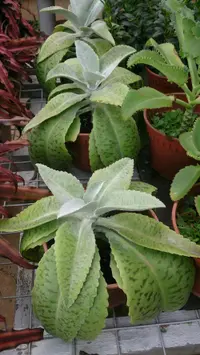
donkey ears
Kalanchoe gastonis-bonnieri
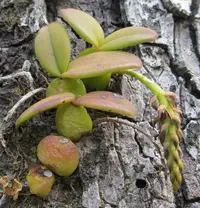
Bulbophyllum elliotii
Bulbophyllum elliotii
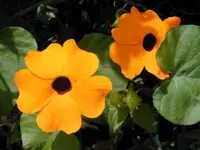
Black-eyed Susan vine
Thunbergia alata
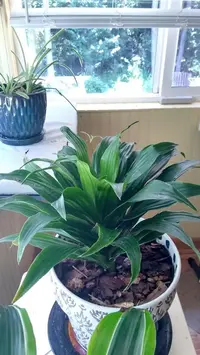
Dracaena
Dracaena fragrans 'Janet Craig Compacta'
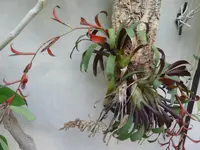
Tillandsia leiboldiana
Tillandsia leiboldiana
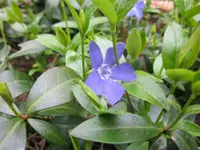
Creeping myrtle
Vinca minor
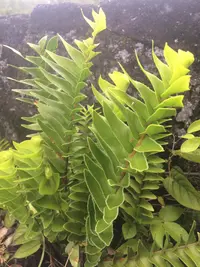
Nephrolepis abrupta
Nephrolepis abrupta