Secure Strong Support
Install a sturdy trellis, wire mesh, or pergola before planting and fasten young vines with soft ties so the plant climbs where you want it and does not overwhelm nearby shrubs or structures.

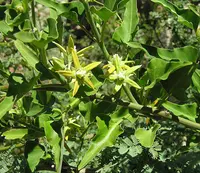
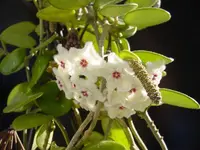
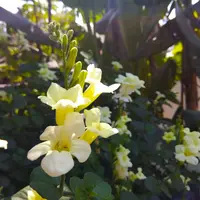
Latexplant, Araujia odorata, is a vigorous, twining vine grown mainly for its clusters of pale, tubular flowers and milky latex sap. It is native to South America but has naturalized in many warm and mild-climate regions, where it can become invasive outdoors.
Stems climb supports readily, and the plant can quickly cover trellises, fences, or other structures. Its fast growth and tolerance of poor conditions make it robust but sometimes hard to control.
This species prefers bright light, moderate moisture, and well-drained soil. Gardeners who learn how to care for Latexplant often grow it as an ornamental climber in frost-free or protected settings.

Care Difficulty
Moderate Care

Light Preference
Full Sun

Water Requirements
Moderate Water

Temperature Preference
Warm Climate

Hardiness Zone
8–11

Soil Texture
Sandy, Loamy, Organic-rich

Soil pH
Acidic (5.5–6.5), Slightly acidic (6.5–7.0)

Soil Drainage
Well-drained

Fertilization
Minimal (feed rarely)
Scan your plant to receive care tips personalized for your specific plant
Available on iOS and Android
Araujia odorata prefers bright conditions that balance strong light with some daily protection.
Araujia odorata prefers evenly moist but not saturated soil, especially while actively growing.
This vigorous climber favors warm, frost-free conditions for reliable growth and flowering.
This vigorous vine handles a wide humidity range but grows best with moderate ambient moisture.
Araujia odorata prefers light, well-aerated soil that drains quickly yet holds some moisture.
This twining climber adapts well to container growing when given stable support and managed moisture.
Araujia odorata responds well to moderate feeding during its active growing season for controlled, healthy growth.
Pruning Araujia odorata helps manage its vigorous climbing habit and supports healthier, denser growth.
When grown in containers, this vigorous climber benefits from timely repotting or transplanting to maintain root health.
Araujia odorata is commonly propagated by seeds or semi-ripe cuttings taken in warm weather.
In mild climates, Araujia odorata needs only modest winter care but is sensitive to hard freezes.

Plant Health Check
Not sure what's wrong with your plant? Check your plant's health inside the app.
The flowers produce copious sticky latex in the floral tube, which can trap visiting moths by their proboscis and sometimes lead to the insect’s death, an unusual pollination strategy among milkweed relatives.
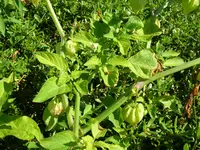
It forms large, bladder-like pods that dry and split open to release many silky-haired seeds, which are efficiently dispersed by wind over considerable distances.
In mild climates it can behave as an aggressive, smothering vine, climbing over shrubs and trees and reducing light availability, which has led to its classification as an invasive species in parts of southern Europe and other warm regions.

In some invaded regions, this species has been documented using its dense twining growth to envelop orchard trees and vineyard structures, forcing growers to remove the vine to prevent mechanical damage and interference with harvest operations.
This species can spread vigorously by both stems and wind-dispersed seeds in mild climates. In suitable conditions it may smother nearby vegetation, so regular pruning and removal of seedpods are important to keep it contained.
Keep your plants happy and healthy with plant identification, disease detection, and easy care guidance.