


Rotate for symmetry
Turn the pot 90° every 2–3 weeks so new leaves distribute evenly around the stem and the plant keeps a compact, symmetrical form instead of leaning toward one side.

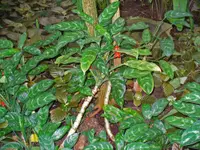
Spotted evergreen, Aglaonema costatum, is a compact tropical foliage plant grown mainly for its patterned leaves rather than flowers. It belongs to the aroid family and is commonly used as an indoor ornamental. Leaves are dark green with a creamy midrib and scattered pale spots, forming a dense clump on short stems. Growth is typically slow to moderate, which suits containers and small spaces. In nature it occurs in shaded, humid forest floors in Southeast Asia, so it prefers gentle light, even moisture, and well-drained, airy soil. These stable conditions make it relatively easy to care for spotted evergreen in typical home and office environments.

Care Difficulty
Easy Care

Light Preference
Bright Indirect Light

Water Requirements
Moderate Water

Temperature Preference
Tropical / Frost Sensitive

Hardiness Zone
11–12

Soil Texture
Loamy, Peaty, Organic-rich

Soil pH
Acidic (5.5–6.5), Slightly acidic (6.5–7.0)

Soil Drainage
Moist but well-drained

Fertilization
Light (every 4–6 weeks)
Scan your plant to receive care tips personalized for your specific plant
Available on iOS and Android
Aglaonema costatum prefers soft, filtered light that protects its leaves from harsh sun.
This plant prefers evenly moist but never soggy soil for steady, healthy growth.
This tropical species thrives in warm, stable conditions without sudden temperature swings.
This species benefits from moderate to slightly elevated humidity for stable foliage health.
This plant prefers a loose, organic-rich, well-drained potting medium that holds moisture without remaining waterlogged.
This species is well suited to container culture for both homes and shaded patios.
Aglaonema costatum benefits from light, consistent nutrition in active growth.
Pruning Aglaonema costatum is mainly about hygiene and maintaining a compact shape.
This species grows slowly and prefers slightly snug pots, so repot only when needed.
New Aglaonema costatum plants are most reliable from division and stem cuttings.
This tropical houseplant is not frost hardy and needs mild, stable winter conditions.

Plant Health Check
Not sure what's wrong with your plant? Check your plant's health inside the app.
This species is native to shaded rainforest floors in peninsular Malaysia and surrounding regions, where its white midrib and irregular leaf spots help break up the leaf outline against dappled light.
Unlike many other aglaonemas, it shows a strong, continuous white midrib on each leaf, which is a key diagnostic feature botanists use to separate it from closely related species.
It tends to grow as a low, tight clump from short, creeping stems, forming small colonies on the forest floor rather than tall, cane‑like shoots seen in some other Aglaonema species.
Yellowing leaves usually result from overwatering, poor drainage, or low light. Check that the pot has drainage holes, allow the top soil to dry slightly between waterings, and remove old, lowest leaves that naturally age and yellow.
Keep your plants happy and healthy with plant identification, disease detection, and easy care guidance.

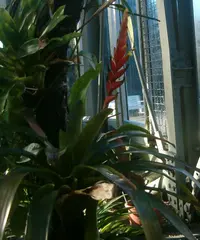
Bromeliad
Vriesea ensiformis
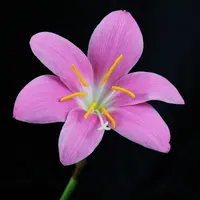
Rose Pink Zephyr Lily
Zephyranthes carinata
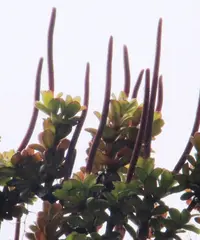
Peperomia hartwegiana
Peperomia hartwegiana
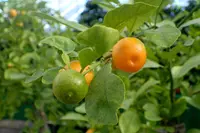
calamondin
Citrus × microcarpa
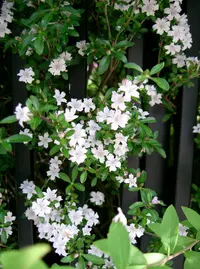
Buchozia japonica
Buchozia japonica
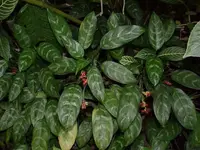
Silver Queen plant
Aglaonema commutatum
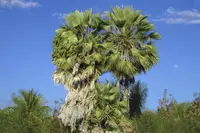
Carnauba palm
Copernicia prunifera
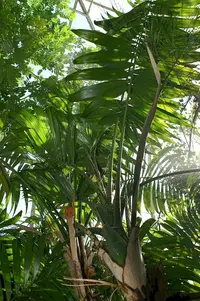
Synechanthus warscewiczianus
Synechanthus warscewiczianus