Mounting for airflow
Consider growing Cooktown orchid on a slab of cork or tree fern fiber if your home is warm and humid, as this mounting method increases air movement around roots and reduces the risk of rot between waterings.

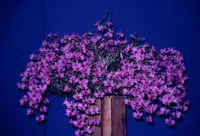
Cooktown orchid, Dendrobium bigibbum, is a compact epiphytic orchid that usually grows on trees, forming clumps of upright, cane-like stems. It produces showy, long-lasting flowers in shades of purple, pink, or white, often with a glossy texture and neat, oval leaves.
This species is native to tropical northern Australia, where it experiences bright light, warm temperatures, and distinct wet and dry periods. It is considered moderately easy to grow when its need for good light, quick-draining orchid mix, and regular airflow is met.
Understanding these natural conditions makes it easier to care for Cooktown orchid successfully in a home or greenhouse setting.

Care Difficulty
Moderate Care

Light Preference
Bright Indirect Light

Water Requirements
Moderate Water

Temperature Preference
Tropical / Frost Sensitive

Hardiness Zone
11–12

Soil Texture
Sandy, Organic-rich

Soil pH
Acidic (5.5–6.5)

Soil Drainage
Well-drained

Fertilization
Moderate (every 2–4 weeks)
Scan your plant to receive care tips personalized for your specific plant
Available on iOS and Android
This orchid needs bright, indirect light with some direct sun at cooler times of day.
Watering should balance regular moisture with fast drainage to protect the roots.
This species prefers warm conditions and does not tolerate frost.
This orchid prefers moderately humid air and reacts quickly to dry conditions.
This epiphytic orchid needs a very open, fast-draining medium rather than dense garden soil.
This species is well suited to container growing when pot choice supports its upright, cane-like growth.
This orchid benefits from light, consistent feeding during active growth for best flowering and leaf health.
Pruning is light and mainly focused on cleaning and managing older canes for healthy growth and flowering.
Repotting keeps this orchid healthy by refreshing the airy medium and giving crowded roots more space.
Propagation of this orchid is usually done vegetatively, since seed growing needs sterile lab conditions.
This warmth-loving orchid needs protection from low temperatures and is best treated as an indoor or greenhouse plant in cold climates.

Plant Health Check
Not sure what's wrong with your plant? Check your plant's health inside the app.
This orchid is the official floral emblem of Queensland, Australia, chosen in 1959 to represent the region’s tropical landscapes and distinctive native flora.
In the wild, it often grows as a lithophyte on exposed rock outcrops as well as on tree branches, tolerating high light and pronounced dry periods compared with many other orchids.
It has been widely used in orchid breeding, especially with other Dendrobium species, to create long-lasting, brightly colored cut flowers for the global trade.

Wild populations of this species are naturally restricted to parts of northeastern Australia and nearby islands, and their numbers have declined enough that habitat protection and regulated collection are needed to conserve native stands.
Lack of flowering is often due to insufficient light, overly warm nights, or no slight dry rest after growth. Ensure bright filtered light, moderate feeding, and a short, cooler, drier period to initiate spikes.
Keep your plants happy and healthy with plant identification, disease detection, and easy care guidance.