Byblis liniflora Care

Byblis liniflora

About Byblis liniflora

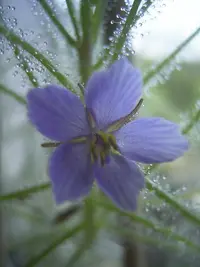
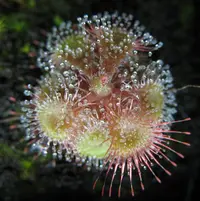
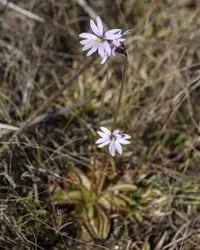
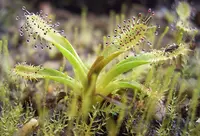
Byblis liniflora, often called the rainbow plant, is a small carnivorous species that forms delicate, upright stems covered in sticky, glittering hairs. These glandular hairs trap tiny insects, which supplement the plant’s nutrient supply in poor, sandy or peaty soils. It is native to seasonally wet habitats in northern Australia and parts of New Guinea, where it grows in open, sunny sites with high humidity. In cultivation it stays compact and is considered moderately challenging, mainly because it needs consistent moisture, soft low-mineral water, and plenty of bright light. Understanding how to care for Byblis liniflora starts with respecting its need for nutrient-poor, always damp, well-drained substrate.


Main Plant Requirements

Care Difficulty

Hard Care

Light Preference

Full Sun

Water Requirements

Keep Soil Moist

Temperature Preference

Tropical / Frost Sensitive

Hardiness Zone

Unknown

Soil Texture

Sandy, Peaty, Organic-rich

Soil pH

Strongly acidic (4.5–5.5)

Soil Drainage

Waterlogged tolerant

Fertilization

Minimal (feed rarely)

Get Personalized Care Plan

Scan your plant to receive care tips personalized for your specific plant

Available on iOS and Android

How to Care for the Byblis liniflora

This sun-loving carnivorous annual needs bright, direct light to form dense, dewy traps.

  • Provide 6–8 hours of full sun daily; morning and midday sun are ideal, with light afternoon shade in very hot climates.
  • Outdoors, place Byblis liniflora in an open, unshaded spot; indoors, use a very bright south- or west-facing window or strong grow light.
  • Stems stretching, pale foliage, and weak dew indicate insufficient light, while scorched, bleached leaves signal excess intense afternoon sun.

This species prefers constantly moist, low-mineral conditions similar to its native wet habitats.

  • Use rainwater, distilled, or reverse-osmosis water; mineral-rich tap water often causes leaf burn and gradual decline.
  • Keep the substrate evenly moist, never waterlogged; allow only the top 0.5–1 cm to lose surface sheen before watering again.
  • In warm, bright months, water more frequently and watch for wilting or dull, dry mucilage as underwatering signs; black, collapsing stems suggest chronic overwatering or poor aeration.

Warm, frost-free conditions support strong growth, flowering, and stable dew production.

  • Aim for 70–86°F (21–30°C) during active growth, with only slight night drops for the most stable performance.
  • Protect the plant from temperatures below 50°F (10°C); brief exposure near this level slows growth, and frost usually kills Byblis liniflora outright.
  • In hot spells above 95°F (35°C), provide light afternoon shade and good air movement to reduce heat stress and prevent leaf scorching.

This species prefers moderately humid air and reacts quickly to very dry conditions.

  • Aim for 50–70% humidity to keep the mucilage droplets stable on the leaves.
  • Tolerates brief dips to 30–40%, but prolonged dry air causes dull, shrinking droplets and browning tips.
  • Increase humidity with nearby open trays of water or a room humidifier, but avoid misting that can wash off sticky secretions.

Use a very open, nutrient-poor, mineral-based mix that stays evenly moist but never stagnant.

  • Combine roughly 1:1 fine silica sand and unfertilized peat or coco coir to create a light, airy texture.
  • Ensure rapid drainage; water should flow through within seconds while the mix remains moist like a squeezed sponge, not soggy.
  • Keep pH slightly acidic, around 5.0–6.0, and avoid any mix containing added fertilizer, manure, or compost.
  • Rinse sand and any inert additives thoroughly before use to reduce dissolved minerals that can burn sensitive roots of Byblis liniflora.

This species is well suited to container culture when moisture and drainage are carefully balanced.

  • Choose a relatively deep pot to allow the fine roots to explore a consistent moisture zone rather than a shallow layer that dries rapidly.
  • Use a lightweight plastic pot if you want slower evaporation, or unglazed clay if you need the mix to dry slightly faster at the surface.
  • Set the pot in a shallow water tray that you let partially dry between refills so the lower mix stays moist without remaining continuously waterlogged.

This carnivorous annual needs only very light feeding, if any, because it is adapted to nutrient-poor soils.

  • If growth is weak in summer, use a highly diluted (about 1/8–1/4 strength) balanced NPK liquid fertilizer, low in urea.
  • Apply to the tray water, not directly on Byblis liniflora foliage, to reduce risk of leaf burn and mineral buildup.
  • Limit feeding to 1–2 times per month during active growth and stop entirely in winter or dormancy.

Pruning needs for this small annual are minimal and focus on hygiene rather than shaping.

  • In late season, remove dead or blackened stems to reduce mold around the plant base.
  • Snip off collapsed or fungus-affected foliage with small, sharp scissors, cutting just above healthy tissue.
  • Discard pruned material away from the growing area to limit fungal spore spread and pest shelter.

This species is usually grown as an annual in its final container, so repotting is rarely required.

  • Sow seeds directly into their long-term pot to avoid later disturbance of the fine root system.
  • If roots circle the pot or growth stalls mid-season, shift very gently into a slightly larger container with fresh, low-mineral carnivorous mix.
  • Handle by the pot and soil mass, not stems, and keep the root ball intact to minimize stress.
  • After any move, maintain high humidity and stable moisture for 1–2 weeks to support recovery.

Most propagation relies on seeds, as this annual does not respond well to division or typical stem cuttings.

  • Collect ripe seed at the end of the growing season and store dry, cool, and dark until sowing.
  • Sow in late winter to early spring on the surface of a moist, nutrient-poor carnivorous substrate.
  • Provide bright light, high humidity, and warm temperatures around 70–80°F to support even germination.
  • Keep the substrate constantly damp with low-mineral water, avoiding burial of the fine seeds.

In most climates this annual is treated as a warm-season plant that naturally finishes at the onset of cold.

  • Byblis liniflora is very frost-sensitive and usually dies when temperatures fall near 32°F.
  • In cool regions, grow as a seasonal indoor plant and maintain temperatures above 60°F under bright light.
  • Collect seeds before plants decline so a new generation can be started the following warm season.

Care Tips

Use Rainwater Trays

Stand pots in a shallow tray of rainwater or distilled water and allow the tray to fully drain dry for a short period before refilling, which helps supply consistent moisture without flushing away the plant’s own digestive enzymes from the foliage.

Avoid Overcrowding

Space individual plants or seedling clumps so air can move freely between them, which reduces fungal issues and allows good light penetration to all sides of the plant.

Gentle Pest Control

If aphids or fungus gnats appear, use a gentle stream of water or a short course of yellow sticky traps placed near, not touching, the foliage instead of sprays, which can damage the sticky glands.

Timed Reseeding

Allow a few mature seed pods to dry on the plant, then collect and sow them in fresh medium at regular intervals so there is always a new generation coming on as older plants decline.

Stable Microclimate

Place pots inside a clear, ventilated propagation box or tall humidity dome with several small vents open to create a bright, warm, stable microclimate that supports consistent growth while avoiding stagnant, overly humid air when growing Byblis liniflora indoors.

Common Pests and Diseases

Fungus gnats

These insects are attracted to constantly wet, nutrient-poor carnivorous mixes and lay eggs in the media; larvae can damage fine roots and stems at the soil line.

Solution

Allow the surface of the medium to dry slightly between waterings while keeping the tray method shallow, improve air movement, and use yellow sticky traps to catch adults; if larvae are present, drench the medium with a biological control containing Bacillus thuringiensis israelensis (BTi) according to label directions.

Gray mold (Botrytis)

This disease appears in cool, humid, low-airflow conditions as soft, water-soaked spots on leaves and stems that quickly develop gray, fuzzy mold.

Solution

Increase airflow around the plant, avoid wetting the foliage, promptly remove and discard all affected tissue, and slightly reduce humidity until new growth is clean; if the problem recurs, consider spacing plants farther apart and using a fan for gentle air movement as part of overall Byblis liniflora care.

Powdery mildew

This disease shows up as a fine white or gray powder on leaves and stems, often starting on older or crowded growth in warm, stagnant air.

Solution

Improve air circulation, thin out overly dense foliage, and avoid large temperature swings; wipe affected stems gently with a damp cloth or rinse carefully, then keep the plant in brighter light with better airflow to prevent reinfection.

Aphids

These insects sometimes colonize the non-glandular lower stems and flower stalk bases, sucking sap and causing distortion or wilting despite many individuals getting trapped on the sticky leaves.

Solution

Rinse stems and flower stalks gently with a strong but controlled stream of water, repeat every few days until populations drop, and isolate heavily infested plants; if needed, apply an insecticidal soap only to non-glandular areas and rinse after a short contact time to avoid buildup on the sticky foliage.

Spider mites

This pest can appear in hot, dry indoor air, causing tiny pale stippling on leaves, webbing near growing tips, and reduced dew production on the sticky hairs.

Solution

Increase humidity around the plant, regularly mist the air nearby without saturating the foliage, and gently shower the plant with lukewarm water to wash off mites; for persistent cases, use insecticidal soap or a miticide labeled for ornamentals, applied lightly and rinsed after short exposure to protect the delicate leaves.

Interesting Facts

One-season carnivorous life

This species is typically an annual in cultivation and in the wild, completing its entire life cycle from seed to flowering and seed set within a single warm season under suitable conditions.

Glue trap specialization

Its leaves are covered with stalked glands that secrete a sticky, sugary mucilage to trap small flying insects, while separate digestive glands release enzymes that break down prey to absorb nitrogen and other nutrients.

Tropical monsoon adaptation

The species is native to seasonal wetlands and open areas in northern Australia and parts of Southeast Asia, where it germinates with the onset of warm, wet conditions and sets seed before the habitat dries out.

Botan icon

Did you know?

Byblis liniflora produces very small, dust-like seeds that often require light to trigger germination, an adaptation that helps ensure seedlings emerge near the soil surface in open, sunlit, recently disturbed sites.

FAQs about Byblis liniflora

This species performs best in bright, warm outdoor conditions such as a sunny balcony or greenhouse. Indoors it needs very strong light and high humidity. Stable warmth and protection from cold snaps are more important than the exact location.

Grow Healthy Plants with Botan Care

Keep your plants happy and healthy with plant identification, disease detection, and easy care guidance.

Botan plant care app — identify plants on mobile

Explore More Plants