Large-leaved Sneezewort Care (Achillea macrophylla)

Large-leaved Sneezewort

About Large-leaved Sneezewort

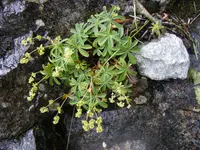
Large-leaved sneezewort, Achillea macrophylla, is a clump-forming perennial grown mainly for its broad, textured foliage and flat-topped flower clusters. It belongs to the daisy family and typically forms a low, spreading mound with upright flowering stems.

In the wild it occurs in mountain regions of central and southern Europe, often in meadows and light woodland edges. This origin explains its preference for cool conditions, moderate moisture, and well-drained, humus-rich soil.

Gardeners consider it moderately easy to grow, provided the soil does not stay waterlogged and the site is not extremely hot or dry. Understanding these natural preferences helps gardeners learn how to care for Large-leaved Sneezewort successfully.

Main Plant Requirements

Care Difficulty

Easy Care

Light Preference

Partial Shade

Water Requirements

Moderate Water

Temperature Preference

Cold Hardy

Hardiness Zone

4–7

Soil Texture

Loamy, Sandy, Organic-rich

Soil pH

Acidic (5.5–6.5), Slightly acidic (6.5–7.0)

Soil Drainage

Moist but well-drained

Fertilization

Minimal (feed rarely)

Get Personalized Care Plan

Scan your plant to receive care tips personalized for your specific plant

Available on iOS and Android

How to Care for the Large-leaved Sneezewort

This sun-loving perennial thrives in open, bright garden positions with only light shade.

  • Provide 6–8 hours of direct sun daily; morning sun with light afternoon shade suits Large-leaved Sneezewort in hotter regions.
  • It tolerates partial shade (4–5 hours of sun), but stems may elongate and flowering can decrease in shadier spots.
  • In very strong summer sun, especially in the US South and Southwest, protect from harsh late-afternoon sun to reduce leaf scorch and drought stress.

This species prefers moderately dry conditions and performs best in well-drained soil.

  • Water when the top 3–5 cm of soil is dry, using deep, infrequent soaking rather than light, frequent sprinkling.
  • During the first growing season, monitor closely and water more often in hot, dry spells; established Achillea macrophylla usually copes with natural rainfall.
  • Yellowing, limp foliage and a sour soil smell suggest overwatering or poor drainage, while crispy, browning leaf tips and drooping in dry soil indicate underwatering.

This hardy perennial tolerates a wide temperature range but grows best in mild conditions.

  • Optimal active growth occurs around 60–75°F (16–24°C), typical of late spring and early summer in many temperate regions.
  • Mature plants usually tolerate down to about 0°F (−18°C) in the ground with good drainage and mulch, dying back above ground and resprouting in spring.
  • In summer, it can handle up to about 85–90°F (29–32°C) if soil moisture is not extreme; prolonged hotter, dry periods can reduce flowering and stress foliage.

This species handles a wide humidity range and rarely needs special humidity management outdoors or in containers.

Achillea macrophylla prefers lean, well-drained, mineral soils that do not stay wet.

  • Use a sandy or gravelly loam with low to moderate organic matter to keep the root zone aerated.
  • Aim for a slightly acidic to neutral pH of about 6.0–7.5, avoiding very acidic or waterlogged sites.
  • Mix in coarse sand or fine grit to improve drainage, especially in heavier clay-based garden soils.
  • Avoid dense, peat-heavy mixes and spots where water pools after rain, which increase rot risk.

This species can be grown successfully in containers if drainage and root space are carefully managed.

  • Choose a wide, stable pot to accommodate its spreading clump and prevent wind rocking the container.
  • Fill the container with a gritty, fast-draining mix, such as 60% potting soil and 40% sand or fine gravel.
  • Place the container on pot feet or bricks so drainage holes remain clear and excess water can exit freely.

Achillea macrophylla grows best in moderately fertile soil and needs only light feeding to support flowering.

  • Apply a thin layer of compost or well-rotted manure in early spring to refresh soil nutrients.
  • If needed, use a balanced slow-release fertilizer (around 10-10-10) at half strength once in spring.
  • Avoid high-nitrogen products, which encourage weak, floppy growth and fewer flowers.
  • Do not feed Large-leaved Sneezewort in late fall or winter, as growth is naturally slow or dormant.

Achillea macrophylla responds well to thoughtful pruning that maintains a compact, floriferous clump.

  • In late winter or very early spring, cut back all old stems to just above the crown using clean hand pruners.
  • Deadhead spent flower stems through summer to encourage continued blooming and a tidier shape.
  • Remove dead, diseased, or badly damaged shoots whenever noticed to reduce disease pressure.
  • Every few years, thin out the most crowded stems to improve airflow and reduce flopping.

This species is usually grown in garden beds, where occasional lifting and division maintains vigor.

  • Look for declining flowering, congested crowns, or bare centers as signs that clumps need lifting and transplanting.
  • Transplant or divide every 3–4 years in early spring or early fall when temperatures are mild.
  • Use a fork or spade to lift the clump, gently tease roots apart, and replant divisions at the same depth.
  • Water thoroughly after transplanting and keep soil evenly moist for 1–2 weeks to limit transplant shock.

Achillea macrophylla is commonly propagated by division, with seed and cuttings as additional options.

  • Divide mature clumps in early spring or early fall, replanting healthy outer sections into well-drained soil.
  • Sow seeds in late winter or spring on the surface of a free-draining mix, keeping them lightly moist and bright.
  • Take softwood or semi-ripe stem cuttings in late spring to summer, rooting them in a moist, airy medium.
  • Maintain gentle bottom warmth and good light, avoiding direct midday sun, until new roots develop.

This yarrow is generally cold hardy and needs only minimal winter care in most temperate gardens.

  • After hard frost, cut back dead stems to a few inches above ground to tidy and reduce disease harboring.
  • Apply a light mulch layer (2–5 cm) around the crown in late fall in colder regions to buffer freeze–thaw cycles.
  • Ensure soil drainage remains good, as winter wet is more damaging than low temperatures for the root system.
  • Move container-grown plants to a sheltered, unheated but frost-free or near-frost site in very cold climates.

Care Tips

Early season pinching

Pinch back the first flush of soft growth by 2–3 in in late spring to encourage a shorter, sturdier plant with more flowering stems and less tendency to flop.

Discreet staking support

In windy or exposed beds, place low ring stakes or pea sticks around the clump in early growth so the foliage can grow through and hide the support before heavy flower heads develop.

Divide for vigor

Lift and divide congested clumps every 3–4 years in early spring, replanting only the outer, more vigorous sections to maintain strong flowering and reduce disease build-up.

Targeted deadheading

Shear off spent flower stems just above the foliage as soon as the main flush fades to reduce self-seeding, keep the plant tidy, and often trigger a lighter repeat bloom.

Airflow spacing

When growing Large-leaved Sneezewort in mixed borders, allow 30–45 cm around each clump and avoid crowding with dense shrubs to improve air circulation and reduce foliar disease pressure.

Common Pests and Diseases

Powdery mildew

This disease causes a white, powdery coating on leaves and stems, often appearing in warm, dry conditions with poor air circulation. Symptoms include distorted new growth and reduced flowering.

Solution

Improve air circulation by thinning crowded stems and avoiding overhead watering, especially late in the day. Remove and dispose of heavily infected foliage, then treat remaining growth with a sulfur or potassium bicarbonate fungicide labeled for ornamentals, following instructions closely.

Botrytis blight

This disease leads to brown, water-soaked spots on leaves and flower heads that develop gray, fuzzy mold in cool, humid weather. Symptoms include rapid decline of flower clusters and collapse of tender stems.

Solution

Remove and discard all affected flower heads and foliage, and avoid splashing water onto the plant surface. Improve spacing and airflow, keep the foliage as dry as possible, and in persistent cases use a labeled ornamental fungicide at the first sign of spotting.

Aphids

These insects cluster on young stems and flower buds, sucking sap and causing curled, sticky, honeydew-covered foliage. This pest can weaken stems and reduce flower quality.

Solution

Spray colonies off with a strong stream of water, then treat remaining insects with insecticidal soap or a light horticultural oil, covering stems and undersides of leaves. Encourage natural predators such as lady beetles by avoiding broad-spectrum insecticides nearby.

Spittlebugs

These insects produce frothy, white spittle masses on stems and leaf joints, where they feed on plant sap. This pest rarely kills plants but can stunt growth and spoil the appearance of flower stems.

Solution

Physically remove or wash off the spittle masses with a firm water spray, focusing on stem joints and lower foliage. For heavy infestations, prune out badly affected stems and keep the area weeded, since spittlebugs often use nearby weeds as hosts.

Leaf spot

This disease causes small, dark, sometimes tan-centered spots on leaves that may merge into larger blotches in wet weather. Symptoms include premature yellowing and drop of the lower foliage, especially in dense plantings.

Solution

Remove and destroy spotted leaves as soon as they appear, and clean up plant debris around the base to reduce spores. Water at soil level, improve drainage and airflow, and in severe, recurring cases apply a copper-based or other labeled foliar fungicide early in the season as part of Achillea macrophylla care.

Interesting Facts

Large basal foliage

This species forms a broad rosette of unusually large, toothed basal leaves for a yarrow, which can create a dense ground-covering clump in moist, cool garden sites.

Moist woodland preference

Unlike many drought-tolerant yarrows, it naturally occurs in montane meadows and light woodland edges, where soils stay evenly moist and summers are relatively cool.

Soft white flower clusters

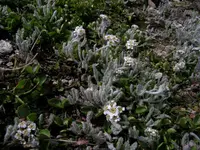
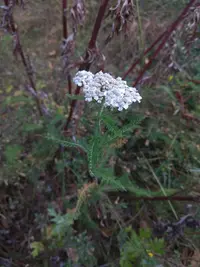
It produces flat-topped clusters of small, creamy white flower heads that are attractive to many pollinating insects, especially in late spring and early summer in cooler climates.

FAQs about Large-leaved Sneezewort

This species spreads slowly by short rhizomes and self-seeding, but it is not usually aggressive. In average garden conditions, it forms clumps that can be managed easily with periodic division and removal of unwanted seedlings.

Grow Healthy Plants with Botan Care

Keep your plants happy and healthy with plant identification, disease detection, and easy care guidance.

Botan plant care app — identify plants on mobile

Explore More Plants