Rock crevice planting
Set plants into shallow rock crevices or between stones so the roots stay cool and anchored while the foliage remains dry and well aerated, which mimics its natural alpine habitat and improves long-term survival.

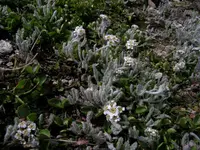
Dwarf milfoil, Achillea nana, is a very low-growing, mat-forming perennial from rocky mountain habitats in southern Europe. It belongs to the yarrow group within the Asteraceae family.
Plants form dense cushions of finely divided, gray-green foliage, with small clusters of cream to pale yellow flower heads held just above the leaves. The compact habit makes it suitable for rock gardens, troughs, and tight sunny spots.
Achillea nana is adapted to harsh, dry, well-drained sites, so it generally prefers full sun, lean mineral soils, and careful watering. Its tolerance of drought and poor soils can make it easier to care for Dwarf Milfoil once established, provided drainage is excellent.

Care Difficulty
Moderate Care

Light Preference
Full Sun

Water Requirements
Low Water

Temperature Preference
Cold Hardy

Hardiness Zone
4–7

Soil Texture
Sandy, Loamy, Rocky

Soil pH
Slightly acidic (6.5–7.0), Slightly alkaline (7.0–7.5)

Soil Drainage
Well-drained

Fertilization
Minimal (feed rarely)
Scan your plant to receive care tips personalized for your specific plant
Available on iOS and Android
This alpine yarrow thrives in strong light and needs abundant direct sun to stay compact and floriferous.
This species prefers dry, well-drained conditions and is highly drought tolerant once established.
This alpine perennial is cold hardy and favors cool, dry conditions with moderate summer warmth.
This alpine yarrow thrives in dry air and does not need elevated humidity.
This species prefers mineral, sharply draining soil that mimics rocky alpine slopes.
This compact alpine is suitable for container growing, especially in rock-garden style pots.
Achillea nana is adapted to lean, rocky soils and needs only light feeding in cultivation, similar to Dwarf Milfoil in low-nutrient aquatic setups.
Achillea nana benefits from light, timed pruning to maintain compact growth and consistent flowering.
This compact yarrow is usually grown in rock gardens or troughs, so focus on careful transplanting rather than frequent repotting.
Achillea nana is commonly propagated by division and seeds in suitable alpine conditions.
Achillea nana is quite cold hardy and usually needs only minimal winter care in well-drained sites.

Plant Health Check
Not sure what's wrong with your plant? Check your plant's health inside the app.
This species is native to the central and eastern Alps, where it often grows in rocky crevices and scree at high elevations above the treeline, adapted to intense sun and strong winds.
The plant forms very low, dense cushions or mats that hug the ground, a growth form that helps reduce moisture loss and protects tissues from cold and mechanical damage in exposed alpine habitats.
Its small, grey‑green, finely divided leaves are covered with tiny hairs that reflect light and reduce water loss, a common adaptation in alpine species but especially noticeable in this dwarf yarrow.

Achillea nana has a very restricted natural distribution compared with many other Achillea species, occurring mainly in localized alpine regions of Italy, Switzerland, and nearby areas, which makes wild populations sensitive to habitat disturbance and climate change.
This species forms tight, slow-moving clumps and is not considered aggressive. It can gently expand over time, but typically stays within its planting area and is easy to keep within rock gardens or small beds.
Keep your plants happy and healthy with plant identification, disease detection, and easy care guidance.