Deadhead In Stages
Remove only the oldest, fully spent flower stalks first and leave younger stalks intact so the plant keeps blooming while still directing some energy back into foliage and roots.

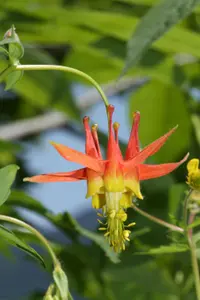
Western columbine (Aquilegia formosa) is a clump-forming perennial wildflower known for its nodding red and yellow, spurred flowers held above delicate, divided foliage. It typically grows in woodlands, meadows, and stream edges across western North America, often in cooler, moist mountain or coastal habitats.
The plant has an airy, informal look and self-seeds lightly, which helps colonies expand without becoming overly aggressive. It attracts hummingbirds and many native pollinators, making it useful in wildlife-friendly gardens.
Aquilegia formosa is generally adaptable and not difficult to grow if given partial sun, consistent moisture, and well-drained soil. For gardeners learning how to care for western columbine, its main needs are cool roots, moderate watering, and protection from intense, dry heat.

Care Difficulty
Moderate Care

Light Preference
Partial Shade

Water Requirements
Moderate Water

Temperature Preference
Cold Hardy

Hardiness Zone
3–9

Soil Texture
Sandy, Loamy, Organic-rich

Soil pH
Acidic (5.5–6.5), Slightly acidic (6.5–7.0)

Soil Drainage
Moist but well-drained

Fertilization
Minimal (feed rarely)
Scan your plant to receive care tips personalized for your specific plant
Available on iOS and Android
This woodland perennial prefers bright conditions with protection from harsh midday sun.
This plant prefers consistently moist but not waterlogged soil, especially during active growth and flowering.
This hardy perennial tolerates a wide temperature range but performs best in cool to mild conditions.
Aquilegia formosa grows well in typical outdoor humidity but benefits from moderately moist air in hot, dry regions.
Aquilegia formosa prefers moist, loose, and well-drained soil that stays cool around the roots.
This species can be grown in containers if moisture and root space are managed carefully.
Aquilegia formosa is a light feeder that benefits from modest nutrition in lean soils.
Pruning helps maintain Aquilegia formosa vigor and encourages longer flowering.
Transplanting is more common than repotting because this species is usually grown in garden beds.
Propagation of Aquilegia formosa is most reliable from seed, with limited division of older clumps.
This species is generally cold hardy and needs minimal winter care in most temperate climates.

Plant Health Check
Not sure what's wrong with your plant? Check your plant's health inside the app.
The long red and yellow spurs of its flowers are adapted to hummingbird beaks and tongues, so in much of its range it is pollinated primarily by native hummingbirds such as Anna’s and rufous hummingbirds.
Unlike some other columbines, this species naturally occurs from moist streambanks and forest edges to comparatively dry open slopes across western North America, showing a broad ecological tolerance to soil moisture.
In areas where it overlaps with other native columbines, such as Aquilegia formosa var. truncata and Aquilegia flavescens, it can form natural hybrids, which has been used by botanists to study speciation and flower color evolution in the genus.

Genetic studies have shown that the red flower color of this species is linked with the evolutionary shift from bee to hummingbird pollination in North American columbines, making it a model organism for understanding how pollinators drive rapid diversification in flowering plants.
Lack of blooms often results from too much shade, excess nitrogen fertilizer, or young plants that are not yet mature. Crowding, heat stress, or very dry soil can also reduce flower production in this species.
Keep your plants happy and healthy with plant identification, disease detection, and easy care guidance.