Stolon management
Mark out the area where you want the patch to stay and cut back or pull any stolons that root outside this boundary once or twice a year to keep the plant from spreading into lawn or beds you want to protect.

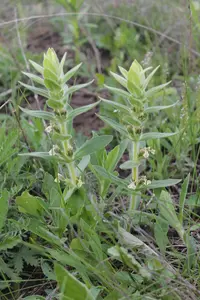
Ajuga laxmannii is a low-growing perennial from the mint family, often used as a groundcover or edging plant. It forms loose clumps or spreading mats with upright flower spikes.
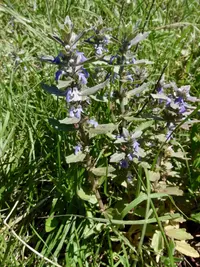
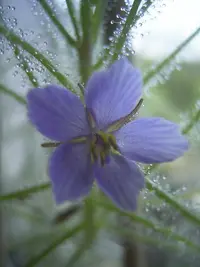
The plant usually has narrow green leaves and soft blue to violet flowers that attract bees and other pollinators. It is native to parts of Eastern Europe and Western Asia, where it grows in open, sunny habitats.
This species is generally considered undemanding, which makes it suitable for beginner gardeners who want to care for Ajuga laxmannii in borders or rock gardens. It prefers sun to light shade, moderately moist but well-drained soil, and tolerates a range of garden conditions when established.

Care Difficulty
Easy Care

Light Preference
Full Sun

Water Requirements
Moderate Water

Temperature Preference
Cold Hardy

Hardiness Zone
4–9

Soil Texture
Sandy, Loamy, Organic-rich

Soil pH
Acidic (5.5–6.5), Slightly acidic (6.5–7.0)

Soil Drainage
Moist but well-drained

Fertilization
Minimal (feed rarely)
Scan your plant to receive care tips personalized for your specific plant
Available on iOS and Android
This low, spreading perennial prefers bright conditions but tolerates some shade.
This groundcover favors consistently moist but not waterlogged soil.
This hardy perennial tolerates a wide temperature range once established.
This species grows well in typical outdoor humidity and rarely needs special adjustment.
Ajuga laxmannii prefers light, free-draining soil that stays evenly moist but not saturated.
This species is suitable for containers, especially for sunny patios or small spaces.
This groundcover needs modest feeding to support dense growth without becoming overly lush.
Pruning keeps this low mat-forming perennial tidy and encourages fresh foliage.
This species is usually grown as a groundcover and more often transplanted in the garden than repotted in containers.
Division is the most reliable method for increasing plants and rejuvenating older patches.
This hardy perennial generally needs minimal winter care in most temperate gardens.

Plant Health Check
Not sure what's wrong with your plant? Check your plant's health inside the app.
This species is naturally found in dry Eurasian steppe and semi-steppe habitats, where it forms low patches among grasses on open, sun-exposed slopes and rocky ground.
Unlike the broader-leaved Ajuga reptans, this species has noticeably narrower, more linear leaves, which likely reflect adaptation to drier, higher-light environments with greater evaporative demand.
It produces taller, more open flowering spikes than many other Ajuga species, with whorls of pale blue to lilac flowers that are spaced out along the stem, giving the inflorescence a more delicate appearance.
This species forms a slowly expanding mat through short stolons, but it is usually not aggressive. In most gardens it spreads in a controlled way, filling gaps between plants without overwhelming sturdier neighbors when managed with light edging.
Keep your plants happy and healthy with plant identification, disease detection, and easy care guidance.