Encourage Bushy Growth
Pinch back soft stem tips in spring when plants reach 10–15 cm tall to promote branching and create a fuller, more compact clump instead of tall, open stems.

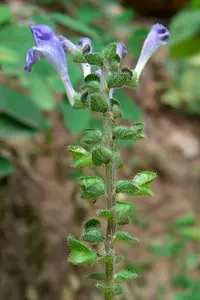
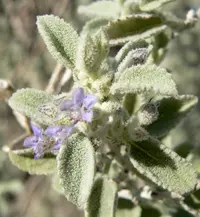
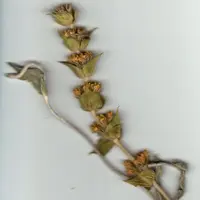
Heartleaf skullcap (Scutellaria ovata) is a perennial herb in the mint family, grown mainly for its soft foliage and late spring to summer flowers. It forms low clumps or patches with heart-shaped leaves and upright stems topped with small, tubular purple to blue blooms.
This species is native to woodlands and rocky slopes in central and eastern North America, where it typically grows in bright shade or light woodland edges. Once established, it tends to be hardy and resilient, which makes it relatively simple to care for heartleaf skullcap.
It generally prefers partial shade, consistently moist but well-drained soil, and protection from extreme heat or drought in exposed sites.

Care Difficulty
Easy Care

Light Preference
Partial Shade

Water Requirements
Moderate Water

Temperature Preference
Cold Hardy

Hardiness Zone
4–8

Soil Texture
Loamy, Silty, Organic-rich

Soil pH
Acidic (5.5–6.5), Slightly acidic (6.5–7.0)

Soil Drainage
Moist but well-drained

Fertilization
Minimal (feed rarely)
Scan your plant to receive care tips personalized for your specific plant
Available on iOS and Android
This shade-tolerant perennial prefers bright, gentle light rather than intense, all-day sun.
This woodland species prefers consistently slightly moist soil that never stays saturated for long.
This hardy perennial is adapted to temperate climates with cool to warm seasons and winter dormancy.
This species adapts well to typical outdoor humidity but benefits from slightly moist air in hot, dry climates.
This species prefers loose, moderately fertile, slightly moist soil that does not stay waterlogged.
This woodland perennial can grow successfully in containers when moisture and drainage are balanced.
This native perennial grows well in average soil and needs only light feeding to stay healthy.
Light, timely pruning keeps Scutellaria ovata compact and flowering well.
This species is usually grown in the ground, so focus on careful transplanting rather than frequent repotting.
Scutellaria ovata is commonly propagated by division, cuttings, or seed under suitable conditions.
This perennial is generally cold hardy in much of its range and needs only simple winter care.

Plant Health Check
Not sure what's wrong with your plant? Check your plant's health inside the app.
The upper lip of the flower forms a distinct hood or helmet, which inspired the common name skullcap and helps guide pollinators like small bees toward the nectar and pollen.
This species is native to rich, rocky woodlands and bluffs in parts of the central and southeastern United States, especially the Ozark region, where it often grows in light shade under deciduous trees.
The leaves have a noticeably cordate, or heart-shaped, base combined with softly hairy surfaces, a feature that distinguishes it from several other North American skullcap species.
This species spreads by rhizomes and self-seeding, forming loose colonies over time. It is usually manageable, not truly aggressive. Edge barriers and occasional thinning of runners help keep clumps within the desired area when growing heartleaf skullcap.
Keep your plants happy and healthy with plant identification, disease detection, and easy care guidance.