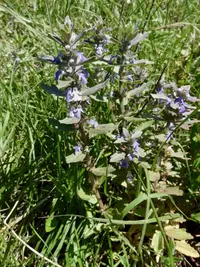
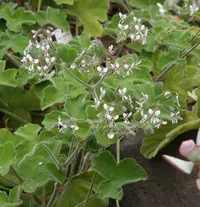
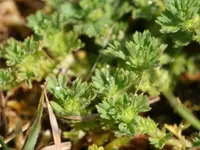
smooth lady's mantle Care (Alchemilla glabra)

smooth lady's mantle

About smooth lady's mantle

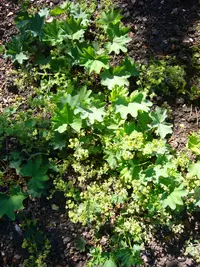
Smooth lady's mantle, Alchemilla glabra, is a compact herbaceous perennial from the rose family, valued mainly for its soft, scalloped foliage. It forms low mounds with rounded, pleated leaves that can collect droplets of water along their surface, creating a distinctive beaded look after rain or dew.

This species is native to parts of Europe and Asia, where it grows in meadows, open woods, and moist slopes. It is generally undemanding and cold-hardy, which makes it suitable for beginners.

Plants tolerate partial shade, cool conditions, and consistently moist but not waterlogged soil. Gardeners who learn how to care for smooth lady's mantle often use it as edging, groundcover, or a soft filler around taller perennials.

Main Plant Requirements

Care Difficulty

Easy Care

Light Preference

Partial Shade

Water Requirements

Moderate Water

Temperature Preference

Cold Hardy

Hardiness Zone

4–8

Soil Texture

Loamy, Silty, Organic-rich

Soil pH

Acidic (5.5–6.5), Slightly acidic (6.5–7.0)

Soil Drainage

Moist but well-drained

Fertilization

Minimal (feed rarely)

Get Personalized Care Plan

Scan your plant to receive care tips personalized for your specific plant

Available on iOS and Android

How to Care for the smooth lady's mantle

This species prefers cool conditions with gentle sun and can tolerate considerable shade in the garden.

  • Provide 3–5 hours of morning sun with light or dappled shade in the afternoon to reduce leaf scorch on smooth lady's mantle.
  • In hot summers, site plants where they receive filtered light under open trees or on the east side of buildings, avoiding intense midday sun.
  • In cooler climates, plants handle more direct sun, but if foliage pales or crisps at the edges, increase shade; if growth becomes floppy, increase light exposure.

This plant prefers evenly moist soil but dislikes waterlogged conditions.

  • Water when the top 2–4 cm of soil feel dry, aiming for soil that stays slightly moist around the roots without standing water.
  • During hot, dry spells, increase watering frequency and consider mulch 3–5 cm deep to reduce evaporation and stabilize moisture for Alchemilla glabra.
  • Watch for wilted, drooping leaves and dry soil as signs of underwatering, and yellowing leaves or a sour soil smell as signs of overwatering and poor drainage.

This hardy perennial tolerates a wide temperature range, with best growth in mild conditions.

  • Optimal growth occurs around 60–75°F (16–24°C), with steady foliage production and flowering in these temperatures.
  • Plants are cold hardy, usually tolerating winters down to about -20°F (-29°C) once established, with foliage naturally dying back and regrowing in spring.
  • In hot regions, growth may slow above 85°F (29°C); provide extra shade and soil moisture during heat waves, and protect young plants from late hard frosts.

This species handles typical outdoor humidity and only needs attention in very dry or very hot conditions.

  • Best performance occurs at roughly 40–70% humidity, similar to many temperate garden perennials.
  • Smooth lady's mantle tolerates brief dry air but may show crisping leaf edges and slower growth if air stays very dry and hot.
  • In prolonged dry spells, group plants and water the surrounding soil lightly in the evening to raise local humidity without soaking foliage.

Alchemilla glabra prefers consistently moist, well-drained, humus-rich soil.

  • Use a loamy mix with 40–60% garden soil, 20–30% compost, and 10–20% coarse sand or grit for structure and drainage.
  • Aim for slightly acidic to neutral pH, around 6.0–7.0, which supports nutrient availability and healthy root function.
  • In heavier clay sites, mix in coarse sand or fine gravel plus compost to improve aeration and reduce waterlogging risk.
  • Avoid compacted, waterlogged, or very sandy soils that dry out quickly, as these stress roots and reduce foliage density.

This species adapts well to container growing when moisture and drainage are carefully managed.

  • Choose a wide, moderately deep pot to allow its clumping, spreading roots to form a stable, even mat.
  • Select a heavier material like ceramic or clay if the container is exposed to wind, as the foliage can make it top-heavy when wet.
  • Raise the container on pot feet or bricks so drainage holes stay clear and excess water exits quickly after rain or irrigation.

This species is modest in its needs, but thoughtful feeding supports healthy foliage and flowering for smooth lady's mantle.

  • Use a balanced, slow-release granular fertilizer or well-rotted compost worked lightly into the topsoil in early spring.
  • Feed once in spring and, if growth is weak, once again in midsummer during the main growing season.
  • Apply at half the label-recommended strength for ornamentals to avoid soft, weak growth.
  • Do not feed in late fall or winter, when the plant is dormant and nutrient demand is low.

Alchemilla glabra responds well to light, timely pruning that keeps the clump dense and flowering well.

  • In late spring to midsummer, shear back spent flower stems to encourage fresher foliage and a tidier shape.
  • Remove dead, damaged, or diseased leaves whenever noticed, using clean, sharp scissors or hand pruners.
  • Thin out congested centers in mature clumps to improve air flow and reduce foliar disease risk.
  • In late fall, cut back browned foliage near ground level, leaving emerging buds undisturbed.

This plant is most often grown in the ground, so care focuses on dividing and transplanting established clumps rather than frequent repotting.

  • Transplant or divide every 3–5 years in early spring or early fall, when temperatures are mild.
  • Look for crowded clumps, bare centers, or reduced flowering as signs the plant benefits from lifting and replanting.
  • Lift the root mass carefully with a spade, gently tease or cut divisions with several buds and healthy roots.
  • Replant divisions at the original depth, water thoroughly, and shade lightly for 3–7 days to limit transplant shock.

This species is commonly propagated by division, with seed also possible for larger-scale planting.

  • Divide mature clumps in early spring or early fall, when soil is moist and temperatures are cool to moderate.
  • Use a sharp spade or knife to split the root mass into sections, each with several shoots and firm roots.
  • Replant divisions immediately into prepared soil, keep evenly moist, and avoid waterlogging while new roots establish.
  • For seed, sow fresh seed on the soil surface in autumn or late winter outdoors, allowing natural cold exposure to aid germination.

Alchemilla glabra is generally cold hardy in temperate gardens and needs only minimal winter attention.

  • Leave foliage to die back naturally, then remove collapsed leaves in late fall or early spring to reduce disease carryover.
  • Apply a light 3–5 cm mulch after the ground cools to insulate the root zone, keeping mulch away from crowns.
  • Container-grown plants in colder regions can be moved into a sheltered, unheated spot to reduce freeze–thaw stress.

Care Tips

Edge containment

Install a shallow root barrier or edging strip 10–15 cm deep along borders to stop the clump from creeping into lawns or neighboring perennials while still allowing natural mound formation.

Flower removal timing

Shear off spent flower stems just as the first seed heads begin to turn brown to prevent unwanted self-seeding and to push the plant to invest energy into fresh foliage rather than scattered seedlings.

Rainwater display

Site plants where you can view them from above on a slight slope or raised bed so the leaf surfaces can clearly display water droplets, which is a distinctive feature people enjoy when caring for smooth lady's mantle.

Mulch management

Use a light, fine-textured mulch layer around but not over the crowns to suppress weeds and keep soil evenly cool, then pull mulch back slightly in late winter to avoid rotting new growth points.

Clump renovation

Every 3–4 years, lift and divide congested clumps in early spring, discarding woody centers and replanting only fresh outer sections so plants regain a dense, uniform mound with good flowering.

Common Pests and Diseases

Rust

This disease causes yellow to orange spots on upper leaf surfaces with rusty pustules on the undersides, often appearing in cool, moist conditions.

Solution

Remove and discard affected leaves, avoid overhead watering, and increase spacing or airflow around plants; if rust persists, apply a sulfur or copper-based fungicide labeled for ornamental perennials according to package directions.

Powdery mildew

This disease shows as white, powdery patches on leaves, especially in crowded plantings with poor air circulation or when nights are cool and days are warm.

Solution

Thin or divide dense clumps to improve airflow, water at soil level in the morning, remove heavily infected leaves, and use a horticultural oil or potassium bicarbonate spray labeled for powdery mildew if needed.

Leaf spot

Symptoms include small brown to purple spots on leaves that may merge into larger patches, often encouraged by prolonged leaf wetness and mild temperatures.

Solution

Cut off and dispose of spotted foliage, water early in the day at ground level, clean up fallen leaves in autumn, and in recurring cases use a preventive fungicide suitable for perennials at the start of the growing season.

Aphids

These insects cluster on young shoots and flower stems, sucking sap and causing curling or distortion of new growth and sticky honeydew on leaves.

Solution

Wash colonies off with a strong but controlled stream of water, encourage natural predators like lady beetles, and if populations stay high use an insecticidal soap or neem oil spray, ensuring full coverage of stems and leaf undersides.

Slugs and snails

This pest feeds on tender foliage, leaving irregular holes and slime trails, especially in shaded, moist sites and dense plantings.

Solution

Hand-pick in the evening or early morning, reduce hiding places such as thick mulch against crowns, use iron phosphate slug baits where damage is severe, and consider copper barriers around high-value plantings to limit access.

Interesting Facts

Central European specialist

This species has a mainly Central and Eastern European distribution, where it grows in cool, moist habitats such as mountain meadows, forest edges, and stream banks, often at higher elevations than many other lady’s mantle species.

Exceptionally smooth foliage

Unlike the more common, softly hairy Alchemilla species, this plant has notably smoother, less hairy leaves, a trait that helps distinguish it in the field and is reflected in its species name glabra, meaning smooth or hairless.

Narrow ecological niche

It tends to occur in relatively undisturbed, species-rich grasslands and light woodland clearings, and is considered more habitat-specific than several related Alchemilla species that tolerate a wider range of soil and disturbance conditions.

FAQs about smooth lady's mantle

Lack of flowers usually comes from too little light, excessive shade, or heavy, nutrient-poor soil. Overgrown clumps also flower less. Divide every few years and deadhead spent blooms to keep energy going into new flower production.

Grow Healthy Plants with Botan Care

Keep your plants happy and healthy with plant identification, disease detection, and easy care guidance.

Botan plant care app — identify plants on mobile

Explore More Plants