Sturdy staking method
Install a strong stake or pea netting on the windy side of young plants and loosely tie stems with soft, wide ties at 20–30 cm intervals to prevent snapping during summer storms.

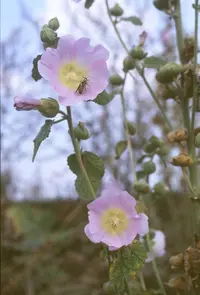
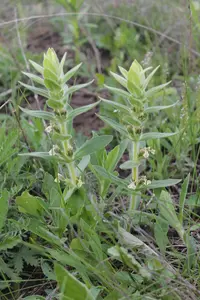
Pale hollyhock, Alcea biennis, is a short-lived perennial or biennial from the mallow family, grown mainly for its tall flower spikes. It typically forms a leafy rosette in the first year, then sends up upright stems with soft pale pink to creamy white blooms in the second year.
This species is native to parts of central and eastern Europe, where it grows in open fields, roadsides, and other sunny, disturbed sites. It is generally straightforward to grow, as long as it receives good light and well-drained soil, which makes it suitable for informal borders and cottage-style plantings.
Those learning how to care for Pale Hollyhock usually find its main demands are sun exposure, space for its tall habit, and protection from strong winds that can bend the stems.

Care Difficulty
Moderate Care

Light Preference
Full Sun

Water Requirements
Moderate Water

Temperature Preference
Cold Hardy

Hardiness Zone
4–8

Soil Texture
Sandy, Loamy, Clay

Soil pH
Slightly acidic (6.5–7.0), Neutral (7.0)

Soil Drainage
Well-drained

Fertilization
Minimal (feed rarely)
Scan your plant to receive care tips personalized for your specific plant
Available on iOS and Android
Alcea biennis performs best in bright, direct outdoor sun with some protection from extreme afternoon heat.
Alcea biennis prefers evenly moist, well-drained soil and does not tolerate waterlogged conditions.
This species is a hardy outdoor perennial that tolerates a wide temperature range once established.
Humidity is rarely critical for Alcea biennis, which adapts well to typical outdoor air conditions in temperate climates.
Alcea biennis grows best in moderately fertile, well-structured mineral soil with steady drainage.
This tall, deep-rooting species is only moderately suitable for containers and needs careful setup to stay stable and healthy.
Alcea biennis benefits from modest feeding in nutrient-poor soils during its active growth period.
Alcea biennis benefits from light, well-timed pruning to maintain vigor and tidy shape.
This species is more often transplanted in garden beds than grown long term in containers.
Alcea biennis is most commonly propagated from seed, which allows easy renewal of garden plantings.
This hardy perennial generally withstands typical winter conditions in its suitable climate zones without complex care.

Plant Health Check
Not sure what's wrong with your plant? Check your plant's health inside the app.
Alcea biennis typically completes its life cycle in 2 years, forming a basal rosette in the first year and sending up a tall flowering stem in the second before dying after seed set.
This species produces mostly pale yellow, sometimes whitish, open funnel-shaped flowers that form along the upper part of the stem, giving a softer and less gaudy appearance than many cultivated hollyhocks.
In its native range of southeastern and central Europe, this species is characteristic of dry grasslands, steppe edges, and light, disturbed soils, reflecting a clear adaptation to low-nutrient, relatively arid sites.
Lack of flowering usually comes from insufficient sun, poor soil fertility, or plants still in their first year. Overcrowding and heavy nitrogen fertiliser can also reduce buds. Deadhead spent flowers and maintain moderate nutrition to support next season’s display.
Keep your plants happy and healthy with plant identification, disease detection, and easy care guidance.