Use sturdy supports
Install a strong post-and-wire or fence support system before plants mature, then tie in new canes loosely with soft ties to keep the arching growth upright, well-spaced, and easier to manage.

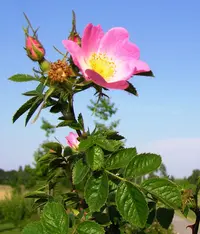
Sweet-briar, Rosa rubiginosa, is a hardy deciduous shrub rose known for its fragrant, apple-scented foliage and simple pink flowers. It forms a dense, arching thicket with thorny stems and small bright hips.
This species is native to Europe and western Asia and has naturalized in many temperate regions, including parts of North America. It tends to be vigorous and can spread, especially in open, sunny sites.
The plant is generally easy to grow, provided it receives good light, well-drained soil, and moderate moisture. Understanding how to care for Sweet-briar helps keep it healthy while managing its tendency to become invasive in suitable climates.

Care Difficulty
Easy Care

Light Preference
Full Sun

Water Requirements
Moderate Water

Temperature Preference
Cold Hardy

Hardiness Zone
4–9

Soil Texture
Sandy, Loamy, Clay

Soil pH
Acidic (5.5–6.5), Slightly acidic (6.5–7.0)

Soil Drainage
Well-drained

Fertilization
Minimal (feed rarely)
Scan your plant to receive care tips personalized for your specific plant
Available on iOS and Android
This rose prefers abundant direct sun for strong flowering and healthy growth.
This species prefers evenly moist, well-drained soil rather than frequent shallow watering.
This hardy rose tolerates a wide temperature range but grows best in moderate conditions.
Rosa rubiginosa tolerates a wide humidity range and rarely needs special humidity management outdoors.
Rosa rubiginosa performs best in loose, well-drained mineral soils that do not stay waterlogged.
This species can be grown in containers, though it is more demanding than many compact shrubs.
Rosa rubiginosa is adapted to lean soils and usually needs only modest feeding in gardens.
Rosa rubiginosa responds well to thoughtful pruning that maintains an open, flowering shrub.
Sweet-briar is usually grown in the ground and is transplanted rather than kept long-term in containers.
Rosa rubiginosa is most commonly propagated from seeds or semi-ripe cuttings.
Rosa rubiginosa is generally cold hardy in temperate climates and needs only light winter care in the ground.

Plant Health Check
Not sure what's wrong with your plant? Check your plant's health inside the app.
The leaves of this species release a distinct apple-like fragrance when crushed or on warm, humid days, due to volatile aromatic compounds on the leaf surface.
Its bright red rose hips are notably rich in vitamin C and other antioxidants, which has led to their traditional use in teas, syrups, and jams in several European regions.
This wild rose easily crosses with other Rosa species, and its genetic influence is present in several old garden roses, contributing fragrance and cold hardiness.

In parts of the Southern Hemisphere, especially in New Zealand and southern Australia, this species is considered an invasive weed because it forms dense, thorny thickets that outcompete native vegetation and alter grazing land.
This species spreads freely by seed and suckering roots. In suitable climates it can form dense thickets and outcompete other plants. Regular pruning, deadheading hips, and removing unwanted shoots helps keep it in bounds in gardens.
Keep your plants happy and healthy with plant identification, disease detection, and easy care guidance.