Mark Dormant Clumps
Flag or label clumps in late spring before foliage dies back so you do not disturb or accidentally dig them up during summer or fall soil work.

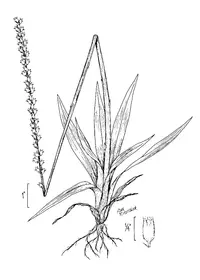
Golden colicroot, Aletris aurea, is a small perennial wildflower in the Nartheciaceae family, known for its upright flower spikes and grass-like leaves. It typically forms modest clumps, sending up slender stems topped with densely packed, yellow, bottlebrush-like flowers.
This species is native to the southeastern United States, where it grows in open, sunny, acidic wetlands and moist pine savannas. It can be challenging to keep alive in typical garden beds because it dislikes disturbance, prefers consistently moist, low-nutrient, sandy or peaty soils, and resents drying out.
Gardeners who want to learn how to care for golden colicroot should focus on mimicking its natural habitat with bright light, steady moisture, and sharply draining but humus-rich soil.

Care Difficulty
Moderate Care

Light Preference
Full Sun

Water Requirements
Moderate Water

Temperature Preference
Warm Climate

Hardiness Zone
7–9

Soil Texture
Sandy, Loamy, Organic-rich

Soil pH
Acidic (5.5–6.5)

Soil Drainage
Moist but well-drained

Fertilization
Minimal (feed rarely)
Scan your plant to receive care tips personalized for your specific plant
Available on iOS and Android
Aletris aurea prefers open, sunny habitats but tolerates some light shade in warm climates.
Aletris aurea prefers steadily moist, sharply drained soil that never stays soggy.
This species is adapted to warm temperate to subtropical climates with mild winters.
Aletris aurea tolerates a wide humidity range and usually does not need special humidity control in typical home or outdoor conditions.
Aletris aurea prefers lean, sandy, sharply drained soil that does not stay wet around the roots.
This species can be grown in containers if its deep, well-drained root needs are met.
This nutrient-efficient native herb needs very light feeding, especially when grown in natural, lean soils.
Aletris aurea needs only minimal pruning to stay healthy and does not require shaping.
This species is usually grown in the ground, where it dislikes disturbance and prefers infrequent transplanting.
Aletris aurea is most often propagated from seed, but the process is slow and needs patience.
This perennial is reasonably cold hardy in much of its native range and usually needs only light winter attention outdoors.

Plant Health Check
Not sure what's wrong with your plant? Check your plant's health inside the app.
Aletris aurea is native to the coastal plain of the southeastern United States, where it is closely associated with open pine savannas and sandy, periodically wet flatwoods.
The plant produces a narrow, upright spike of densely packed, golden-yellow flowers that gives the impression of a thin wand, which is the basis for its common name golden colicroot.
This species thrives in acidic, nutrient-poor, sandy or peaty soils and can persist in habitats that are often too infertile for many competing herbaceous plants.

Aletris aurea is considered a fire-adapted species in many of its native habitats, benefiting from periodic burns that maintain the open, sunny conditions and reduced competition it needs to survive and reproduce.
This species forms small, clumping rosettes and slowly expands from short rhizomes. It does not run or self-seed aggressively and is unlikely to overwhelm nearby plants under normal garden conditions when given an appropriate, well-drained site.
Keep your plants happy and healthy with plant identification, disease detection, and easy care guidance.