Mark bulb clusters
After flowering, place small tags or discreet stones where clumps performed best so you can lift, divide, or re-space the dormant bulbs accurately in late summer without disturbing other plantings.

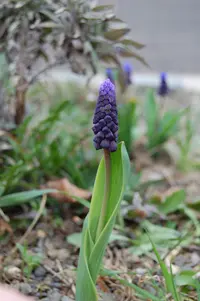
Broad-leaved grape-hyacinth (Muscari latifolium) is a small spring-flowering bulb, valued for its dense spikes of deep blue, urn-shaped flowers. It forms compact clumps of broad, strap-like leaves that emerge early, then die back after flowering as the bulb rests underground.
This species is native to rocky slopes and woodland edges in parts of Turkey and nearby regions, so it copes well with cold winters and relatively dry summers. Its hardy nature and reliable blooming make it suitable for borders, rock gardens, and naturalized plantings. Once established, it needs little attention, so learning how to care for Broad-leaved Grape-hyacinth is straightforward for most home gardeners.
It prefers sun to light shade, moderately moist but well-drained soil, and benefits from being left undisturbed for several years.

Care Difficulty
Easy Care

Light Preference
Full Sun

Water Requirements
Moderate Water

Temperature Preference
Cold Hardy

Hardiness Zone
4–8

Soil Texture
Sandy, Loamy, Organic-rich

Soil pH
Acidic (5.5–6.5), Slightly acidic (6.5–7.0)

Soil Drainage
Well-drained

Fertilization
Minimal (feed rarely)
Scan your plant to receive care tips personalized for your specific plant
Available on iOS and Android
Muscari latifolium prefers bright conditions and flowers best with consistent direct light during the growing season.
This bulb prefers evenly moist, well-drained soil during active growth, then drier conditions after flowering.
This hardy spring bulb is adapted to cool winters and mild springs, with strong tolerance of seasonal outdoor conditions.
Humidity is not a key factor for Muscari latifolium, which handles typical home and outdoor air well.
Muscari latifolium bulbs need loose, well-aerated mineral soil that sheds excess water quickly.
This species suits container growing when the pot is set up to drain rapidly and keep bulbs cool and relatively dry in dormancy.
Muscari latifolium needs only light feeding because the bulbs store most nutrients needed for flowering.
Muscari latifolium needs minimal pruning, focused on tidying foliage and supporting bulb health.
This bulb is usually grown in the ground, so focus on lifting and transplanting crowded clumps rather than frequent repotting.
This bulb is most commonly propagated by division, with seed used mainly for naturalizing or breeding work.
This hardy bulb tolerates typical winters in most temperate climates and usually needs little special attention.

Plant Health Check
Not sure what's wrong with your plant? Check your plant's health inside the app.
This species naturally produces bicolored flower spikes, with a dense cluster of dark violet, almost black fertile flowers at the base and a ring of paler blue sterile flowers near the top, giving a distinct two-layered appearance compared with other grape hyacinths.
Muscari latifolium is native to montane and submontane regions of Turkey, where it grows in open pine woods and rocky clearings, making it more tolerant of dry, stony soils than many commonly grown bulb species.
In suitable climates this species forms stable, slowly expanding clumps rather than aggressively spreading, so it can be used to naturalize in lawns, under light woodland, or in rock gardens without usually becoming invasive.

This species was only formally described in the 1970s, yet it rapidly became popular in horticulture because its distinct bicolored flower spikes are rare among spring-flowering bulbs and provide a strong vertical accent in mixed plantings.
This species flowers in early to mid spring, often shortly after crocuses. Individual flower spikes usually look good for about 2–3 weeks, depending on temperature, soil moisture, and wind exposure.
Keep your plants happy and healthy with plant identification, disease detection, and easy care guidance.