Mark dormancy pot
When the leaf collapses at the end of the season, label the pot clearly with the species name and last watering date so you do not accidentally discard the dormant tuber or water it heavily while it is leafless.


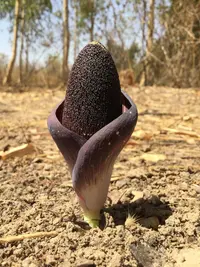
Amorphophallus kiusianus is a tuber-forming aroid, related to the better-known voodoo lilies. It produces a single, umbrella-like leaf on a mottled, fleshy stem each growing season. The inflorescence is striking, with a tall central spadix surrounded by a spathe, and appears from the underground tuber during its active period. This species is native to parts of East Asia, where it grows in woodland or lightly shaded habitats.
It has a marked dormant phase when the tuber rests leafless, which can be confusing for beginners. Once that cycle is understood, it is not especially difficult to grow. Those who want to care for Amorphophallus kiusianus should provide well-drained, humus-rich soil, moderate moisture, and bright shade or filtered light.

Care Difficulty
Moderate Care

Light Preference
Partial Shade

Water Requirements
Regular Water

Temperature Preference
Warm Climate

Hardiness Zone
8–11

Soil Texture
Loamy, Sandy, Organic-rich

Soil pH
Acidic (5.5–6.5), Slightly acidic (6.5–7.0)

Soil Drainage
Moist but well-drained

Fertilization
Light (every 4–6 weeks)
Scan your plant to receive care tips personalized for your specific plant
Available on iOS and Android
This species prefers bright, indirect sun with some protection from strong midday rays.
Watering should keep the soil evenly moist during the growing season, then much drier in dormancy.
Temperature needs shift between the active growing season and the dormant period.
This species tolerates typical indoor humidity but benefits from slightly moist air in active growth.
Prepare a loose, draining mix that protects the tuber from waterlogging yet retains moderate moisture.
This species grows reliably in containers when the pot is sized and shaped for its tuberous root system.
This tuberous aroid benefits from light, targeted feeding during its active growing season.
Pruning needs for this species are minimal and focus on cleanliness rather than shaping.
This plant forms a tuber that benefits from periodic repotting or transplanting to maintain vigor.
Propagation relies mainly on dividing tubers or offsets rather than stems or leaf cuttings.
This species is not strongly frost hardy and needs attention to its dormant tuber in cold climates.

Plant Health Check
Not sure what's wrong with your plant? Check your plant's health inside the app.
This species is naturally restricted to parts of southern Japan, especially Kyushu and nearby islands, where it grows in deciduous woodland and forest edges on rich, well-drained soils.
Compared with its giant relative Amorphophallus titanum, it produces a much slimmer spadix and a narrow, often dark purple spathe, with a mottled, snake-like petiole that helps it blend into the forest undergrowth.
The plant grows from an underground tuber that sends up foliage and a flower in the warm season, then dies back completely above ground in autumn, surviving winter only as the dormant tuber.
This species usually blooms in late spring to early summer, often before or as leaves emerge. A single, tall inflorescence appears from the tuber and typically flowers once per year, not continuously through the season.
Keep your plants happy and healthy with plant identification, disease detection, and easy care guidance.