Lifting For Dormancy
At the end of the growing season, lift the bulb from outdoor beds, brush off soil, and store it in a dry, airy crate or mesh bag at 50–60°F to prevent rot during the dry rest period.

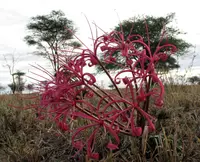
Ammocharis tinneana is a bulb-forming perennial from arid and semi-arid regions of southern Africa. It produces thick, tunic-covered bulbs and wide, twisted leaves that often sprawl flat across the soil surface. In season, it sends up tall stalks with clusters of starry, fragrant pink to reddish flowers, giving it a striking, architectural look in pots or rock gardens.
This species is adapted to strong light, dry rests, and well-drained, gritty soil, which makes it suitable for experienced growers or patient beginners who enjoy bulbs. Understanding how to care for Ammocharis tinneana mainly involves respecting its rest period and avoiding excess moisture when it is not actively in leaf.

Care Difficulty
Moderate Care

Light Preference
Full Sun

Water Requirements
Low Water

Temperature Preference
Tropical / Frost Sensitive

Hardiness Zone
10–11

Soil Texture
Sandy, Loamy, Rocky

Soil pH
Slightly acidic (6.5–7.0), Neutral (7.0)

Soil Drainage
Well-drained

Fertilization
Minimal (feed rarely)
Scan your plant to receive care tips personalized for your specific plant
Available on iOS and Android
This bulb thrives in strong light typical of open, dry habitats.
This species prefers a drier rhythm with distinct wet and dry phases.
This plant is adapted to warm, dry climates with mild winters.
This bulb tolerates typical indoor humidity and usually does not need special moisture in the air.
Ammocharis tinneana prefers a fast-draining, sandy mineral substrate that prevents water from sitting around the bulb.
This species is suitable for container growing when the bulb is kept shallow in a wide, stable pot.
This bulb grows well in lean, sandy soil and needs only light feeding to support flowering.
This species needs only minimal pruning focused on hygiene and bulb health rather than shaping.
Container-grown bulbs prefer to stay slightly crowded and are moved only when growth or drainage suffer.
This bulb is usually propagated by offsets or seed, but both methods are relatively slow.
This South African bulb is not fully hardy in cold climates and benefits from dry, frost-free winter conditions.

Plant Health Check
Not sure what's wrong with your plant? Check your plant's health inside the app.
This bulb species is native to arid regions of northeastern Africa and often remains dormant underground until substantial seasonal rains trigger leaf and flower growth.
The plant forms a flat rosette of broad, often wavy leaves pressed close to the soil surface, an adaptation that helps reduce water loss and withstand strong dry winds.
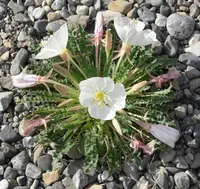
Its pale pink to whitish funnel-shaped flowers open in loose clusters and release a stronger scent at dusk, which is interpreted as an adaptation to attract nocturnal pollinators such as moths.

The bulbs of this species can sit partly above the soil surface and survive long droughts by storing water and nutrients, allowing the plant to resprout and flower again even after several seasons of harsh, dry conditions.
This bulb usually flowers in summer after a dry rest, often producing a single flush of large, fragrant blooms. In suitable warm, dry-summer climates, it can rebloom in following years from the same bulb.
Keep your plants happy and healthy with plant identification, disease detection, and easy care guidance.