


Dormancy timing
Mark the calendar when foliage yellows and collapses, then store the dry tuber for 3–4 months in a breathable box with barely moist peat or coco coir so it does not shrivel during dormancy.

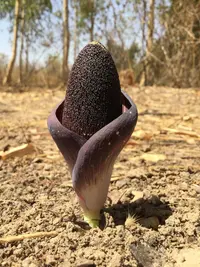
Amorphophallus aphyllus is a tuber-forming aroid known for sending up a single, mottled leaf and, at maturity, a striking, sometimes foul-scented flower spike. It grows seasonally, with the leaf and inflorescence emerging from an underground tuber and then dying back to a dormant rest period.
This species is native to parts of Africa, where it occurs in warm, seasonal habitats with well-drained soils. It can be challenging for beginners because it demands a clear dry rest, careful watering, and protection from cold. Those learning how to care for Amorphophallus aphyllus should focus on warm temperatures, bright but indirect light, and a loose, fast-draining potting mix.

Care Difficulty
Hard Care

Light Preference
Partial Shade

Water Requirements
Keep Soil Moist

Temperature Preference
Tropical / Frost Sensitive

Hardiness Zone
10–11

Soil Texture
Loamy, Silty, Organic-rich

Soil pH
Acidic (5.5–6.5), Slightly acidic (6.5–7.0)

Soil Drainage
Moist but well-drained

Fertilization
Light (every 4–6 weeks)
Scan your plant to receive care tips personalized for your specific plant
Available on iOS and Android
This species prefers bright, indirect light that mimics a lightly shaded forest floor.
Watering should keep the soil evenly moist in leaf, then much drier in dormancy.
Stable warm conditions are important for healthy growth and tuber development.
This species prefers moderately humid air but usually copes with typical indoor levels.
Provide a loose, fast-draining, organic-rich mix that dries slightly between waterings.
This species is well suited to container growing when the pot is chosen to support its large underground tuber.
This tuberous aroid benefits from modest, targeted feeding during its active growth phase.
Pruning needs for Amorphophallus aphyllus are minimal and mainly hygienic.
This species is typically grown from a tuber that benefits from periodic repotting into fresh, well-drained medium.
Most home propagation of this plant relies on vegetative increase from the tuber rather than seed.
This tropical tuber is not frost hardy and needs controlled cool, dry dormancy in winter.

Plant Health Check
Not sure what's wrong with your plant? Check your plant's health inside the app.
This species is native to lowland rainforests of Cameroon, where it grows on shaded forest floor soils rich in decaying organic matter, rather than in open or montane habitats documented for some related species.
The plant produces one large, divided leaf from its underground tuber during the growing season, then sheds it completely and enters dormancy, leaving no above-ground parts visible for several months.
Its underground storage organ is a depressed-globose tuber with clearly marked bud zones, an adaptation that allows rapid re-sprouting when favorable moisture and temperature conditions return.
This species normally produces a single flowering event per growing season from each tuber, followed by one leaf. After bloom, it focuses on rebuilding the tuber. Multiple blooms in one year from the same tuber are uncommon.
Keep your plants happy and healthy with plant identification, disease detection, and easy care guidance.

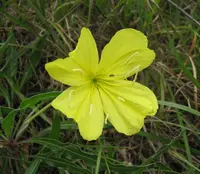
bigfruit evening primrose
Oenothera macrocarpa
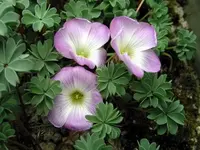
silver shamrock
Oxalis adenophylla
 POPULAR
False Shamrock
Oxalis triangularis

beach evening primrose
Oenothera drummondii
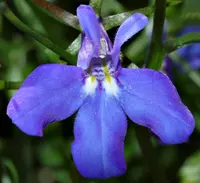
Trailing Lobelia
Lobelia erinus
Malgas Lily
Ammocharis longifolia
Large-flowered Evening-primrose
Oenothera glazioviana

Good Luck Plant
Oxalis tetraphylla 'Iron Cross'