Bulb crowding strategy
Plant bulbs fairly close together, with only 2–3 cm between them, because slight crowding encourages better flowering and makes lifting and dividing easier after several years.

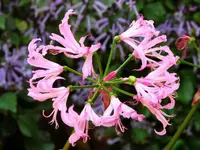
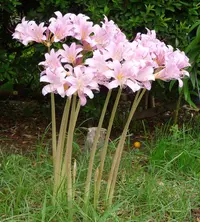
Cornish lily (Nerine bowdenii) is a bulb-forming perennial grown mainly for its late-season flowers. It sends up slender, leafless stems topped with clusters of pink, ribbon-like blooms. Foliage usually appears before or after flowering, giving the plant a neat, compact look in borders or containers.
This species originates from South Africa, where it grows in rocky, well-drained sites with dry summers and wetter, cooler seasons. It prefers bright light, moderate watering, and gritty soil that never stays waterlogged. These traits make it relatively undemanding if drainage is good and help explain how to care for Cornish lily in temperate gardens or as a pot plant.

Care Difficulty
Moderate Care

Light Preference
Full Sun

Water Requirements
Moderate Water

Temperature Preference
Cool Climate

Hardiness Zone
6–10

Soil Texture
Sandy, Loamy, Organic-rich

Soil pH
Slightly acidic (6.5–7.0), Neutral (7.0)

Soil Drainage
Well-drained

Fertilization
Light (every 4–6 weeks)
Scan your plant to receive care tips personalized for your specific plant
Available on iOS and Android
Nerine bowdenii flowers best in bright, direct sun with only light shade in hotter regions.
Watering for Nerine bowdenii should follow its seasonal growth cycle and bulb dormancy.
This bulb prefers cool to mild conditions, with protection from severe frost and extreme heat.
Humidity is a minor factor for Nerine bowdenii, which copes well with average indoor and outdoor levels.
Nerine bowdenii prefers lean, sharply drained soil that never stays waterlogged.
This species grows well in containers when drainage and bulb positioning are managed carefully.
Nerine bowdenii benefits from modest feeding to support flowering while keeping growth compact.
Nerine bowdenii needs minimal pruning, focused on spent flowers and fading foliage.
Nerine bowdenii prefers to stay relatively undisturbed, so transplant or repot only when necessary.
Nerine bowdenii is most commonly propagated by bulb division, with seeds used mainly for patient growers and breeding.
Nerine bowdenii is moderately hardy but benefits from simple winter protection in colder regions.

Plant Health Check
Not sure what's wrong with your plant? Check your plant's health inside the app.
This species flowers in early to mid autumn, often after its leaves have died back for summer, so the bright pink flower clusters appear on bare stems with no foliage.
Although the genus Nerine is native to South Africa, Nerine bowdenii is believed to be of hybrid garden origin, first selected and distributed from cultivated plants in the early 20th century rather than discovered in true wild populations.
Compared with many other Nerine species, this one is notably tolerant of cold and can survive winter temperatures down to about 5°F with good drainage and mulching, which makes Nerine bowdenii care suitable for temperate outdoor gardens.

In the United Kingdom, this species has received the Royal Horticultural Society Award of Garden Merit, which recognizes plants that perform reliably and ornamentally under typical garden conditions without requiring specialized techniques.
Lack of flowers usually comes from insufficient summer light, overcrowded bulbs, or removing foliage too early. Allow leaves to die back naturally, avoid disturbing clumps too often, and provide a dry rest period to support future blooms.
Keep your plants happy and healthy with plant identification, disease detection, and easy care guidance.