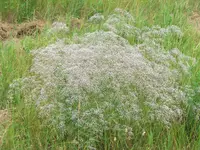
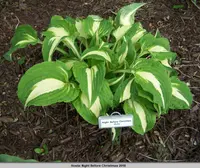
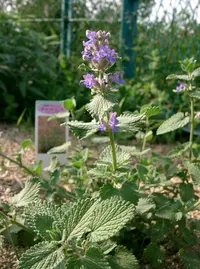
Staggered clump division
Divide mature clumps every 5–7 years in early spring, replanting only the healthiest outer sections and discarding woody, congested centers to maintain vigorous new growth and reduce disease pressure.

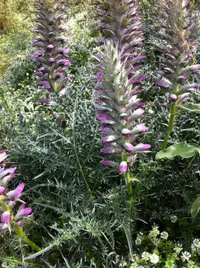
Acanthus spinosus, commonly called spiny bear’s breeches, is a clump-forming perennial grown mainly for its bold, architectural foliage and tall flower spikes. It forms deep green, glossy leaves with sharply spined lobes that create a strong, sculptural look in borders. In summer it sends up vertical stems topped with white and purple hooded flowers, giving a striking, upright accent in mixed plantings. This species is native to the Mediterranean region, where it grows in sunny, dry, rocky places. Once established, it is relatively drought-tolerant but resents heavy, waterlogged soil. Gardeners who understand how to care for Acanthus spinosus usually find it long-lived and reliable, though it can spread slowly by roots in suitable conditions.

Care Difficulty
Moderate Care

Light Preference
Partial Sun

Water Requirements
Moderate Water

Temperature Preference
Cool Climate

Hardiness Zone
5–9

Soil Texture
Sandy, Loamy, Clay

Soil pH
Slightly acidic (6.5–7.0), Slightly alkaline (7.0–7.5)

Soil Drainage
Moist but well-drained

Fertilization
Minimal (feed rarely)
Scan your plant to receive care tips personalized for your specific plant
Available on iOS and Android
This perennial prefers bright conditions with some protection from intense midday sun.
This plant prefers evenly moist but not waterlogged soil, especially during active growth.
This species is a hardy perennial that copes with a range of outdoor temperatures when established.
Humidity is rarely a concern for Acanthus spinosus in most home and garden conditions.
Soil preparation matters more than watering frequency for this species.
This species can be grown in containers if the pot is large and stable enough for its vigorous root system.
This drought-tolerant perennial benefits from modest, targeted feeding rather than heavy fertilization.
Pruning supports neat appearance, healthy foliage, and reliable flowering.
This deep-rooted perennial is usually grown in the ground and dislikes frequent disturbance.
New plants are most commonly produced by division or root cuttings rather than seed.
This perennial is fairly cold hardy but benefits from simple measures in colder regions.

Plant Health Check
Not sure what's wrong with your plant? Check your plant's health inside the app.
The deeply cut, spiny leaves of this species are believed to be the model for the stylized foliage in classical Corinthian capitals used in ancient Greek and Roman architecture.
This perennial forms dense, slowly spreading clumps with thick, fleshy roots that store carbohydrates, which helps the plant survive seasonal drought and summer heat in its native eastern Mediterranean habitat.
Its tall flower spikes carry white to pale pink flowers enclosed in purple, sharply spined bracts, which deter herbivores while still allowing pollinating insects to access the nectar.

In some parts of its native range, this species can persist for decades at abandoned garden sites because its robust root system resprouts from small leftover fragments even after the aboveground growth has been repeatedly removed.
This species spreads steadily by underground rhizomes, forming large clumps over time. It can become dominant in favorable conditions, so install root barriers or divide and remove unwanted shoots regularly if space is limited.
Keep your plants happy and healthy with plant identification, disease detection, and easy care guidance.