Edge Spill Control
Plant 20–30 cm back from path or bed edges and lightly trim only the front-facing stems after flowering to keep the mound neat without reducing overall bloom display.

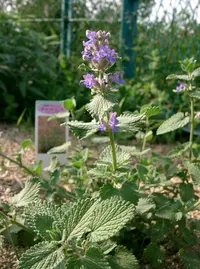
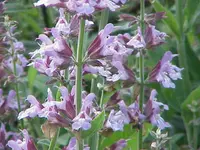
Faassen's catnip, Nepeta × faassenii, is a compact, perennial herb grown mainly for its soft gray-green foliage and long-lasting lavender-blue flowers. It forms low, spreading mounds that work well at the front of borders, along paths, or in rock gardens.
This hybrid does not occur naturally in the wild; it is a garden-bred plant derived from Nepeta species from dry, sunny regions of Europe and Asia. It is valued for being tough, drought-tolerant once established, and generally resistant to pests and diseases, which makes it simple to care for faassen's catnip.
It prefers full sun, well-drained soil, and moderate moisture, and it rebounds well from trimming after flowering.

Care Difficulty
Easy Care

Light Preference
Full Sun

Water Requirements
Low Water

Temperature Preference
Cold Hardy

Hardiness Zone
4–9

Soil Texture
Sandy, Loamy, Rocky

Soil pH
Slightly acidic (6.5–7.0), Slightly alkaline (7.0–7.5)

Soil Drainage
Well-drained

Fertilization
Minimal (feed rarely)
Scan your plant to receive care tips personalized for your specific plant
Available on iOS and Android
Nepeta × faassenii thrives in bright conditions and produces best flowering with plenty of direct sun.
This drought-tolerant perennial prefers infrequent, deep watering once established.
This catmint handles a wide temperature range but grows most actively in mild conditions.
Humidity is rarely critical for faassen's catnip, which thrives in typical dry outdoor air.
Nepeta × faassenii prefers light, fast-draining soil that does not stay wet after rain or watering.
This species grows well in containers when drainage and root space are carefully managed.
This aromatic perennial is modest in its nutrient needs but responds to light feeding on poor soils.
Pruning helps Nepeta × faassenii stay compact, tidy, and free-flowering.
This catmint is usually grown in the ground but can be transplanted or moved when clumps outgrow their space.
Multiplying this hybrid catmint is straightforward and maintains desired traits when done vegetatively.
This perennial is generally cold hardy and needs minimal winter attention in most temperate gardens.

Plant Health Check
Not sure what's wrong with your plant? Check your plant's health inside the app.
This plant is a garden-origin hybrid between Nepeta racemosa and Nepeta nepetella, and it typically produces little to no viable seed, which limits unwanted self-seeding compared with many other catmints.
Although closely related to true catnip (Nepeta cataria), this hybrid often has a milder concentration or different balance of nepetalactone compounds, so many cats show weaker interest or no reaction at all.
In suitable conditions it produces dense spikes of small bluish-lavender flowers for an unusually long period in the season, providing extended forage for bees and hoverflies in ornamental beds and along paths.

This hybrid was first popularized in European ornamental horticulture in the 20th century, and modern selections such as 'Walker's Low' and 'Six Hills Giant' have become benchmark cultivars for compact, drought-tolerant edging plants in temperate gardens.
This species is highly attractive to bees, butterflies, and other pollinating insects due to its abundant, nectar-rich flowers. Planting several clumps together can create a strong pollinator magnet and support beneficial insects in a garden setting.
Keep your plants happy and healthy with plant identification, disease detection, and easy care guidance.