Hosta Care (Hosta 'Night Before Christmas')

Hosta

About Hosta

Hosta 'Night Before Christmas' is a clump-forming perennial grown mainly for its bold foliage rather than flowers. It belongs to the shade-loving group of hostas commonly used in temperate gardens.

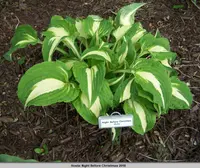
This cultivar has dark green leaves with a showy white center that brightens shaded beds and borders. Plants spread slowly by short rhizomes, forming neat mounds over time.

Hostas originate from woodland habitats in East Asia, so they are naturally adapted to cool conditions, dappled light, and moist, rich soil. Their strong cold tolerance and predictable growth habit make them straightforward for many gardeners, especially when learning how to care for Hosta.

Hosta 'Night Before Christmas' suits shaded landscapes, mixed borders, and containers, where consistent moisture and protection from harsh sun keep foliage attractive.

Main Plant Requirements

Care Difficulty

Easy Care

Light Preference

Partial Shade

Water Requirements

Regular Water

Temperature Preference

Cold Hardy

Hardiness Zone

3–8

Soil Texture

Loamy, Silty, Organic-rich

Soil pH

Acidic (5.5–6.5), Slightly acidic (6.5–7.0)

Soil Drainage

Moist but well-drained

Fertilization

Light (every 4–6 weeks)

Get Personalized Care Plan

Scan your plant to receive care tips personalized for your specific plant

Available on iOS and Android

How to Care for the Hosta

This shade-loving perennial performs best with bright but gentle light to preserve its variegation.

  • Provide 2–4 hours of soft morning sun with bright dappled or filtered light the rest of the day; avoid harsh midday sun.
  • Plant on the east or north side of buildings or under high tree canopies, where it receives broken light rather than direct afternoon exposure.
  • Watch the white leaf centers of Hosta 'Night Before Christmas' for bleaching or brown edges, which indicate excessive sun; stretching and dull color suggest insufficient light.

This plant prefers consistently moist, cool soil without becoming waterlogged.

  • Water when the top 3–5 cm of soil feel dry, soaking the root zone deeply rather than giving frequent light splashes.
  • Use rich, well-drained soil with organic matter and a 5–8 cm mulch layer to reduce evaporation and keep moisture even around Hosta 'Night Before Christmas'.
  • In spring and hot summer spells, expect to water more often; reduce frequency in cool, rainy periods and watch for yellowing, mushy leaves as a sign of overwatering or crispy edges from drought.

This cultivar is a hardy, temperate perennial that thrives in cool to mild conditions.

  • Aim for active growth in 60–75°F (16–24°C), where foliage develops best and stress remains low.
  • Dormant crowns tolerate winter cold down to about -20°F (-29°C) with mulch, but emerging spring shoots are sensitive to late frosts and may need protection.
  • In summer, plants handle short periods up to 85–90°F (29–32°C) if soil stays moist and shaded; prolonged heat plus full sun increases scorch and stress.

This cultivar grows well in typical outdoor humidity and does not need special moisture in the air.

  • Aim for ambient humidity around 40–60% when possible, which suits its foliage without encouraging fungal problems.
  • It tolerates short periods of drier air, but prolonged hot, dry wind can cause leaf edges to crisp and brown.
  • Increase local humidity outdoors by mulching the soil and grouping plants, rather than misting leaves, to reduce stress and disease risk.

Hosta 'Night Before Christmas' prefers consistently moist, structured soil that stays aerated yet never waterlogged.

  • Use a loamy, organic-rich soil with a crumbly structure, mixing native garden soil with 30–40% compost for moisture retention and nutrients.
  • Ensure drainage by avoiding heavy, pure clay; incorporate pine bark fines or shredded leaves to open compact soil and improve aeration.
  • Target a slightly acidic to neutral pH around 6.0–7.0; avoid highly alkaline spots that can limit nutrient uptake and cause pale foliage.
  • Do not plant where water stands after rain; if the site is wet, raise the bed and blend in coarse sand or grit to speed drainage.

This variety is well suited to growing in containers outdoors on patios or shaded beds.

  • Choose a wide, moderately deep pot to accommodate spreading roots and leaf clumps so the plant does not become crowded at the surface.
  • Select a heavier material such as ceramic or thick-walled plastic to stabilize the pot against wind and the weight of mature foliage.
  • Fill the container with a moisture-retentive yet free-draining mix of potting soil, compost, and bark, leaving 2–3 cm below the rim for easy watering.

This cultivar benefits from modest, focused feeding to support foliage quality without forcing weak growth.

  • Use a balanced slow-release fertilizer (around 10-10-10) or well-rotted compost in early spring as new shoots emerge.
  • Apply granular slow-release once per growing season, lightly mixing it into the topsoil around but not touching the crowns.
  • If using liquid feed, dilute to 1/2 strength and apply every 4–6 weeks during active growth only.
  • Stop feeding Hosta by late summer and do not fertilize during fall and winter dormancy.

Pruning supports plant health and keeps Hosta 'Night Before Christmas' foliage tidy through the season.

  • In spring, remove any dead or winter-damaged leaves at the base using clean, sharp pruners or scissors.
  • During the growing season, cut off yellowing, torn, or slug-damaged leaves to improve air flow and appearance.
  • Deadhead spent flower stalks at ground level after blooming to direct energy back into roots and foliage.
  • In late fall after hard frost, shear or pull away collapsed foliage to reduce overwintering pests and disease.

This hosta is usually grown in the ground, with transplanting every few years to refresh space and vigor.

  • Plan major moves or divisions for early spring as shoots just emerge, or early fall while soil is still warm.
  • Look for crowded clumps, weak centers, or roots circling containers as signs that transplanting is needed.
  • Dig widely around the clump, lift with as much root and soil as possible, and keep roots shaded and moist.
  • Replant at the same depth in enriched, well-drained soil, water thoroughly, and mulch lightly to reduce stress.

Division is the standard way to multiply Hosta 'Night Before Christmas' while keeping the variegated pattern true.

  • Divide established clumps in early spring as eyes emerge, or in early fall with several weeks before hard frost.
  • Lift the entire clump and split it into sections, each with at least 2–3 shoots and a solid root mass.
  • Replant divisions at original depth in moist, well-drained soil, spacing to allow mature spread and airflow.
  • Keep soil evenly moist and shade steady for several weeks after division to support new root growth.

This hosta is cold hardy in most temperate gardens and needs only minimal, practical winter care.

  • After the first hard frost, allow foliage to collapse, then remove it to reduce disease and slug habitat.
  • Apply a 5–7 cm layer of mulch over the root zone in late fall, keeping it away from crown centers.
  • Container-grown plants in colder zones can be sunk into the ground or overwintered in an unheated but frost-free space.

Care Tips

Slug barrier setup

Lay a 5–8 cm wide ring of sharp gravel or crushed pumice around the crown each spring to create a dry, uncomfortable surface that deters slugs from reaching the foliage without using harsh chemicals.

Division for vigor

Every 4–6 years, divide clumps in early spring as the eyes just emerge, replanting healthy divisions at the same depth to maintain strong variegation and prevent overcrowding that can weaken plants.

Mulch color protection

Apply a 3–5 cm layer of light-colored organic mulch around but not touching the crowns to keep roots cool and stable, which helps preserve the bright white centers of the leaves through summer heat.

Targeted foliage inspection

Check the undersides of leaves weekly in late spring and early summer for early signs of foliar nematodes or chewing damage, removing and discarding affected leaves promptly to reduce spread in the clump and nearby plants.

Container rotation practice

If grown in a pot, rotate the container 90° every 2–3 weeks during the growing season so the plant receives even light, which encourages symmetrical growth and better-looking mounded form when caring for Hosta in shaded patios or entries.

Common Pests and Diseases

Hosta virus X

This disease causes mottled, streaked, or twisted leaves and often shows as irregular dark and light patches along veins. Symptoms include progressive distortion and stunting over several seasons.

Solution

Immediately remove and discard the entire plant, including roots, in household trash and disinfect tools with a 10% bleach solution after cutting. Avoid dividing or sharing plants from infected clumps and purchase new stock from reputable nurseries that test for Hosta virus X as part of standard Hosta care instructions.

Foliar nematodes

These microscopic worms feed inside leaf tissue, creating tan, water-soaked streaks between veins that later turn brown, often starting on older leaves. Symptoms include damage that follows the leaf veins rather than forming round spots.

Solution

Remove and dispose of affected leaves promptly and avoid overhead watering so foliage stays as dry as possible. Improve spacing for better airflow, water at soil level in the morning, and if damage is severe, consider discarding the plant and replanting in a new area to reduce reinfestation risk.

Slug and snail damage

This pest chews irregular holes in leaves, often starting on tender new growth and leaving slime trails on or near the plant. Symptoms include shredded leaf edges and large missing sections on the white and pale areas of variegated foliage.

Solution

Hand-pick slugs and snails in the evening, use iron phosphate slug baits according to label directions, and set out physical barriers such as copper tape or diatomaceous earth around key plants. Reduce hiding spots by removing dense mulch mats and debris, and avoid frequent late-day overhead watering that keeps soil and foliage wet overnight.

Black vine weevil

This pest causes notched, scalloped leaf edges from adult feeding, while larvae feed on roots and crowns below ground, leading to wilting and decline. Symptoms include slow weakening of the clump even when foliage damage seems minor.

Solution

Inspect at night and manually remove adults from leaves, then apply beneficial nematodes to the soil in spring or late summer to target larvae. Keep mulch slightly pulled back from the crown and monitor for recurring notching so treatments can be repeated in following seasons if needed.

Crown rot (Sclerotium blight)

This disease attacks the crown at soil level, causing sudden collapse of leaves, yellowing, and rotting tissue with possible white fungal growth or hard brown sclerotia around the base. Symptoms include entire eyes or sections of the clump failing to emerge or quickly wilting after leaf-out.

Solution

Dig out and discard affected crowns and surrounding soil and avoid replanting hostas in the same exact spot for several years. Improve drainage, reduce heavy mulch against the crown, water early in the day at soil level, and space plants to promote airflow and faster drying of the crown area.

Interesting Facts

Stable tricolor foliage

This cultivar reliably develops a dark green margin, bright white center, and narrow mid-green transition zone on mature leaves, a pattern that differentiates it clearly from similar white-centered hostas once established.

Color change with maturity

Young plants and divisions often show more green and less white in the first season, but as the clump matures over several years the leaf centers typically lighten to a much cleaner white.

Distinct from sports and look-alikes

Although often confused with cultivars like 'Loyalist' and 'White Christmas', this plant is a separate registered variety selected for its specific margin width, leaf shape, and more stable mid-season color pattern.

Botan icon

Did you know?

This cultivar traces back to the influential American hybridizer Robert Savory, whose breeding work in the late 20th century helped popularize white-centered hostas and led to a series of related introductions that are now common in shade gardens across the US.

FAQs about Hosta

Brown leaf edges usually come from underwatering, excess sun, or dry wind. Check soil moisture, mulch the root zone, and protect from hot afternoon exposure. High fertilizer salts can also scorch margins, so avoid overfertilizing.

Grow Healthy Plants with Botan Care

Keep your plants happy and healthy with plant identification, disease detection, and easy care guidance.


Botan plant care app — identify plants on mobile

Explore More Plants