victory onion Care (Allium victorialis)

Also known as: Alpine leek
victory onion

About victory onion

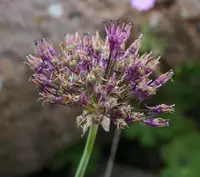
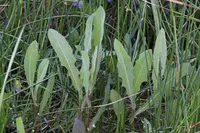
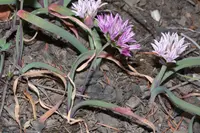
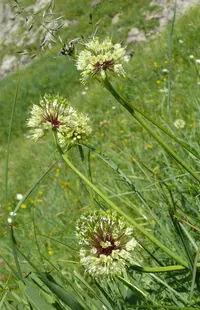
Victory onion (Allium victorialis) is a hardy perennial allium grown for its edible leaves and subtle ornamental value. It forms clumps of broad, smooth, green foliage that emerges in early spring. Later in the season it sends up sturdy stems topped with pale, rounded flower clusters.

This species is native to cool, mountainous regions of Europe and Asia, where it grows in open woodlands and grassy slopes. It is generally robust and long-lived when given cool roots, consistent moisture, and well-drained soil.

For gardeners looking to care for victory onion, the plant is usually straightforward as long as it is protected from extreme heat and planted in light shade to partial sun.

Main Plant Requirements

Care Difficulty

Moderate Care

Light Preference

Partial Shade

Water Requirements

Moderate Water

Temperature Preference

Cold Hardy

Hardiness Zone

3–7

Soil Texture

Loamy, Silty, Organic-rich

Soil pH

Acidic (5.5–6.5), Slightly acidic (6.5–7.0)

Soil Drainage

Moist but well-drained

Fertilization

Minimal (feed rarely)

Get Personalized Care Plan

Scan your plant to receive care tips personalized for your specific plant

Available on iOS and Android

How to Care for the victory onion

This hardy mountain allium prefers bright, cool conditions with protection from harsh midday sun.

  • Provide 4–6 hours of sun daily, ideally morning sun with light shade or dappled light in the afternoon, especially in warmer regions.
  • Grow victory onion in partial shade in hot summers; full sun is suitable in cooler climates if soil stays evenly moist and roots are insulated.
  • Watch foliage color and strength: pale, weak leaves often indicate too little light, while scorched tips or bleached patches suggest excessive direct afternoon sun.

Allium victorialis prefers steadily moist but not waterlogged soil, especially during active growth.

  • Allow the top 2–3 cm of soil to dry slightly between waterings, then water deeply so moisture reaches the root zone without puddling on the surface.
  • Ensure sharply draining soil or raised beds; soggy conditions increase bulb rot risk, while cracks in soil and limp, folding leaves indicate underwatering.
  • Reduce watering once foliage starts to yellow and die back after flowering, keeping soil just barely moist through dormancy to protect bulbs.

This cold-tolerant allium thrives in cool to mild climates with distinct seasons.

  • Active growth is strongest at 50–70°F (10–21°C); plants handle brief warmth up to about 80°F (27°C) if soil moisture and partial shade are maintained.
  • Bulbs tolerate winter cold down to around -20°F (-29°C) in well-drained soil, especially with mulch to buffer freeze–thaw cycles.
  • In hot regions, protect plants from prolonged heat above 85°F (29°C) with afternoon shade and consistent moisture, as excessive heat can trigger early dormancy.

Humidity is usually not critical for victory onion, which handles typical indoor levels well.

  • Aim for 30–60% humidity; it tolerates dry central heating air better than many leafy houseplants.
  • Crisp, browning leaf tips combined with adequate watering may indicate air that is extremely dry below 30%.
  • Increase humidity slightly by grouping pots together or placing the container on a pebble tray with water kept below the pot base.

Allium victorialis prefers loose, moist, well-drained soil that does not stay waterlogged.

  • Use a loamy mix with 40–50% compost, 30–40% garden soil, and 10–20% mineral grit such as perlite or coarse sand.
  • Target a slightly acidic to neutral pH around 6.0–7.0 for stable nutrient availability and root health.
  • Improve aeration by avoiding fine peat-only mixes that compress; add perlite or pumice to keep the structure open.
  • Avoid compacted clay, poorly drained spots, or low-lying areas where water pools, which encourage bulb rot.

This species is suitable for container growing outdoors when given a deep, stable pot.

  • Choose a pot at least 25–30 cm deep so the bulbs and roots can extend downward without crowding.
  • Use a heavy ceramic or clay container to reduce tipping as the foliage matures and to moderate moisture swings.
  • Ensure large drainage holes and add a 2–3 cm layer of coarse grit at the base to prevent the outlets clogging with fine mix.

This mountain woodland species needs only light feeding, especially in richer garden soils.

  • Apply a balanced NPK liquid fertilizer at 1/4–1/2 strength every 4–6 weeks in spring–early summer for potted victory onion.
  • Use a slow-release, balanced granular fertilizer at planting in poorer soils, mixing it into the top 5–8 cm.
  • Supplement with a thin layer of compost each spring to support steady leaf growth without excessive lushness.
  • Stop feeding once foliage begins yellowing and the plant enters dormancy in late summer–autumn.

Allium victorialis needs minimal pruning, mainly to keep clumps healthy and tidy.

  • Cut away yellowing or dead leaves in late summer–autumn using clean, sharp scissors or pruners.
  • Remove any damaged or disease-spotted foliage promptly to limit spread and maintain airflow in the clump.
  • After flowering, snip off spent flower stalks at the base if seed is not desired, which can direct energy back to bulbs.
  • Avoid cutting healthy green leaves hard during peak growth, as this can weaken bulbs and reduce next year’s flowering.

This bulb-forming species is more often divided and transplanted than grown as a long-term container plant.

  • Look for tight, congested clumps, reduced leaf size, or slow growth as signs that bulbs are overcrowded.
  • Plan transplanting or repotting for early spring or early autumn, when growth is just starting or fading.
  • Divide clumps every 3–5 years, replanting bulbs at the same depth in well-drained, humus-rich soil.
  • Water thoroughly after moving bulbs, then keep soil just moist to limit transplant shock and support quick re-rooting.

This plant is commonly increased by division and also grown from seed for larger plantings.

  • Lift and divide mature clumps in early spring or early autumn, separating offsets with minimal root damage.
  • Replant divisions immediately at the same depth in moist, well-drained soil, spacing bulbs 15–20 cm apart.
  • Sow fresh seeds in autumn in pots or trays outdoors; cold winter temperatures help break dormancy.
  • Maintain evenly moist, cool conditions for seed trays, and expect germination to be slow and staggered over several months.

This hardy bulb tolerates cold winters well and usually needs little special attention in the ground.

  • In USDA zones roughly 4–7, bulbs overwinter outdoors once planted at the correct depth in draining soil.
  • Apply a 3–5 cm mulch layer of leaves or bark after the ground cools to buffer freeze–thaw cycles.
  • For containers in colder or exposed sites, move pots into a sheltered, unheated area to prevent rootball freezing solid.

Care Tips

Spring mulch ring

Apply a thin 2–3 cm ring of leaf mold or compost around, not over, the crowns each spring to conserve soil moisture and suppress weeds without risking rot at the growing points.

Rotate harvest zones

When harvesting leaves, divide the clump mentally into sections and pick from a different section each time so individual bulbs are not overtaxed and the stand remains productive for many years.

Summer shade cloth

In hotter regions, use 30–40% shade cloth during the warmest weeks of summer to prevent leaf scorch and extend the leafy harvest period when growing victory onion.

Seed head management

If the plant self-seeds too freely, remove most flower heads just as they fade but leave a few to mature if you want controlled natural regeneration and a gradual expansion of the patch.

Clump renewal division

Every 4–6 years, lift and divide congested clumps in early autumn, replanting only the firm, healthy bulbs at the original depth to maintain vigor and reduce disease buildup in long-term plantings.

Common Pests and Diseases

onion fly

This pest lays eggs at the base of plants and the larvae tunnel into bulbs and stems, causing yellowing, wilting, and stunted growth.

Solution

Use fine insect mesh over beds from early spring to prevent egg-laying, rotate plantings away from other Allium beds, promptly remove and discard infested plants, and encourage predators by avoiding broad-spectrum insecticides; in small plantings, hand-pick and destroy any visible larvae in the soil around affected bulbs.

allium leaf miner

This pest creates puncture marks along leaves where eggs are laid, and the larvae mine inside leaves and down into the bulbs, leading to distorted, yellowing foliage and rotting tissue.

Solution

Place insect mesh or floating row covers over plants during known flight periods, remove and destroy infested foliage and bulbs, and avoid leaving Allium plant waste in the bed; in affected regions, time planting so vulnerable growth does not coincide with peak adult activity.

downy mildew

This disease causes pale yellow patches on leaves that develop into grayish or purplish fuzzy growth on the undersides, often followed by leaf collapse in cool, damp weather.

Solution

Improve airflow by adequate spacing, avoid overhead watering, remove and dispose of infected leaves, and rotate Allium plantings; in persistent cases, apply a labeled copper- or phosphorous acid-based fungicide preventatively during prolonged wet periods as part of broader Allium victorialis care instructions.

Botrytis neck rot

This disease typically develops in stored bulbs, where symptoms include soft, water-soaked neck tissue that turns gray with mold, eventually causing the entire bulb to collapse.

Solution

Cure bulbs thoroughly before storage, keep storage conditions cool, dry, and well ventilated, and discard any bulbs showing soft or moldy areas; avoid injuring bulbs at harvest and rotate beds so Allium crops are not grown in the same soil each year.

allium rust

This disease produces small, bright orange or rust-colored pustules on leaves, which can merge into larger patches and reduce plant vigor by limiting photosynthesis.

Solution

Remove and dispose of affected leaves as soon as symptoms appear, maintain good spacing and air circulation, avoid overhead irrigation, and practice crop rotation with non-Allium species; in severe, recurring cases, use a labeled sulfur or other rust-targeted fungicide according to product directions.

Interesting Facts

High-altitude specialist

This species is naturally found in subalpine and alpine meadows and open forests across parts of Europe and Asia, where it tolerates cold, long winters and a short growing season better than many other Allium species.

Distinctive broad leaves

Unlike chives or typical garden onions, it forms wide, lance-shaped leaves that resemble those of some lilies, which can help distinguish it from look-alike wild Allium species in its native habitats.

Early spring emergence

The plant often emerges and leafs out soon after snow melt in mountain regions, allowing it to complete much of its growth before tree canopies fully shade the ground.

Botan icon

Did you know?

In several European mountain regions, especially the Alps and Carpathians, this species has a long history as a protective and symbolic plant, once carried by travelers and herders as a good-luck charm against misfortune in high passes.

FAQs about victory onion

Lack of flowering often comes from insufficient light, crowded bulbs, or nutrient-poor soil. Divide congested clumps every few years, provide consistent moisture in spring, and avoid cutting foliage too early after flowering so bulbs recharge.

Grow Healthy Plants with Botan Care

Keep your plants happy and healthy with plant identification, disease detection, and easy care guidance.

Botan plant care app — identify plants on mobile

Explore More Plants