Wind hardening
Expose young plants to increasing outdoor wind and sun for 1–2 hours more each day over a week before planting out, which encourages sturdy stems and reduces transplant shock when growing Solanum chilense.

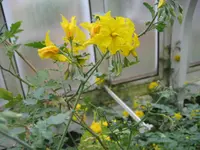
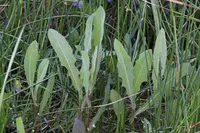
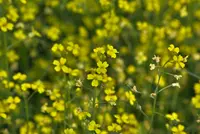
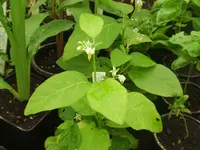
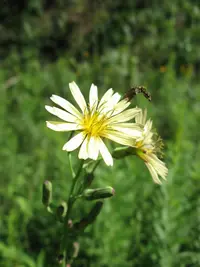
Solanum chilense is a wild tomato species native to arid and coastal regions of Chile and southern Peru. It is a bushy, branching perennial with small yellow flowers and small, usually inedible fruits. Plants often grow in dry, rocky habitats with strong sun and wind exposure, which makes them naturally tough and drought tolerant. They show good resilience to some common tomato diseases, but can be slow or tricky to establish outside suitable climates. For those who want to care for Solanum chilense, it typically prefers bright light, good air movement, and very well-drained, lean soil with only modest watering.

Care Difficulty
Moderate Care

Light Preference
Full Sun

Water Requirements
Low Water

Temperature Preference
Warm Climate

Hardiness Zone
9–11

Soil Texture
Sandy, Loamy, Rocky

Soil pH
Slightly acidic (6.5–7.0), Neutral (7.0)

Soil Drainage
Well-drained

Fertilization
Minimal (feed rarely)
Scan your plant to receive care tips personalized for your specific plant
Available on iOS and Android
This species prefers strong sun but tolerates some light shade, especially in hotter regions.
This drought-tolerant tomato relative needs infrequent but deep watering in sharply drained soil.
This desert-adapted wild tomato prefers warm, dry conditions and dislikes hard frost.
This species is adapted to arid habitats and usually does not need elevated humidity indoors.
Solanum chilense prefers very well-drained, gritty soil that mimics its native dry, rocky habitats.
This species can be grown in containers when the pot is chosen to support its deep and spreading root system.
This drought-adapted wild tomato generally needs modest feeding in lean, well-drained soil.
Pruning is mainly used to keep plants healthy and to manage size in garden or container culture.
This species is more often grown in beds, with transplanting focused on young plants raised from seed.
Propagation is usually done from seed, which maintains genetic diversity and adapts well to local conditions.
Mature plants are highly drought-tolerant but only moderately frost-hardy, so winter care depends on local climate.

Plant Health Check
Not sure what's wrong with your plant? Check your plant's health inside the app.
This wild tomato species is native to extremely arid coastal deserts of northern Chile and southern Peru, tolerating some of the lowest natural rainfall levels recorded for any tomato relative.
Populations of this species show remarkable tolerance to saline soils and low temperatures, making it an important genetic resource in breeding programs for salt- and cold-tolerant cultivated tomato lines.
Solanum chilense has been used in tomato breeding because some populations carry strong resistance to serious diseases such as late blight (caused by Phytophthora infestans) and certain foliar fungal pathogens.

Genetic studies indicate that Solanum chilense is one of the most genetically diverse wild tomato species, with distinct coastal and highland populations that have adapted to sharply different environments along the western slopes of the Andes.
Fruits are related to tomatoes but this wild species is not recommended as a food crop. Flavor is usually poor, fruit size is small, and alkaloid levels may be higher than in domesticated varieties, so treat it as ornamental only.
Keep your plants happy and healthy with plant identification, disease detection, and easy care guidance.