Use leaf mulch
Apply a 3–5 cm layer of shredded deciduous leaves each autumn to mimic woodland litter, keeping roots cool, conserving moisture, and slowly enriching the soil without overfertilizing.

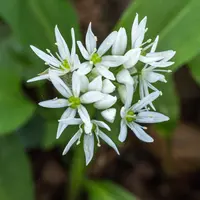
Ramsons, Allium ursinum, is a woodland perennial herb in the onion family, valued for its strong garlic scent and edible leaves. It forms low, lush carpets of soft, broad green foliage with starry white flower clusters in spring.
In nature it grows in cool, moist, shaded forests, especially on rich, humus-heavy soils across much of Europe and parts of Asia. Once established, it spreads by seed and bulbs, which makes it relatively easy to maintain but potentially invasive in small gardens.
It prefers partial shade, consistent moisture, and well-drained, fertile soil. Understanding these simple needs makes it easier to care for Ramsons in suitable climates.

Care Difficulty
Moderate Care

Light Preference
Partial Shade

Water Requirements
Keep Soil Moist

Temperature Preference
Cold Hardy

Hardiness Zone
3–8

Soil Texture
Loamy, Silty, Organic-rich

Soil pH
Acidic (5.5–6.5), Slightly acidic (6.5–7.0)

Soil Drainage
Moist but well-drained

Fertilization
Minimal (feed rarely)
Scan your plant to receive care tips personalized for your specific plant
Available on iOS and Android
Wild garlic prefers woodland-style light that mimics dappled shade under trees.
Wild garlic favors consistently moist, cool soil without becoming waterlogged.
Wild garlic is a cold-hardy woodland bulb that prefers cool conditions and tolerates winter freezes.
Allium ursinum prefers cool, moderately moist air similar to a shaded woodland floor.
Allium ursinum thrives in moist, humus-rich, well-aerated soil that mimics a deciduous woodland floor.
This species can be grown in containers if moisture, depth, and shade are carefully managed.
Allium ursinum needs only modest feeding, as it is adapted to nutrient-rich woodland soils.
Allium ursinum requires minimal pruning, mainly to keep clumps healthy and tidy.
Transplanting Allium ursinum focuses on moving or dividing clumps rather than frequent container repotting.
Allium ursinum is commonly propagated by division of bulbs and by seed under cool, moist conditions.
Allium ursinum is fully hardy in most temperate climates and usually needs little special winter care.

Plant Health Check
Not sure what's wrong with your plant? Check your plant's health inside the app.
Wild garlic is considered an ancient woodland indicator in parts of Europe, meaning long‑persisting populations often mark forests that have remained continuously wooded for centuries.
Its star‑shaped white flowers are highly attractive to early spring pollinators such as hoverflies and solitary bees, providing one of the first substantial nectar sources on the woodland floor.
The leaves emerge very early in spring, complete most of their photosynthesis before the tree canopy fully closes, then die back by early summer, allowing the plant to persist as a dormant bulb underground.

Genetic studies have shown that many European populations of wild garlic are strongly structured regionally, suggesting limited long‑distance seed dispersal and long‑term persistence of local clones formed by vegetative bulb division.
All parts are technically edible, but the leaves are most commonly used. They have a mild garlic flavor and are usually eaten fresh or lightly cooked. Correct identification is essential, as similar-looking species can be toxic.
Keep your plants happy and healthy with plant identification, disease detection, and easy care guidance.