


Plan for short lifespan
Treat plants as short-lived perennials and stagger-sow new batches every 2–3 weeks in spring so flowering continues even as older clumps decline after 2–3 seasons.

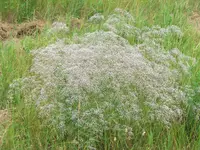
Baby's breath, Gypsophila paniculata, is a delicate, bushy perennial known for its clouds of tiny white or pale pink flowers on fine, branching stems. It is widely used in cut flower arrangements and bridal bouquets because its airy form fills space without looking heavy.
In nature, it comes from dry, open habitats in parts of Europe and Asia, where it grows in sunny, well-drained, often chalky or sandy soils. It is generally easy to grow if it has plenty of light and sharply drained soil, and gardeners who learn how to care for Baby's breath appreciate its long flowering season and reliable performance in borders and cutting gardens.

Care Difficulty
Moderate Care

Light Preference
Full Sun

Water Requirements
Low Water

Temperature Preference
Cold Hardy

Hardiness Zone
3–9

Soil Texture
Sandy, Loamy, Rocky

Soil pH
Slightly alkaline (7.0–7.5), Alkaline (7.5–8.5)

Soil Drainage
Well-drained

Fertilization
Minimal (feed rarely)
Scan your plant to receive care tips personalized for your specific plant
Available on iOS and Android
Gypsophila paniculata thrives in bright, open sites with sustained sun exposure.
This species prefers dry, free-draining conditions and is sensitive to excess moisture.
This perennial is adapted to temperate climates with cool to warm summers and cold winters.
This species prefers dry, airy conditions and does not need elevated humidity.
This plant thrives in light, very free-draining mineral soil and declines in heavy, wet conditions.
This species can be grown in containers, but the pot must mimic its naturally dry, well-drained root conditions.
Gypsophila paniculata prefers lean soil and needs only light, controlled feeding to support flowering.
Pruning helps Gypsophila paniculata stay airy, healthy, and free-flowering.
This species dislikes root disturbance, so transplanting should be rare and carefully planned.
Gypsophila paniculata is most often propagated from seed, with cuttings used by more advanced growers.
Mature plants are quite cold hardy in most temperate gardens and usually need only minimal winter care.

Plant Health Check
Not sure what's wrong with your plant? Check your plant's health inside the app.
This species naturally colonizes lime-rich, calcareous soils and even gypsum outcrops, using its deep root system to exploit mineral-rich but nutrient-poor substrates where many other plants struggle to survive.
Its tiny seeds are packed into numerous small capsules on a highly branched inflorescence, allowing wind to shake and scatter large numbers of seeds over open steppe and dry meadow habitats.
Since the 20th century this plant has become one of the world’s standard cut-flower fillers, bred into multiple white and pink cultivars specifically for long vase life and dense, fine branching in the floral industry.

In several regions outside its native Eurasian range, including parts of the North American Great Lakes sand dunes, Gypsophila paniculata forms persistent, woody-rooted clumps whose thick taproots can extend more than 1 m deep, allowing the plant to outcompete many native dune species and making mechanical removal difficult for conservation managers.
This species self-seeds readily and can spread beyond its original patch, especially in dry, open soil. In some regions it is considered invasive, so deadhead spent flowers and check local guidelines before planting extensively.
Keep your plants happy and healthy with plant identification, disease detection, and easy care guidance.

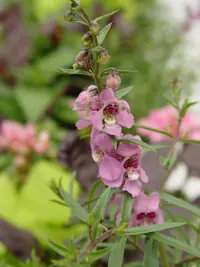
Narrowleaf angelon
Angelonia angustifolia
Begonia × semperflorens-cultorum
Begonia × semperflorens-cultorum
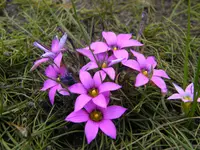
rosy sandcrocus
Romulea rosea
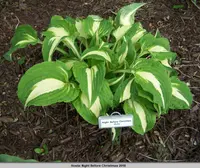
Hosta
Hosta 'Night Before Christmas'
Anthyllis terniflora
Anthyllis terniflora
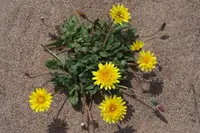
woolly goat chicory
Agoseris apargioides
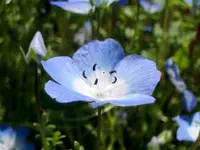
baby blue eyes
Nemophila menziesii
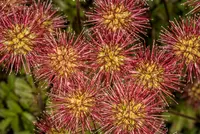
Acaena juvenca
Acaena juvenca