woolly goat chicory Care (Agoseris apargioides)

Also known as: seaside agoseris
woolly goat chicory

About woolly goat chicory

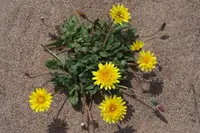
Woolly goat chicory (Agoseris apargioides) is a small, herbaceous perennial in the daisy family, native to coastal regions of western North America. It typically forms low rosettes of narrow, often softly hairy leaves.

From these rosettes, single yellow, dandelion-like flower heads rise on slender stems, giving the plant a delicate, open look. It is usually found in grasslands, dunes, and open coastal slopes.

This species prefers well-drained, often sandy soils and open, sunny sites, but can tolerate some wind and salt exposure. Once established, it is relatively low-maintenance, so learning how to care for woolly goat chicory mainly involves providing suitable light and drainage.

Main Plant Requirements

Care Difficulty

Moderate Care

Light Preference

Full Sun

Water Requirements

Low Water

Temperature Preference

Cool Climate

Hardiness Zone

7–10

Soil Texture

Sandy, Loamy, Rocky

Soil pH

Slightly acidic (6.5–7.0), Neutral (7.0)

Soil Drainage

Well-drained

Fertilization

Minimal (feed rarely)

Get Personalized Care Plan

Scan your plant to receive care tips personalized for your specific plant

Available on iOS and Android

How to Care for the woolly goat chicory

This coastal wildflower favors bright, open conditions that mimic its native sandy habitats.

  • Provide 6–8 hours of direct sun daily, ideally with morning sun and some light afternoon shade in hotter inland sites to reduce leaf scorch.
  • Tolerates light partial shade (3–4 hours direct sun) but flowering and compact growth decline if shaded for most of the day.
  • In summer, monitor plants during heat waves; reflective surfaces and all-day intense sun can dry soil rapidly and bleach foliage on woolly goat chicory.

This species prefers dry to slightly moist conditions and is sensitive to prolonged wetness around the roots.

  • Allow the top 3–5 cm of soil to dry between waterings; soil should feel dry and loose rather than cool and sticky before adding water.
  • Use very well-drained, sandy or gravelly soil so water runs through within a few seconds; standing water or heavy clay promotes root rot in Agoseris apargioides.
  • In wet, cool seasons, reduce or stop supplemental watering and watch for yellowing, soft leaves as a sign of excess moisture, while crisp, folding leaves indicate drought stress.

This coastal perennial is adapted to mild, temperate climates with moderate seasonal variation.

  • Best active growth occurs around 55–70°F (13–21°C), with cooler nights supporting sturdy, compact rosettes and reliable flowering.
  • Established plants tolerate brief drops to about 20–25°F (-6 to -4°C), but repeated hard freezes or freezing, waterlogged soil increase crown and root damage risk.
  • Handles dry summer warmth up to 80–90°F (27–32°C) if soil is sharply drained; prolonged heat above this, combined with drought, can trigger premature dormancy and leaf dieback.

This coastal perennial prefers relatively dry air and does not require elevated humidity indoors or outdoors.

  • Target 30–50% humidity, similar to typical indoor air or light coastal conditions.
  • It tolerates drier air well, but prolonged hot indoor heating can crisp leaf edges and tips.
  • If leaf margins brown and curl, increase local humidity slightly with a nearby water tray or by grouping plants, avoiding misting the foliage.

This species favors lean, fast-draining soils that mimic coastal dunes or open, rocky slopes.

  • Use a sandy or gritty mix: about 50–60% coarse sand, 20–30% fine gravel or perlite, and 20–30% low-nutrient compost.
  • Ensure rapid drainage so water passes through within seconds, preventing roots from sitting in saturated pockets.
  • Aim for slightly acidic to neutral pH around 6.0–7.2, which supports nutrient uptake without encouraging excessive lush growth.
  • Avoid dense clay, peat-heavy mixes, and constantly wet substrates, and loosen compacted layers to keep pore spaces open for oxygen.

This species can be grown in containers if the pot mimics its naturally dry, well-drained root environment.

  • Choose a deep, narrow pot that allows a developing taproot to extend without bending sharply at the base.
  • Use a heavier terracotta or ceramic container to prevent tipping in windy sites as the flowering stems elongate.
  • Raise the pot on feet or bricks so drainage holes clear surfaces quickly and excess water cannot reabsorb into the mix.

Agoseris apargioides is a low-nutrient native that usually needs little feeding, especially in lean, well-drained soils.

Agoseris apargioides benefits from light, timely pruning to keep rosettes tidy and flowering well.

  • Cut spent flower stems at the base after blooming to encourage a neater appearance and potential rebloom.
  • Remove any dead, damaged, or disease-marked leaves with clean, sharp scissors to reduce infection risk.
  • Thin crowded rosettes lightly, if needed, to improve air movement and reduce fungal problems.
  • Disinfect tools between plants when managing disease to avoid spreading pathogens.

This species is seldom kept in pots, so care focuses on careful transplanting of its taprooted rosettes.

  • Transplant in early spring or early fall when growth is slower and soil is naturally moist but not waterlogged.
  • Look for signs such as cramped clumps, crowded seedlings, or stunted growth indicating a need for more space.
  • Lift plants gently, keeping as much soil as possible around the taproot to limit transplant shock.
  • Replant at the same depth in a well-drained site, water thoroughly once, then allow soil to dry slightly between waterings.

Propagation of woolly goat chicory is usually done by seed rather than division or cuttings due to its taproot.

  • Collect seeds from mature, dry flower heads in late summer, before they disperse naturally.
  • Sow fresh seed on the soil surface or barely covered in fall or early spring for best germination.
  • Provide full sun, well-drained soil, and even moisture until seedlings establish strong rosettes.
  • Avoid disturbing young taproots; transplant only when seedlings are still small and soil is damp.

This coastal native is generally cold hardy in mild climates and needs minimal winter care in the ground.

  • In regions with frost, a light 2–5 cm mulch around the root zone helps buffer temperature swings without burying the crown.
  • Container-grown plants can be moved to a sheltered, unheated porch or cold frame to reduce freeze–thaw stress.
  • Keep winter watering light; soil should stay barely moist, never saturated, to prevent root rot.

Care Tips

Support windy sites

In exposed coastal or open sites, plant in clusters or near low rocks so the natural rosette form is sheltered from strong prevailing winds that can snap flower stalks.

Encourage reseeding

Allow some flower heads to fully dry and disperse their dandelion-like seeds in place if you want a naturalized patch, then mark the area to avoid disturbing young rosettes during weeding.

Gentle weed control

Hand-weed with a narrow trowel or hori-hori knife, sliding the blade under nearby weeds to sever roots without disturbing the shallow taproot of the rosette.

Adaptive mowing strip

At meadow edges, flag the planting zone and set mower blades high so the low rosettes are not scalped while surrounding grasses are kept in check.

Dry-season protection

In very dry, hot summers, use a light gravel mulch around but not touching the crown to reduce soil surface temperature and moisture loss while still keeping the neck of the plant dry, which supports long-term Agoseris apargioides care.

Common Pests and Diseases

Aster leafhopper

This pest feeds on young leaves and stems and can transmit aster yellows phytoplasma. Symptoms include pale, twisted new growth and general loss of vigor.

Solution

Reduce nearby weedy hosts, especially in wild or meadow-style plantings, and encourage predators such as spiders and lady beetles by avoiding broad-spectrum insecticides. For small plantings, dislodge leafhoppers with a strong water spray or use floating row covers in exposed coastal sites during peak migration periods.

Aphids

These insects cluster on tender stems and leaf undersides, sucking sap and causing curling, distortion, and sticky honeydew that can lead to sooty mold on the leaves.

Solution

Rinse colonies off with a firm stream of water and remove heavily infested flower stalks or leaves. If needed, apply insecticidal soap or a light horticultural oil, coating the insects directly and repeating at 5–7 day intervals until populations decline.

Powdery mildew

This disease appears as white, powdery patches on leaves, especially in still, humid air with cool nights, and can reduce photosynthesis and flowering over time.

Solution

Improve air movement around plants by thinning dense vegetation and avoiding overhead watering late in the day. Remove and discard heavily infected leaves, and in recurring cases use a sulfur or potassium bicarbonate fungicide labeled for ornamentals, applied at the first sign of white growth as part of broader Agoseris apargioides care instructions.

Rust

This disease causes small orange to brown pustules on leaf undersides and yellowing spots above, which can weaken plants if infections are repeated over several seasons.

Solution

Promptly remove and destroy infected leaves to reduce spore spread and avoid overhead irrigation that keeps foliage wet for long periods. In sites with chronic rust issues, space plants more widely for faster drying and consider rotating with non-host native species nearby to lower inoculum levels.

Interesting Facts

Coastal dune specialist

This species is restricted to coastal habitats of California and Oregon, where it grows in sandy dunes and bluffs that many other daisies cannot tolerate.

Woolly leaf adaptation

The densely hairy, gray-green leaves help reduce water loss and protect the plant from salt-laden winds and intense sun near the ocean.

Ground-hugging growth form

It forms low rosettes pressed close to the sand, which reduces wind damage and sand abrasion in its exposed shoreline environment.

Botan icon

Did you know?

Populations of this species are considered of conservation concern in parts of its range because coastal development and dune stabilization have reduced the naturally shifting sandy habitats it depends on.

FAQs about woolly goat chicory

This species is attractive to many native pollinators. The yellow dandelion-like flower heads provide nectar and pollen for bees, small butterflies, and hoverflies, supporting local ecosystems when planted in mixed native meadows or informal borders.

Grow Healthy Plants with Botan Care

Keep your plants happy and healthy with plant identification, disease detection, and easy care guidance.

Botan plant care app — identify plants on mobile

Explore More Plants