Autumn clean-up
In early autumn, gently comb through the clumps by hand and remove yellow or dead leaves so that new flower stalks can emerge easily and stay cleaner in winter rain.

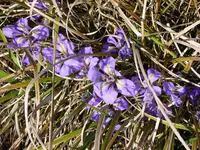
Iris unguicularis, commonly called Algerian iris, is a winter-flowering rhizomatous perennial grown mainly for its fragrant, pale to deep violet blooms. It forms clumps of narrow, grass-like evergreen leaves, giving a neat, upright appearance most of the year.
This species is native to rocky, sun-exposed slopes in North Africa and the eastern Mediterranean, so it prefers well-drained soil and moderate moisture. Flowers often appear in the cooler months, providing color when many other plants are dormant.
Thanks to its toughness and drought tolerance once established, many gardeners find it relatively straightforward to care for Algerian Iris in mild climates, provided drainage and sunlight are adequate.

Care Difficulty
Moderate Care

Light Preference
Full Sun

Water Requirements
Moderate Water

Temperature Preference
Cool Climate

Hardiness Zone
7–9

Soil Texture
Sandy, Loamy, Rocky

Soil pH
Acidic (5.5–6.5), Slightly acidic (6.5–7.0)

Soil Drainage
Well-drained

Fertilization
Minimal (feed rarely)
Scan your plant to receive care tips personalized for your specific plant
Available on iOS and Android
This iris prefers bright, cool light to support strong winter flowering.
This species prefers moderately dry conditions rather than constant moisture.
This iris is adapted to mild winters and warm, dry summers.
This species tolerates a wide humidity range and rarely needs special humidity management outdoors.
Iris unguicularis prefers sharply drained, lean to moderately fertile soil to prevent rhizome rot.
This iris can grow successfully in containers when drainage and root conditions are managed carefully.
Iris unguicularis benefits from light, targeted feeding rather than heavy fertilization.
Pruning Iris unguicularis is mainly about tidiness and maintaining healthy clumps.
Iris unguicularis is usually grown in the ground, with transplanting or lifting needed only every few years.
Propagation of Iris unguicularis is most reliable through division of established clumps.
This iris is relatively cold hardy and often flowers in winter, so winter care focuses on root health rather than heavy protection.

Plant Health Check
Not sure what's wrong with your plant? Check your plant's health inside the app.
This species flowers in midwinter, often from late fall to early spring, using cool-season growth to take advantage of reduced competition for pollinators when few other plants are in bloom.
Its narrow, tough leaves often fold or roll slightly, which reduces surface area and helps limit water loss in the dry, rocky habitats of its native eastern Mediterranean range.
The flowers are lightly fragrant and produce nectar in specialized structures called nectaries, attracting early-season insects that can fly in cool weather.

In traditional Mediterranean courtyard gardens, clumps of this species were often planted near paths or doorways specifically so that its unexpected midwinter flowers could be enjoyed at close range when few other ornamentals were in bloom.
Lack of flowers usually comes from insufficient light, crowded or undivided clumps, or planting the rhizomes too deep. Poor nutrition and heavy, wet soil also reduce flowering. Division every few years restores vigor and buds.
Keep your plants happy and healthy with plant identification, disease detection, and easy care guidance.