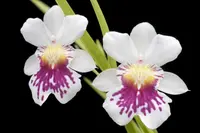
Harlequin dancing-lady orchid Care (Tolumnia variegata)

Harlequin dancing-lady orchid

About Harlequin dancing-lady orchid

Tolumnia variegata, commonly called the Harlequin dancing-lady orchid, is a small epiphytic orchid that often grows on tree branches or rocks. It forms compact fans of narrow leaves and produces airy sprays of colorful, patterned flowers that resemble tiny dancers.

This species is native to the Caribbean, especially Puerto Rico and nearby islands, where it experiences bright light, good air movement, and quick drying after rain. It is considered moderately challenging for beginners because it dislikes constant wetness, needs stable warmth, and reacts quickly to poor airflow or heavy potting mixes. With attention to light, moisture, and ventilation, it is possible to successfully care for Harlequin dancing-lady orchid at home.

Main Plant Requirements

Care Difficulty

Hard Care

Light Preference

Partial Sun

Water Requirements

Moderate Water

Temperature Preference

Tropical / Frost Sensitive

Hardiness Zone

11–12

Soil Texture

Sandy, Rocky, Organic-rich

Soil pH

Acidic (5.5–6.5)

Soil Drainage

Well-drained

Fertilization

Heavy (weekly, diluted)

Get Personalized Care Plan

Scan your plant to receive care tips personalized for your specific plant

Available on iOS and Android

How to Care for the Harlequin dancing-lady orchid

Tolumnia variegata needs bright light to flower well but burns in harsh midday sun.

  • Provide 4–6 hours of bright, indirect light daily, ideally with gentle morning sun and shaded or filtered light from late morning to late afternoon.
  • Outdoors, place where it receives dappled light under thin tree canopy; it tolerates light partial shade but flowering may decrease if light drops too low.
  • Watch leaves: reddish or yellow patches indicate too much sun, while dark, soft foliage and weak blooming suggest insufficient light for the Harlequin dancing-lady orchid.

This species prefers frequent moisture around its roots but dries quickly between waterings.

  • Allow roots or medium to dry almost completely before watering again; in warm, active growth check daily and water when surfaces feel dry and roots turn silvery.
  • In cooler seasons or low light, extend intervals so the plant stays dry slightly longer, reducing the risk of root rot and fungal problems.
  • Signs of overwatering include black, mushy roots and leaf drop; shriveled leaves and wrinkled pseudobulbs on Tolumnia variegata indicate underwatering.

This orchid is a warm-growing epiphyte and thrives within a moderate temperature range.

  • Aim for daytime temperatures of 70–85°F (21–29°C) and nighttime temperatures of 60–70°F (16–21°C) for steady growth and flowering.
  • Tolumnia variegata tolerates brief dips to about 50°F (10°C) but should be protected from frost and cold drafts to avoid tissue damage.
  • In hot weather above 90°F (32°C), increase air movement and humidity, and avoid placing the plant in enclosed, stagnant areas that trap heat.

This orchid needs moderately high humidity to flower and grow reliably.

  • Aim for 50–70% humidity, as Harlequin dancing-lady orchid tends to stall in very dry rooms below 40%.
  • Crisping leaf tips, shriveling pseudobulbs, and sticky buds that fail to open indicate humidity stress.
  • Use a pebble tray with water, a small humidifier nearby, or group plants together to raise local humidity without wetting foliage.

Tolumnia variegata grows best mounted or in a very airy, fast-draining orchid medium rather than standard potting soil.

  • Use a fine to medium orchid bark mix with added charcoal and a small amount of sphagnum moss to retain brief moisture pulses.
  • Ensure a loose, open structure that dries within 1–2 days; waterlogged conditions quickly damage the fine roots.
  • A slightly acidic to neutral range around pH 5.5–7 is suitable for this epiphytic species.
  • Improve aeration by using slotted orchid pots or mounting on bark or cork, and avoid compact, peat-heavy mixes.

This species is suitable for container growing if the potting setup stays very airy and drains rapidly.

  • Choose small, shallow orchid pots that match the compact root system and prevent excess mix from staying wet in the center.
  • Use slotted or net pots placed inside a decorative cachepot so air reaches roots while runoff is neatly contained.
  • Select rigid plastic or clay that keeps the plant stable, since a loose, top-heavy clump can shift and damage fine roots.

This compact epiphytic orchid benefits from light, consistent feeding during active growth.

  • Use a balanced orchid fertilizer (e.g., 20-20-20) diluted to 1/4–1/2 strength in low-mineral water.
  • Feed every 1–2 weeks in spring and summer, then reduce to monthly or stop entirely in fall and winter.
  • Flush the pot or mount with plain water every few feedings to avoid salt buildup on roots.
  • Harlequin dancing-lady orchid responds best to weak, frequent feeding rather than strong, infrequent doses.

Tolumnia variegata needs only light, targeted pruning to stay tidy and flowering well.

  • Cut spent flower spikes back to the base once they dry, using clean, sharp scissors.
  • Remove dead, shriveled, or diseased leaves and pseudobulbs to improve air flow and reduce rot risk.
  • Trim only dry, dead root tips; keep firm, silvery roots intact to maintain plant strength.
  • Limited thinning of overcrowded fans can slightly improve shape but avoid heavy cutting, which reduces blooms.

This orchid prefers tight quarters and infrequent disturbance, so repot only when clearly needed.

  • Repot every 2–3 years or when roots spill far beyond the pot or mount, or growth slows despite good care.
  • Plan to repot in late winter to early spring, just before active growth begins.
  • Use a very airy medium such as fine bark with perlite or mount on cork to keep roots well aerated.
  • Gently tease old medium from roots, trim only dead tissue, and keep shaded, slightly drier conditions for 7–10 days after repotting to limit stress.

Division is the standard method for multiplying Tolumnia variegata in home culture.

  • Divide mature clumps in late winter or early spring, when new roots and fans start to form.
  • Separate the plant into sections with at least 3–4 healthy fans and a good root mass per division.
  • Plant divisions in fresh, airy orchid mix or remount, keeping them stable so new roots attach well.
  • Maintain bright, indirect light, 65–80°F temperatures, and slightly higher humidity to support rooting.

This warm-growing orchid is not frost hardy and needs indoor or greenhouse conditions in cold climates.

  • Move outdoor plants indoors before temperatures drop below 55°F, keeping them in bright, indirect light.
  • Maintain indoor temperatures around 60–80°F and avoid cold drafts near windows or doors.
  • Reduce watering slightly in winter, letting roots dry faster, but do not allow prolonged drought.
  • In mild climates, sheltered patios may work if night temperatures stay well above frost and roots never freeze.

Care Tips

Mounting strategy

Mount plants on cork or hardwood with a very thin pad of sphagnum only at the roots, and position the mount nearly vertical so water runs off quickly and roots dry fast after each watering.

Airflow management

Place a small fan on a low, indirect setting to keep gentle but constant air movement around the plant, which greatly reduces rot and leaf spotting in tight clusters of foliage and roots.

Targeted root checks

Inspect roots monthly with a strong light, trimming only clearly dead, hollow, or mushy roots with sterilized tools and leaving firm silver or green roots intact to maintain strong anchorage and water uptake.

Seasonal rest adjustment

In late fall and winter, reduce fertilizer and slightly extend the dry time between waterings, but avoid complete shriveling of the fan-shaped pseudobulbs to prevent long-term stress on the plant.

Bloom spike handling

After flowers fade, leave green spikes in place because they can branch and rebloom, and only remove them once they turn fully brown and dry to support ongoing success in growing Harlequin dancing-lady orchid.

Common Pests and Diseases

Scale insects

This pest attaches firmly to leaves and pseudobases, sucking sap and causing yellowing, weakened growth, and sticky honeydew that can lead to sooty mold. Symptoms include small, dome-shaped brown or tan bumps that do not move when touched.

Solution

Isolate the plant, then wipe affected areas with cotton pads soaked in 70% isopropyl alcohol, repeating weekly until no new scales appear. Improve air movement around the plant, avoid overfertilizing, and use a targeted horticultural oil spray labeled for orchids, applied carefully to both leaf surfaces and mounting material while keeping the crown and roots from staying wet for long periods.

Spider mites

These insects thrive in warm, dry, low-humidity conditions and feed on leaf undersides, causing fine stippling, dull leaves, and sometimes delicate webbing between fan leaves. This pest is especially common on compact, mounted Tolumnia grown indoors under lights.

Solution

Increase humidity to 50–60%, rinse foliage thoroughly with tepid water, and gently wipe leaf undersides to remove mites and webbing. For persistent infestations, apply a miticide or insecticidal soap approved for orchids, repeating every 7–10 days and avoiding spraying in strong sun or on heat-stressed plants.

Mealybugs

This pest appears as white, cottony clusters at leaf bases, in leaf axils, and around the pseudobases, feeding on sap and slowing new fan growth. Honeydew excretion can attract ants and promote sooty mold on leaves and mounts.

Solution

Remove visible mealybugs with cotton swabs dipped in 70% isopropyl alcohol and inspect all tight crevices where fans meet the mount. If activity continues, apply a systemic insecticide labeled for ornamental orchids or repeated light applications of insecticidal soap, and reduce crowding of plants to limit spread while maintaining good air circulation.

Bacterial brown rot

This disease causes rapidly spreading, water-soaked brown lesions at leaf bases or in the crown area, often with a soft texture and unpleasant odor. Symptoms include sudden collapse of individual fans, especially in warm, stagnant, very humid conditions.

Solution

Immediately remove and discard all affected fans with sterile tools, cutting into firm, clean tissue and allowing cuts to dry. Improve air movement, avoid water standing in the fan bases, water in the morning only, and apply a bactericide labeled for orchids to neighboring plants and surfaces if the outbreak is severe.

Leaf spot fungus

This disease appears as small, round to irregular dark spots on older leaves that may slowly enlarge, especially when foliage stays wet for long periods. Symptoms include cosmetic spotting more than rapid decline, but repeated infections can stress the plant over time.

Solution

Trim off heavily spotted leaves with sterile scissors and keep Tolumnia foliage dry at night by watering early in the day. Increase air circulation, avoid overhead misting, and, if spotting continues, use a preventive fungicide suitable for orchids applied at label intervals as part of Tolumnia variegata care instructions.

Interesting Facts

Miniature twig epiphyte

This species naturally grows on thin twigs and outer branches of shrubs and small trees in the Caribbean, forming tiny clumps rather than large orchid masses. Its roots are adapted to cling tightly to exposed bark where air movement and light are high.

Butterfly-mimic flowers

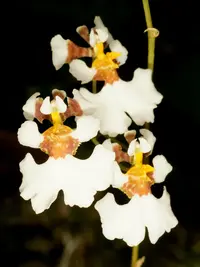
The small, showy blooms have broad, patterned lips and contrasting petals that often resemble a flying butterfly from a distance. In its native habitat this visual pattern likely helps attract specific pollinating insects that respond to the color contrasts.

Seasonal dry rest adaptation

In Puerto Rico and nearby islands, this orchid experiences a pronounced dry season and responds by slowing growth while relying on its thickened leaf bases and roots to store water. Flowering often follows after rains return, when temperature and moisture conditions improve.

Botan icon

Did you know?

Tolumnia variegata has been documented as one of the most widespread and locally abundant twig epiphytes in parts of Puerto Rico and the Virgin Islands, often forming conspicuous populations on roadside shrubs and coastal vegetation where few other orchids can tolerate the same level of sun and wind exposure.

FAQs about Harlequin dancing-lady orchid

Lack of blooms usually comes from insufficient light, no slight night temperature drop, or irregular fertilizing. This species also needs a short rest after flowering with reduced water. Stable, moderate care often restores flowering the next season.

Grow Healthy Plants with Botan Care

Keep your plants happy and healthy with plant identification, disease detection, and easy care guidance.

Botan plant care app — identify plants on mobile

Explore More Plants