


Improve Air Circulation
Mount plants on open structures such as wire, cork, or driftwood rather than in enclosed glass vessels so air can move freely around every side and dry the leaves between waterings.

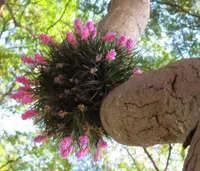
Tillandsia recurvifolia is a small epiphytic air plant from South America, typically found clinging to trees or rocks in bright, airy habitats. It forms tight rosettes of narrow, curling leaves covered in fine silvery scales that help it capture light and moisture from the air.
This species produces colorful flower spikes that add seasonal interest despite its compact size. Its ability to grow without soil and its moderate tolerance of indoor conditions make it relatively straightforward for beginners who want to learn how to care for Tillandsia recurvifolia.
The plant prefers bright, indirect light, good air circulation, and regular light moisture, which reflects its origin in open, breezy environments rather than dense forest shade.

Care Difficulty
Moderate Care

Light Preference
Partial Sun

Water Requirements
Low Water

Temperature Preference
Warm Climate

Hardiness Zone
9–11

Soil Texture
Sandy, Rocky, Organic-rich

Soil pH
Acidic (5.5–6.5), Slightly acidic (6.5–7.0)

Soil Drainage
Well-drained

Fertilization
Minimal (feed rarely)
Scan your plant to receive care tips personalized for your specific plant
Available on iOS and Android
This species prefers bright, indirect light with some gentle direct sun each day.
Watering focuses on thorough wetting followed by complete drying of the plant surfaces.
Stable, mild temperatures support steady growth and flowering.
This air plant prefers moderate humidity and needs regular moisture access despite lacking roots in soil.
This species is an epiphytic air plant and must not be planted in traditional potting soil.
This air plant adapts well to container display as long as it is not buried in any substrate.
This epiphytic air plant has modest nutrient needs but responds well to light feeding during active growth.
Pruning is minimal and mainly used to maintain hygiene and appearance.
This air plant is usually mounted rather than potted, so transplanting focuses on remounting rather than root disturbance.
Propagation is commonly done by division of offsets that form around the mother plant.
This species dislikes prolonged cold and benefits from simple winter protection in cooler climates.

Plant Health Check
Not sure what's wrong with your plant? Check your plant's health inside the app.
This species has dense, silvery trichomes that create a frosted appearance and help it thrive in very bright, exposed habitats by reflecting excess light and trapping brief moisture from fog or dew.
Mature plants develop noticeably arching to curling leaves that bend backward, a growth form that helps channel water toward the plant’s center and distinguishes it from many straighter-leaved air plants.
It produces slender tubular flowers, usually white to pale violet, that can emit a light fragrance and are adapted to pollination by nectar-feeding insects and, in some regions, small birds such as hummingbirds.
Brown leaf tips usually result from low humidity, underwatering, or strong, hot air flows. Entire brown, mushy leaves indicate rot from staying wet too long. Improve air movement, adjust misting or soaking frequency, and remove dead tissue.
Keep your plants happy and healthy with plant identification, disease detection, and easy care guidance.

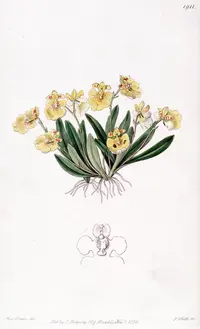
Erycina crista-galli
Erycina crista-galli
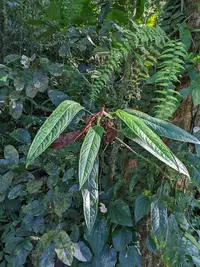
Anthurium microspadix
Anthurium microspadix
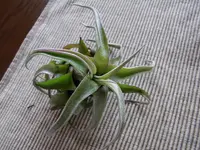
Tillandsia streptophylla
Tillandsia streptophylla

Neoregelia carolinae var. tricolor
Neoregelia carolinae var. tricolor

lucuba palm
Dypsis madagascariensis
Amaioua guianensis
Amaioua guianensis
 POPULAR
Asian Taro Plant
Alocasia odora
 POPULAR
Moon Cactus
Gymnocalycium mihanovichii