Violet Cattleya Care (Cattleya violacea)

Violet Cattleya

About Violet Cattleya

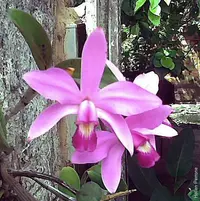
Violet Cattleya, Cattleya violacea, is a tropical epiphytic orchid that often grows on trees along warm, humid rivers in the Amazon basin. It forms clumps of pseudobulbs with thick leaves and produces large, showy purple to violet flowers with a frilled, often darker lip.

In cultivation it usually grows mounted or in a very airy orchid mix, reflecting its natural need for abundant air around the roots. The plant prefers bright, filtered light, steady warmth, and regular moisture with good drying between waterings.

Its main challenges are sensitivity to cold, low humidity, and poor air movement, so stable indoor conditions make care for Violet Cattleya more manageable for hobby growers.


Main Plant Requirements

Care Difficulty

Moderate Care

Light Preference

Partial Sun

Water Requirements

Moderate Water

Temperature Preference

Tropical / Frost Sensitive

Hardiness Zone

Unknown

Soil Texture

Peaty, Organic-rich, Rocky

Soil pH

Acidic (5.5–6.5)

Soil Drainage

Well-drained

Fertilization

Moderate (every 2–4 weeks)

Get Personalized Care Plan

Scan your plant to receive care tips personalized for your specific plant

Available on iOS and Android

How to Care for the Violet Cattleya

This orchid needs bright, filtered light to flower well without leaf burn.

  • Provide 10–12 hours of bright, indirect light, such as dappled sun under 30–50% shade cloth or a lightly shaded tree canopy.
  • Allow gentle early morning or late afternoon sun; avoid strong midday sun, which can scorch leaves of Violet Cattleya and cause yellow patches or wrinkling.
  • In winter or cloudy seasons, move plants to a brighter position; dark, soft leaves and sparse flowering indicate insufficient light.

This species prefers frequent moisture around the roots but not constant saturation.

  • Water when roots and medium look silvery and the top 2–3 cm of bark or substrate feel almost dry, then flush thoroughly so water drains away quickly.
  • Reduce watering in cooler months when growth slows; in warm active growth, water more often, especially if plants are mounted or in very open media.
  • Watch for signs: limp, shriveled pseudobulbs suggest underwatering, while blackened roots, sour smell, or mushy bulbs indicate overwatering in Cattleya violacea.

This orchid is a warmth-loving species that dislikes cold swings and frost.

  • Aim for 70–85°F (21–29°C) by day and 65–72°F (18–22°C) at night for steady growth and flowering.
  • Protect plants from temperatures below 55°F (13°C); brief drops to 50°F (10°C) may be tolerated but slow growth and increase disease risk.
  • In hot spells above 90°F (32°C), increase air movement and shade, and avoid placing plants near hot reflective surfaces to prevent heat stress and leaf scorch.

This species needs consistently high humidity to flower and grow well indoors.

  • Aim for 60–80% humidity; growth slows and buds may abort below about 50%.
  • In dry air, leaves may wrinkle, pseudobulbs shrivel, and new roots stall or brown at the tips.
  • Increase humidity with a room humidifier, grouped plants, or a wide pebble tray that keeps pots above, not in, the water.

Cattleya violacea grows best in a very airy, fast-draining epiphytic mix rather than regular potting soil.

  • Use medium orchid bark as the main component, with chunky perlite and a little sphagnum moss to hold some moisture without becoming dense.
  • Ensure large air gaps around roots; the mix should dry quickly after watering and never stay soggy for more than 1–2 days.
  • Aim for slightly acidic conditions, around pH 5.5–6.5, which supports nutrient uptake and healthy root growth.
  • Avoid fine peat-based or heavy mixes that compact, block airflow, and promote root rot in containers.

This orchid is very suitable for container growing when drainage and root aeration are prioritized.

  • Choose a shallow, snug pot so roots fill it quickly, which stabilizes the plant and prevents the mix from staying wet too long.
  • Use slotted or net-style orchid pots to increase side ventilation and speed moisture loss from the bark mix.
  • Place the pot inside a heavier cachepot or on a stable stand if the tall growth makes the plant prone to tipping over.

This orchid benefits from moderate, targeted feeding during active growth for reliable flowering.

  • Use a balanced orchid fertilizer (for example 20-20-20) diluted to 1/4–1/2 strength for Cattleya violacea.
  • Feed every 1–2 weeks in the growing season when new roots and pseudobulbs are developing.
  • Rinse the potting mix with plain water monthly to prevent salt buildup on roots.
  • Reduce feeding to once a month or pause entirely in winter or when growth slows.

Pruning needs for Cattleya violacea are minimal and focus on hygiene rather than shaping.

  • Trim spent flower spikes at the base with clean, sharp scissors after blooms fade.
  • Remove dead, shriveled, or rotted pseudobulbs and leaves to limit disease spread.
  • Cut only dry, brown roots, leaving firm white or green roots intact for support.
  • Sterilize tools between cuts with alcohol or a flame to reduce fungal and bacterial problems.

This epiphytic orchid prefers snug conditions but benefits from occasional repotting to refresh its airy medium.

  • Check for roots circling the pot, climbing over the edge, or very slow growth as signs Cattleya violacea needs repotting.
  • Repot every 2–3 years in late winter or early spring, just as new roots begin to emerge.
  • Use a coarse, free-draining orchid mix and position the rhizome at the surface to avoid rot.
  • Handle roots gently, remove only soft, blackened tissue, and keep the plant slightly drier for 7–10 days to limit stress.

Division is the standard home method for increasing Cattleya violacea plants.

  • Divide mature clumps in late winter or early spring when new growth starts.
  • Ensure each division has at least 3–4 healthy pseudobulbs and active roots for stable recovery.
  • Plant divisions in fresh coarse orchid mix, anchoring them firmly to prevent wobbling.
  • Maintain bright, indirect light, high humidity (60–70%), and moderate watering until growth resumes.

This tropical orchid is frost-sensitive and needs warm, stable conditions in winter.

  • Grow Cattleya violacea indoors or in a heated greenhouse where temperatures stay above 55°F.
  • Provide bright, indirect light and good air movement to reduce fungal issues in cooler months.
  • Water less often in winter, allowing the mix to dry slightly more between waterings.
  • Avoid cold drafts from windows and doors, and never expose the plant to freezing conditions.

Care Tips

Optimize air movement

Use a small oscillating fan on a low, indirect setting to keep air moving around the leaves and roots, which helps prevent fungal spots on pseudobulbs and flowers while allowing the plant to dry evenly after watering or misting.

Use open baskets

Mount plants in slatted wooden baskets or open mesh pots with large-grade orchid bark so roots can wander freely, which suits their epiphytic habit and reduces the risk of suffocation and rot in dense containers.

Seasonal light adjustment

Shift the plant slightly closer to a bright window or adjust shade cloth at the end of winter to give a gentle light increase before the main growth period, then move it a little back if leaves begin to show pale or yellow patches.

Support heavy flower spikes

As buds swell, insert a thin orchid stake into the pot or basket and secure spikes loosely with soft clips or ties so that the stems do not bend or snap under the weight of the flowers.

Monitor root color

Check exposed roots regularly and aim for a silvery tone most of the time with a quick turn to fresh green right after watering, using this color change as a practical guide to fine-tune the irrigation rhythm when caring for Violet Cattleya.

Common Pests and Diseases

Scale insects

This pest attaches firmly to pseudobulbs, leaf sheaths, and undersides of leaves, sucking sap and weakening the plant. Symptoms include yellowing patches, sticky honeydew, and sooty mold development, especially on older canes and sheaths.

Solution

Remove heavily infested sheaths and wipe visible scale with cotton pads dipped in isopropyl alcohol, repeating weekly until clear. Improve air movement, avoid overfertilizing with high nitrogen, and use a labeled systemic insecticide or horticultural oil suitable for orchids if manual removal is not enough.

Spider mites

These insects thrive on Cattleya violacea in warm, dry, bright conditions and are often found on the undersides of leaves. Symptoms include fine stippling, dull or silvery patches on leaves, webbing in leaf axils, and reduced vigor.

Solution

Increase humidity, rinse foliage thoroughly with a strong but gentle water spray, and wipe leaf undersides. For persistent infestations, apply a miticide or insecticidal soap labeled for orchids, repeating treatments according to label directions while keeping leaves drying quickly afterward to prevent fungal issues.

Bacterial brown spot

This disease causes soft, water-soaked, quickly spreading brown lesions on leaves and sometimes pseudobulbs, often starting at a wound or water-sitting point. Symptoms include a foul smell, rapid tissue collapse, and yellow halos around infected areas in warm, wet conditions.

Solution

Isolate the plant, cut away infected tissue back into firm, healthy tissue with a sterile tool, and dust cuts with ground cinnamon or a bactericide labeled for orchids. Keep leaves dry, improve air circulation, and avoid water standing in leaf axils, especially in warm indoor growing areas when caring for Violet Cattleya.

Fungal leaf spots

This disease appears as small dark spots or patches on leaves that may enlarge and merge under high humidity with poor air movement. Symptoms include circular or irregular lesions that may have yellow margins and cause premature leaf drop if unchecked.

Solution

Remove affected leaves or cut out localized spots using sterile tools, and reduce overhead watering so foliage dries quickly. Improve spacing and airflow around plants and, if lesions continue to appear, apply a broad-spectrum fungicide labeled for orchids according to package directions.

Orchid viruses

This disease group includes viruses such as CymMV and ORSV that cause streaking, mottling, or color break in flowers and distorted growth, often more visible on the showy blooms. Symptoms include reduced vigor, deformed or off-color flowers, and patterns that do not match normal variegation.

Solution

There is no cure, so the key steps are strict hygiene: sterilize cutting tools between plants, avoid reusing contaminated pots or media, and discard or isolate suspected plants to protect the collection. Always obtain new Cattleya violacea plants from reputable suppliers that virus-test mother stock where possible.

Interesting Facts

Amazonian riverbank specialist

This species is native to lowland Amazonian forests and often grows on trees along riverbanks, where seasonal flooding brings high humidity and good air movement around its roots.

Warmth-loving epiphyte

It is a true lowland warm grower, typically found at elevations below about 400 m in consistently hot, humid conditions rather than the cooler, higher-elevation habitats of many other Cattleya species.

Fragrant evening blooms

Flowers usually release a sweet, noticeable fragrance that is often stronger in the late afternoon and evening, which helps attract pollinators when wind and humidity conditions are favorable.

Botan icon

Did you know?

Cattleya violacea is one of the few Cattleya species that naturally forms large, pure stands on riverside trees in parts of the Amazon, creating striking masses of violet flowers visible from boats during peak bloom.

FAQs about Violet Cattleya

Lack of flowering usually comes from insufficient light, too little temperature drop between day and night, or nutrient imbalance. Mature pseudobulbs must form fully. Avoid frequent repotting, keep roots slightly snug, and provide a consistent, mild dry rest between growths.

Grow Healthy Plants with Botan Care

Keep your plants happy and healthy with plant identification, disease detection, and easy care guidance.

Botan plant care app — identify plants on mobile

Explore More Plants