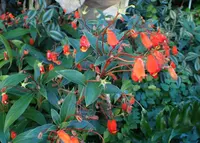
Cuitlauzina pendula Care

Cuitlauzina pendula

About Cuitlauzina pendula

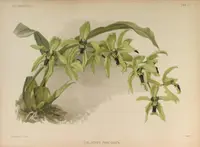
Cuitlauzina pendula is an epiphytic orchid native to the cloud forests of Mexico and Central America. It typically grows on trees, forming graceful, hanging sprays of blooms. The plant develops slender, arching pseudobulbs with narrow leaves and produces cascading flower spikes, often covered in many delicately patterned, fragrant flowers. This growth habit makes it well suited to basket culture or mounted displays. It prefers bright, filtered light, good air movement, and evenly moist but free-draining growing media. Due to its need for stable humidity and regular attention, it is moderately demanding, better suited to growers with some orchid experience who want to learn how to care for Cuitlauzina pendula.

Main Plant Requirements

Care Difficulty

Hard Care

Light Preference

Bright Indirect Light

Water Requirements

Keep Soil Moist

Temperature Preference

Tropical / Frost Sensitive

Hardiness Zone

Unknown

Soil Texture

Organic-rich, Peaty

Soil pH

Acidic (5.5–6.5)

Soil Drainage

Moist but well-drained

Fertilization

Moderate (every 2–4 weeks)

Get Personalized Care Plan

Scan your plant to receive care tips personalized for your specific plant

Available on iOS and Android

How to Care for the Cuitlauzina pendula

This orchid prefers bright, gentle light that mimics dappled forest conditions.

  • Provide 6–8 hours of bright, filtered light daily, such as under 30–50% shade cloth or behind sheer curtains if grown indoors.
  • Allow soft morning sun but protect from strong midday and afternoon sun, which can scorch leaves and fade Cuitlauzina pendula flowers.
  • If new growth is weak, leaves are dark green, or flowering is poor, increase light slightly; in summer, shift to brighter shade, in winter move to the brightest safe spot.

Watering should keep the roots moist but never stagnant.

  • Water when the top 2–3 cm of the potting mix feels just barely dry, then flush thoroughly so water runs out of the drainage holes.
  • Use a very free-draining orchid mix to avoid root rot; wrinkled pseudobulbs or limp leaves suggest underwatering, while yellowing, blackened roots, or a sour smell indicate overwatering.
  • In active growth and warm weather, watering may be needed several times per week; in cooler months, reduce frequency but do not allow the mix to dry completely for Cuitlauzina pendula.

This species grows best in intermediate to cool-intermediate conditions.

  • Aim for 65–75°F (18–24°C) by day and 55–60°F (13–16°C) at night to support steady growth and flowering.
  • Avoid temperatures below 45°F (7°C), as this orchid is not frost tolerant and can suffer tissue damage near freezing.
  • Short periods up to 80–85°F (27–29°C) are tolerated if humidity stays above 50–60% and there is good air movement; in heat, shade more and water slightly earlier in the day.

This orchid needs fairly high ambient humidity to grow and flower well.

  • Aim for 60–80% humidity, with consistent moisture around the roots but no standing water.
  • Dry indoor air below 40% causes limp, wrinkling pseudobulbs and browning leaf tips.
  • Use a humidity tray, room humidifier, or clustered plants to raise humidity around Cuitlauzina pendula.
  • Increase air movement with a gentle fan to prevent fungal problems in humid conditions.

Use a very airy, fast-draining orchid medium rather than standard potting soil.

  • Choose a loose mix based on medium to fine-grade bark with some sphagnum moss and perlite for moisture retention and aeration.
  • Ensure water flows through in seconds; the mix should feel springy, not compact, so roots receive ample oxygen.
  • A slightly acidic reaction around pH 5.5–6.5 suits epiphytic orchids like Cuitlauzina pendula.
  • Avoid dense peat-heavy or garden soil mixes, which stay wet too long and promote root rot in this species.

This species is well suited to container and basket culture when drainage and stability are managed carefully.

  • Select a shallow, wide pot or slatted basket that allows roots to spread laterally and hang slightly, matching its natural growth habit.
  • Use a relatively heavy container or add top-dressing stones if the arching flower spikes make the plant top-heavy.
  • Set the pot inside a decorative cachepot without standing water so excess moisture can drain away while still supporting humidity around the plant.

This orchid benefits from light, consistent feeding during active growth for reliable flowering.

  • Apply a balanced orchid fertilizer (around 20-20-20) at 1/4–1/2 strength every 2–3 weeks in spring and summer.
  • Use a liquid formulation for plants in bark-based media; flush the pot with plain water monthly to prevent salt buildup.
  • Reduce feeding to once a month at very weak strength in autumn and stop in deep winter rest if growth pauses.
  • Avoid organic compost in pots, as it compacts and reduces aeration around the roots of Cuitlauzina pendula.

Pruning Cuitlauzina pendula is minimal and focuses on hygiene rather than shaping.

  • Trim only spent flower spikes at the base once all blooms have faded, using sterilized scissors or pruners.
  • Remove dead, yellow, or diseased leaves by cutting close to the pseudobulb, avoiding green, firm tissue.
  • Cut away dry or rotted roots during repotting, keeping only firm, white or green roots to support healthy growth.

This orchid prefers slightly tight conditions but needs repotting when the medium breaks down or roots overcrowd the pot.

  • Check for signs such as roots circling the pot, medium turning sour or decomposed, or slowed growth despite good care.
  • Plan to repot every 2–3 years, ideally just after flowering in spring when new roots are starting.
  • Gently remove old bark, trim dead roots, and set the plant so new growths face into fresh medium in a slightly larger pot.
  • Use a coarse, well-drained orchid mix and keep humidity high with moderate watering for 1–2 weeks to reduce root stress.

Propagation of Cuitlauzina pendula is usually done by division rather than from seed in home conditions.

  • Divide clumps during repotting in spring, when new roots are emerging and recovery is fastest.
  • Ensure each division has at least 3–4 healthy pseudobulbs to maintain vigor and stable flowering.
  • Use sterilized tools to separate rhizomes, dust cut surfaces with fungicidal powder, and pot divisions in fresh orchid mix.
  • Provide bright, indirect light, high humidity, and slightly warmer temperatures to encourage new root and shoot growth.

This orchid is not frost hardy and requires sheltered conditions in winter.

  • Maintain indoor temperatures around 55–65°F in winter, avoiding any exposure to frost or freezing drafts.
  • Move container plants indoors or into a greenhouse before night temperatures drop below 50°F outdoors.
  • Reduce watering so the medium stays barely moist, and avoid water sitting around roots in cool conditions.
  • Ensure moderate light and gentle air movement to limit fungal problems during the cooler, darker months.

Care Tips

Support arching spikes

Use thin, flexible orchid stakes or horizontal wires above the pot to gently support the long, pendulous flower spikes so they do not kink or snap under their own weight.

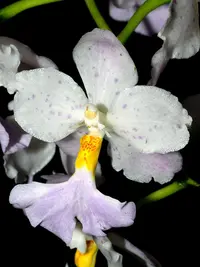
Cool-night management

In late summer and early autumn, move plants to a screened porch, shaded cold frame, or an operable window to provide a 10–15°F drop at night, which helps initiate stronger flowering.

Basket and mount setup

Grow plants in slatted baskets or on mounts with a moisture-retentive but fast-drying medium, then hang them so new growths can naturally drape downward without crowding or deforming the pseudobulbs.

Targeted air movement

Place a small oscillating fan on a low setting so air flows gently across, not directly at, the plant to keep pseudobulb sheaths dry and reduce fungal spotting on leaves and buds.

Pseudobulb health checks

Inspect pseudobulbs monthly and remove only dry, papery sheaths by hand to improve air circulation around the bases while leaving any green tissue intact to support overall plant vigor when caring for Cuitlauzina pendula.

Common Pests and Diseases

Scale insects

These insects feed on sap along pseudobulbs, leaf bases, and flower spikes, often appearing as small, brown or whitish bumps. Symptoms include sticky honeydew, sooty mold, and gradual yellowing or shriveling of pseudobulbs.

Solution

Isolate the plant, then gently scrub affected areas with a cotton swab dipped in isopropyl alcohol and rinse with lukewarm water. Improve air circulation, avoid excessive nitrogen fertilization, and repeat targeted alcohol treatments weekly until no new scale appears; use a systemic insecticide labeled for orchids only if infestations persist.

Spider mites

This pest thrives on Cuitlauzina leaves in warm, dry air, causing fine stippling, dull leaf surfaces, and delicate webbing on the undersides. Symptoms include slow decline, reduced flowering, and increased vulnerability to leaf scorch.

Solution

Shower the foliage thoroughly with lukewarm water, focusing on leaf undersides, then raise humidity to 50–70% while maintaining good airflow. For persistent mites, use repeated applications of an orchid-safe miticide or insecticidal soap, ensuring full coverage of both sides of the leaves every 5–7 days for several cycles.

Bacterial brown spot

This disease causes sunken, water-soaked patches on leaves that soon turn brown to black, often starting near the leaf tip or a mechanical wound. Symptoms include rapid lesion expansion in warm, wet conditions and a foul odor if tissue is badly infected.

Solution

Immediately cut away affected tissue with a sterile blade back into healthy tissue, then dust or dab the cut edges with ground cinnamon or a bactericide labeled for orchids. Keep foliage dry, increase spacing and airflow, avoid overhead watering, and reduce splashing between plants to limit spread, especially in warm periods when caring for Cuitlauzina pendula.

Leaf tip dieback

Symptoms include progressive browning and drying of leaf tips, sometimes accompanied by accordion-like pleating along the leaf when humidity or watering has been inconsistent. This issue is common when plants are exposed to low humidity, high salts in water, or irregular moisture around the roots.

Solution

Trim off the dead tip with sterilized scissors, leaving a narrow margin of healthy tissue, and switch to low-mineral water such as rain, distilled, or reverse-osmosis where possible. Maintain evenly moist but airy medium, keep humidity around 50–70% with good airflow, and avoid fertilizer buildup by flushing the pot thoroughly every 3–4 waterings.

Fungal leaf spotting

This disease produces small, dark, often circular spots that may merge into larger blotches, especially on older leaves or in crowded growing areas. Symptoms include slow expansion of spots and a tendency to worsen under cool, stagnant, and humid conditions.

Solution

Remove heavily spotted leaves with sterile tools and discard them, then improve spacing and airflow around the plant while keeping leaves dry at night. If new spots continue to appear, apply an orchid-safe fungicide according to label directions and adjust watering so the plant is watered early in the day and not left with wet foliage for extended periods.

Interesting Facts

Pendant inflorescence adaptation

This orchid produces long, arching to hanging flower spikes that can reach 30–60 cm, an adaptation that lets the many blossoms be displayed below the plant when it grows on tree branches in its native cloud forests.

Cool-growing cloud forest species

Cuitlauzina pendula is native to cool, moist montane forests of Mexico and Central America, typically between roughly 1,800–2,400 m elevation, where it experiences bright but diffused light, frequent mist, and pronounced nightly temperature drops.

Fragrant, short-lived blooms

The flowers are often sweetly fragrant and borne in showy clusters, but each individual bloom is relatively short-lived, so the plant relies on producing many flowers at once to attract pollinators efficiently.

Botan icon

Did you know?

The genus name Cuitlauzina commemorates the Mexican botanist Cuitláhuac, reflecting the species’ strong geographic and historical association with Mexican highland flora, and the species epithet pendula refers to its distinctively hanging flower spikes, which helped distinguish it from related oncidium-type orchids in taxonomic revisions.

FAQs about Cuitlauzina pendula

This orchid usually blooms once a year in late winter to spring, producing long, arching inflorescences with many flowers. A distinct cooler, slightly drier rest period beforehand often improves bud initiation and overall flowering performance.

Grow Healthy Plants with Botan Care

Keep your plants happy and healthy with plant identification, disease detection, and easy care guidance.

Botan plant care app — identify plants on mobile

Explore More Plants