Rhynchostele maculata Care

Rhynchostele maculata

About Rhynchostele maculata

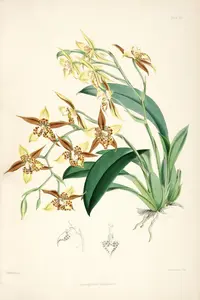
Rhynchostele maculata is an epiphytic orchid, usually growing on trees, with slender pseudobulbs and narrow leaves that support showy, spotted flowers. Its blooms often display cream, yellow, or white backgrounds with brown or purple markings, giving a distinct speckled look.

This species occurs naturally in cloud forests of Mexico and Central America, where it grows in cool to intermediate, humid conditions with good air movement. It is considered moderately challenging, as it reacts quickly to improper watering, low humidity, or stagnant air.

Those who want to learn how to care for Rhynchostele maculata should know it prefers bright, filtered light, regular moisture around the roots, and a very free-draining orchid substrate.


Main Plant Requirements

Care Difficulty

Hard Care

Light Preference

Bright Indirect Light

Water Requirements

Keep Soil Moist

Temperature Preference

Tropical / Frost Sensitive

Hardiness Zone

Unknown

Soil Texture

Peaty, Organic-rich

Soil pH

Acidic (5.5–6.5)

Soil Drainage

Moist but well-drained

Fertilization

Moderate (every 2–4 weeks)

Get Personalized Care Plan

Scan your plant to receive care tips personalized for your specific plant

Available on iOS and Android

How to Care for the Rhynchostele maculata

This orchid prefers bright, gentle light that mimics a high-elevation forest canopy.

  • Provide 6–8 hours of bright, filtered light per day, such as under 30–50% shade cloth or behind sheer curtains with soft morning sun.
  • Allow only mild direct morning sun; avoid strong midday or afternoon sun that can scorch leaves, causing yellow patches or dry, bleached spots.
  • In winter, move Rhynchostele maculata to a slightly brighter position, but still protected from direct midday rays to prevent stress.

Watering should maintain steady moisture around the roots without leaving them waterlogged.

  • Water when the top 2–3 cm of the medium feels just barely dry, using thorough watering that drains completely from the pot or mount area.
  • Use a fast-draining orchid mix; roots should stay moist but never sit in standing water, which leads to root rot, mushy roots, and sour smell.
  • Reduce watering slightly in cooler months, and increase frequency in warm, active growth when pseudobulbs start to wrinkle lightly between waterings.

Stable, intermediate temperatures support consistent growth and flowering.

  • Aim for 65–75°F (18–24°C) by day and 55–60°F (13–16°C) at night, with a gentle day–night drop to stimulate healthy growth.
  • Protect this orchid from temperatures below 45°F (7°C); exposure near freezing can damage leaves and pseudobulbs, especially if combined with wet conditions.
  • During hot spells above 85°F (29°C), increase air movement and humidity, and shade more heavily to reduce heat stress and prevent leaf scorching.

This orchid needs consistently high humidity to flower and grow well indoors.

  • Aim for 60–80% humidity, using a room humidifier or humidity tray placed near but not under the pot.
  • Tolerates brief dips to 40–50%, but sustained dry air leads to wrinkled pseudobulbs and crisp leaf tips.
  • Increase humidity with grouped plants and gentle air movement to prevent fungal spots while keeping leaves dry.

Provide a very airy, fast-draining orchid substrate rather than regular potting soil.

  • Use a mix of medium fir bark, chunky perlite, and a little sphagnum moss to keep roots moist but well aerated.
  • Ensure the structure is loose and coarse so water drains in seconds and air can circulate freely around the roots.
  • Maintain slightly acidic conditions around pH 5.5–6.5 by avoiding lime-heavy materials and using rainwater or filtered water when possible.
  • Replace or refresh compacted or decomposed bark to restore drainage and prevent root suffocation or rot in Rhynchostele maculata.

This species is well suited to container culture when the pot is matched to its epiphytic root system.

  • Choose a slightly snug, shallow orchid pot so the root mass fills it quickly, which stabilizes the plant and speeds drying between waterings.
  • Use a pot with side slits or ventilation holes to keep the orchid mix airy and avoid stagnant moisture near the roots.
  • Select a heavier clay or ceramic pot if the plant becomes top-heavy, reducing the risk of tipping when spikes develop.

Nutrient-conscious feeding supports healthy flowering and foliage in Rhynchostele maculata grown in pots.

  • Use a balanced orchid fertilizer (for example 20-20-20) diluted to 1/4–1/2 strength in well-watered media.
  • Feed every 2–3 weeks during active growth in spring–summer, skipping any dry, resting periods.
  • In fall–winter, reduce feeding to monthly or stop if light and temperatures are low and growth slows.
  • Avoid compost or heavy slow-release products that stay wet and instead use orchid-specific liquids or very light slow-release granules.

Pruning needs are light and mainly focused on hygiene and flowering performance for Rhynchostele maculata.

  • Best time to prune is after flowering, once spikes fade and begin to dry.
  • Cut spent flower spikes back to the base with sterilized scissors or pruning snips to limit disease entry.
  • Remove dead, shriveled, or badly damaged pseudobulbs and leaves, leaving firm, green tissue intact.
  • Avoid cutting healthy green canes or leaves, as these store energy and support future blooms.

Repotting helps maintain aerated media and a healthy root system in this epiphytic orchid.

  • Check for crowded roots circling the pot, slow growth, or medium breaking down into fine, soggy particles.
  • Repot every 2–3 years in late winter or early spring, just before or as new roots begin to grow.
  • Gently remove old bark, trim dead roots, and place the plant in a slightly larger pot with fresh airy orchid mix.
  • Keep the plant shaded, slightly warmer, and evenly but lightly moist for 1–2 weeks after repotting to reduce stress.

Propagation of Rhynchostele maculata is usually done by division rather than from seed at home.

  • Plan division in late winter or early spring when new growths and roots start to emerge.
  • Remove the plant from its pot and split the clump so each division has at least 3–4 healthy pseudobulbs.
  • Dust cuts lightly with fungicidal powder or ground cinnamon and pot divisions into fresh, free-draining orchid mix.
  • Maintain high humidity, bright indirect light, and gentle air movement until new roots and growths establish.

Cool to intermediate conditions suit this orchid, but it is not frost hardy and needs protection in winter.

  • Keep temperatures around 50–60°F at night and 60–70°F by day during winter rest.
  • Move any outdoor containers indoors before temperatures drop below 50°F, using bright filtered light.
  • Maintain slightly drier media in winter, allowing the top to approach dryness between waterings without letting roots desiccate.
  • Avoid cold drafts and sudden temperature drops around windows or doors to reduce stress and leaf damage.

Care Tips

Cool-night boost

If possible, move plants to a slightly cooler room or near a screened window at night in fall and winter to provide a 10–15°F temperature drop, which supports reliable spike initiation and flowering when growing Rhynchostele maculata.

Mounting for roots

For experienced growers, mounting the plant on cork or hardwood with a thin layer of sphagnum allows rapid drying around the fine roots and can reduce root rot risk in very humid grow rooms.

Targeted air movement

Place a small oscillating fan on a low setting so air just barely moves the leaves and pseudobulbs, which helps prevent fungal spotting on flowers and reduces the chance of bacterial rot in the crown area.

Spike stabilization

As soon as new flower spikes are 8–10 cm long, attach them loosely to thin stakes with soft ties or clips to keep them upright and prevent breakage when you move or water the plant.

Post-bloom recovery

After flowers fade, cut the spent spike close to its base, then keep the plant in steady conditions and avoid repotting for several months so new pseudobulbs can fully mature and store energy for the next flowering cycle.

Common Pests and Diseases

Scale insects

This pest feeds on sap and often appears as small, brown, immobile bumps on pseudobulbs, flower spikes, and leaf bases. Symptoms include sticky honeydew, sooty mold growth, and gradual yellowing or shriveling of tissues.

Solution

Remove heavily infested areas with a cotton swab dipped in isopropyl alcohol and gently scrape off visible insects. Improve air movement, avoid excess nitrogen fertilization, and repeat topical alcohol treatments weekly; in severe cases, use a labeled systemic insecticide suitable for orchids and isolate the plant during treatment.

Spider mites

These insects thrive in the bright, warm, relatively dry conditions often used for this species and feed on leaf undersides. Symptoms include fine webbing, silvery stippling, and a dull, dusty look to the foliage.

Solution

Rinse foliage thoroughly with lukewarm water, paying special attention to leaf undersides, and increase ambient humidity to 50–70%. For persistent infestations, apply a horticultural oil or insecticidal soap labeled for orchids at 5–7 day intervals, and keep the plant slightly away from hot, drying airflow while maintaining good ventilation.

Mealybugs

This pest appears as white, cottony clusters in leaf axils, between pseudobulbs, and along roots in the potting mix. Symptoms include distorted new growth, sticky honeydew, and slow decline of plant vigor.

Solution

Physically remove visible mealybugs with a cotton swab dipped in isopropyl alcohol and flush the crown and crevices with water to dislodge hidden insects. Inspect and clean roots when repotting, consider replacing the medium, and if needed apply a systemic insecticide suitable for orchids, repeating according to label directions to break the life cycle when caring for Rhynchostele maculata.

Bacterial brown spot

This disease causes water-soaked, translucent lesions on leaves that quickly turn brown to black with a soft or mushy texture. Symptoms include foul odor, rapid expansion of spots in warm, humid conditions, and potential collapse of affected leaves.

Solution

Remove and discard infected leaves or leaf sections with a sterile blade, cutting well into healthy tissue, and keep the foliage dry, especially at night. Increase air circulation, lower humidity slightly, and use a bactericide labeled for orchids if new spots continue to appear, disinfecting tools and avoiding overhead watering onto the leaves.

Leaf anthracnose

This disease produces small, sunken, dark lesions on leaves that may merge into larger dead patches with yellow halos, especially under high humidity and poor air movement. Symptoms include slow but progressive spotting that starts on older leaves and sometimes along the leaf tips or margins.

Solution

Prune out affected leaf areas with sterilized tools and ensure stronger air circulation around the plant while avoiding overcrowding. Keep humidity in the recommended range without prolonged leaf wetness and, if spotting persists, apply a fungicide labeled for anthracnose on orchids following label intervals and safety instructions.

Interesting Facts

Variable flower spotting

This species naturally shows a high variation in the size, density, and distribution of dark spots on its white to cream petals and sepals, so individual plants can look strikingly different even within the same population.

Cool, high-elevation origins

It is native to cool to intermediate cloud forests of Mexico and Central America, where it often grows as an epiphyte at higher elevations than many commonly grown orchids.

Fragrant, long-lasting blooms

The flowers are frequently sweetly scented and can remain in good condition on the plant for several weeks, which contributes to its long-standing popularity among orchid collectors.

Botan icon

Did you know?

Historical herbarium and horticultural records show that this species has been described under several different genus names over time, reflecting how challenging its relationships within the Oncidiinae orchid group have been for botanists to interpret.

FAQs about Rhynchostele maculata

This orchid usually blooms in late winter to spring, sometimes again later under stable conditions. Mature, well-grown plants can flower once or twice a year, producing branched sprays of spotted blossoms that last several weeks.

Grow Healthy Plants with Botan Care

Keep your plants happy and healthy with plant identification, disease detection, and easy care guidance.

Botan plant care app — identify plants on mobile

Explore More Plants