


Mounting strategy
Use a rough cork or tree fern mount with a thin layer of long-fiber sphagnum only around the roots, leaving the rhizome exposed so new pseudobulbs can attach and spread without rotting.

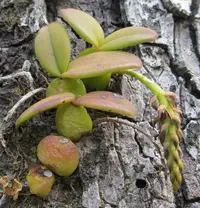
Bulbophyllum elliotii is a small to medium epiphytic orchid, usually growing on tree trunks or branches rather than in soil. It forms clumps of slender pseudobulbs with narrow leaves and produces unusual, often intricate flowers that attract specialized pollinators.
This species is native to parts of tropical Africa, where it experiences warm temperatures, high humidity, and dappled forest light. Its need for consistent moisture, good air movement, and stable warmth makes it more suited to intermediate or advanced growers.
Those who want to learn how to care for Bulbophyllum elliotii should know it prefers bright, filtered light and a very airy, fast-draining growing medium that never stays dry for long.

Care Difficulty
Hard Care

Light Preference
Bright Indirect Light

Water Requirements
Keep Soil Moist

Temperature Preference
Tropical / Frost Sensitive

Hardiness Zone
Unknown

Soil Texture
Peaty, Organic-rich

Soil pH
Acidic (5.5–6.5)

Soil Drainage
Moist but well-drained

Fertilization
Light (every 4–6 weeks)
Scan your plant to receive care tips personalized for your specific plant
Available on iOS and Android
This orchid prefers bright, filtered conditions that mimic dappled forest light.
Watering should keep the roots moist but never stagnant.
This species prefers intermediate to warm temperatures with stable conditions year-round.
This orchid needs consistently high humidity to stay healthy in typical home conditions.
Bulbophyllum elliotii prefers a very airy, fast-draining epiphytic mix rather than standard potting soil.
This species adapts well to container culture when moisture and air reach the roots evenly.
Feeding is helpful for Bulbophyllum elliotii but should stay light and consistent during active growth.
Pruning needs for Bulbophyllum elliotii are minimal and focus on hygiene rather than shaping.
Repotting Bulbophyllum elliotii is occasional but important to keep the fine roots healthy and well aerated.
Propagation of Bulbophyllum elliotii is most reliable by careful division of mature clumps.
Winter care for Bulbophyllum elliotii focuses on avoiding cold damage and maintaining stable indoor warmth.

Plant Health Check
Not sure what's wrong with your plant? Check your plant's health inside the app.
This species typically grows as a small epiphyte on tree branches in African forests, anchoring to bark rather than soil and forming compact clumps of pseudobulbs and leaves.
Its flowers show the complex, hinged lip structure typical of Bulbophyllum, adapted to guide specific insect visitors, but the overall size and form remain relatively modest compared with some larger relatives.
It is native to parts of tropical Africa, where it occupies humid, shaded forest habitats, often sharing host trees with mosses, lichens, and other small orchids.
This species usually blooms once or twice a year, often in warmer months when growth is active. Good light, stable warmth, and consistent moisture help trigger flowering, and individual blooms may last from several days to a couple of weeks.
Keep your plants happy and healthy with plant identification, disease detection, and easy care guidance.


Philodendron ornatum
Philodendron ornatum
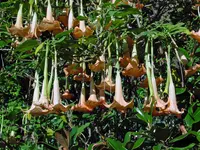
arborescent angel's-tears
Brugmansia versicolor
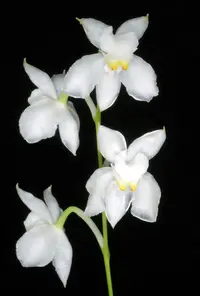
Cuitlauzina pulchella
Cuitlauzina pulchella
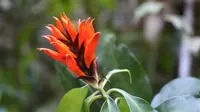
Aphelandra chamissoniana
Aphelandra chamissoniana

Barbel palm
Acanthophoenix rubra
Costa Rican skullcap
Scutellaria costaricana
Eugenia punicifolia
Eugenia punicifolia
 POPULAR
Cyclamen
Cyclamen persicum