Dark Columbine Care (Aquilegia atrata)

Dark Columbine

About Dark Columbine

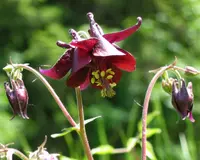
Dark columbine (Aquilegia atrata) is a hardy, clump-forming perennial grown for its nodding, deep purple to almost black flowers and delicate, divided leaves. It typically reaches a modest height and blends well into mixed borders, cottage gardens, and naturalistic plantings.

This species is native to central and southern Europe, where it grows in meadows, woodland edges, and mountain slopes. It tends to be relatively easy to grow in temperate climates, as long as soil drains well and does not stay waterlogged.

Plants prefer light shade to sun with consistent, moderate moisture and humus-rich soil. Once established, it can self-seed modestly, which helps maintain a planting with minimal effort and makes it straightforward to care for Dark Columbine.

Main Plant Requirements

Care Difficulty

Moderate Care

Light Preference

Partial Shade

Water Requirements

Moderate Water

Temperature Preference

Cold Hardy

Hardiness Zone

3–8

Soil Texture

Loamy, Silty, Organic-rich

Soil pH

Acidic (5.5–6.5), Slightly acidic (6.5–7.0)

Soil Drainage

Moist but well-drained

Fertilization

Minimal (feed rarely)

Get Personalized Care Plan

Scan your plant to receive care tips personalized for your specific plant

Available on iOS and Android

How to Care for the Dark Columbine

This shade-tolerant perennial prefers cool, filtered light rather than intense direct sun.

  • Provide 3–5 hours of morning sun with light afternoon shade; dappled light under open trees suits Dark Columbine well.
  • In hot summer areas, protect from strong sun after 11 a.m. to reduce leaf scorch, bleaching, and premature flowering decline.
  • In cooler climates, it tolerates more direct sun, but monitor for wilting or crispy leaf edges and add shade if these appear.

This woodland-type perennial prefers evenly moist, not soggy, soil throughout the growing season.

  • Water when the top 2–4 cm of soil feels dry; soil below should stay slightly damp but never waterlogged.
  • Use free-draining soil with added organic matter so water moves through in a few seconds, preventing root rot and yellowing foliage.
  • In spring and early summer, expect more frequent watering; reduce once flowering ends, watching for limp leaves (too dry) or blackened crowns (too wet).

This hardy perennial thrives in cool to mild conditions and tolerates substantial winter cold.

  • Optimal active growth occurs around 55–70°F (13–21°C), with best flowering in cooler spring weather.
  • Plants withstand winter lows near -20°F (-29°C) in the ground when soil is well drained and mulched lightly.
  • Heat above 85°F (29°C) can stress foliage; provide afternoon shade and consistent moisture during hot spells to prevent dieback.

This species handles typical outdoor humidity well and rarely needs special humidity management.

  • Target 40–60% humidity, which most temperate outdoor settings naturally provide.
  • Plants tolerate short dry-air spells, but prolonged hot, very dry wind can cause leaf edges to brown.
  • If foliage scorches in very dry conditions, group plants near other perennials or use low, wind-breaking edging to reduce moisture loss.

Aquilegia atrata prefers cool, moist, well-drained, humus-rich soil for stable growth.

  • Use a loose loam with 30–50% compost or leaf mold to build organic matter and moisture retention without becoming waterlogged.
  • Aim for slightly acidic to neutral pH around 6.0–7.0; avoid strongly alkaline sites that can reduce nutrient availability.
  • Improve drainage and aeration in heavy clay by working in sharp sand or fine grit plus compost to at least 15–20 cm depth.
  • Avoid compacted, soggy, or very sandy soil that dries out quickly, as roots are shallow and sensitive to both waterlogging and drought.

This species can be grown in containers, but performance is usually better in the ground.

  • Choose a deep, heavy pot to keep tall flowering stems stable and prevent the container from tipping in wind.
  • Fill the container with a loose, well-drained mix and raise the pot on feet so excess water clears quickly from the drainage holes.
  • Place the container where the pot wall is shaded or mulched to keep roots cooler and reduce moisture fluctuations.

Aquilegia atrata needs only modest feeding in reasonably fertile garden soil.

  • Apply a light layer of garden compost or well-rotted manure around plants in early spring to support flowering.
  • Use a balanced, slow-release fertilizer (around 10-10-10) once in spring at half the label rate if soil is poor.
  • Avoid high-nitrogen products that push leafy growth over blooms when caring for Dark Columbine.
  • Stop feeding by late summer and do not fertilize during winter dormancy.

Pruning Aquilegia atrata is simple and mainly focused on tidiness and encouraging fresh growth.

  • In late spring to early summer, deadhead spent flower stalks to prolong blooming and reduce self-seeding.
  • Remove dead, damaged, or disease-marked leaves with clean, sharp scissors or hand pruners.
  • Cut back the foliage to a low mound after flowering to stimulate fresh, compact regrowth.
  • In late autumn, clear away decayed stems and leaves to reduce overwintering pests and diseases.

Aquilegia atrata is usually grown in beds and borders, where it prefers minimal disturbance.

  • Transplant young plants in early spring or early fall, when temperatures are mild and soil is moist.
  • Move only when necessary; mature plants dislike root disturbance, which can slow growth temporarily.
  • Lift with a wide root ball, keep soil around the roots intact, and replant at the same depth.
  • Water thoroughly after transplanting, then keep soil evenly moist and shaded for 7–10 days to reduce stress.

Aquilegia atrata is most often propagated from seed, with division used more sparingly.

  • Sow fresh seeds in late summer to early fall in trays or pots outdoors for natural winter chilling.
  • Alternatively, cold-stratify stored seed at 35–40°F for 4–6 weeks, then sow in spring under bright, indirect light.
  • Use a fine, well-drained seed mix, cover seeds very lightly, and keep evenly moist until germination.
  • Divide only young clumps in early spring, keeping divisions small and replanting promptly to limit root shock.

Aquilegia atrata is cold hardy and usually needs minimal winter care in most temperate climates.

  • After frost blackens foliage, cut stems down to a low crown to tidy the plant and reduce disease carryover.
  • Apply a light mulch layer (2–5 cm) of leaves or compost around the crown in late fall, avoiding direct crown cover.
  • In containers, move pots to a sheltered, unheated area to reduce freeze–thaw stress on the root system.

Care Tips

Deadhead Precisely

Cut spent flower stalks back to the base as soon as petals drop, leaving foliage intact, to extend the blooming period and reduce self-seeding where you do not want seedlings.

Mark Dormant Clumps

Place discreet labels or stones where plants grow, because foliage can disappear quickly after flowering, and clear marking prevents accidental digging or hoeing through dormant crowns.

Rotate Planting Sites

Replant new seedlings or divisions in a different garden area every 3–4 years to reduce build-up of soil-borne diseases such as crown and root rots that can shorten plant lifespan.

Use Seedling Screens

Cover young plants and freshly sown patches with fine mesh or lightweight row cover until they establish, which protects tender growth from leaf miners and early-season pests without chemicals.

Encourage Self-Sown Drift

Allow some seed pods to ripen and drop in a designated bed, then thin crowded seedlings in early spring to create a natural-looking colony and maintain genetic diversity when growing Dark Columbine.

Common Pests and Diseases

Columbine leaf miner

This pest lives inside the leaf tissue and creates pale, winding tunnels that cause blotchy and distorted foliage. Symptoms include leaves that look badly scribbled or marbled but remain attached to the plant.

Solution

Remove and dispose of affected leaves as soon as tunnels appear to break the life cycle, and clean up fallen foliage at the end of the season. In heavy infestations, use a systemic insecticide labeled for leaf miners early in the season, and plant new columbines a short distance away from badly affected clumps to reduce carryover.

Columbine sawfly

These insects are green, caterpillar-like larvae that can quickly skeletonize leaves, leaving only veins and causing plants to look bare. Symptoms include rapid defoliation starting from the lower leaves upward in late spring to early summer.

Solution

Hand-pick larvae from foliage and drop them into soapy water at the first sign of damage, and inspect plants every few days during their active period. For larger infestations, use a targeted product containing spinosad, applied in the evening to limit impact on beneficial insects.

Powdery mildew

This disease appears as a white or gray powdery coating on leaves, especially in crowded or shaded plantings. Symptoms include yellowing, distortion, and premature leaf drop, which weakens the plant over time.

Solution

Improve air circulation by spacing plants properly and thinning dense growth, and avoid wetting foliage when watering. Remove and discard heavily infected leaves, and if needed apply a fungicide labeled for powdery mildew at the first appearance of the white coating, following label instructions carefully.

Rust

This disease causes small yellow spots on upper leaf surfaces and orange to brown pustules on the undersides. Symptoms include premature yellowing and leaf drop that can weaken plants over several seasons.

Solution

Remove and dispose of affected leaves promptly and keep the area around plants free of plant debris to reduce spores. Water at soil level, not over foliage, and in recurring cases use a rust-labeled fungicide early in the season according to label directions as part of broader Aquilegia atrata plant care.

Interesting Facts

Darkest-flowered columbine

This species is notable for its very deep purple to almost black flowers, which are among the darkest naturally occurring hues in the genus Aquilegia and help distinguish it from paler European columbines.

Alpine woodland specialist

It is native to montane and subalpine regions of central Europe, where it grows in light shade of beech and conifer woods and on forest edges rather than in open meadows like some related species.

Distinctive floral spurs

Its nectar-filled floral spurs are relatively short and strongly curved compared with many other columbines, an adaptation linked to pollination by short-tongued bees and flies instead of long-tongued hawkmoths.

Botan icon

Did you know?

Aquilegia atrata has been used in Central Europe as a parent in breeding very dark hybrid columbines, passing on its near-black pigmentation to many modern garden cultivars that would not exist in this form without its genetic contribution.

FAQs about Dark Columbine

Lack of flowers often comes from too much shade, nutrient-poor or very dry soil, or plants started from seed that are still in their first year. Removing spent blooms and avoiding heavy nitrogen fertilizer usually improves flowering next season.

Grow Healthy Plants with Botan Care

Keep your plants happy and healthy with plant identification, disease detection, and easy care guidance.

Botan plant care app — identify plants on mobile

Explore More Plants