
Deep root establishment
During the first growing season, give one slow, deep soak after long dry spells to encourage a taproot that can later access deep moisture and reduce the need for supplemental water when growing desert princesplume.

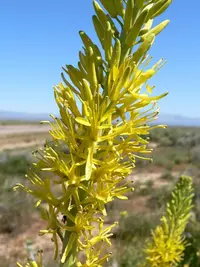
Desert princesplume (Stanleya pinnata) is a long-lived perennial native to arid regions of the western United States, especially rocky deserts and dry slopes. It belongs to the mustard family and has a naturally sparse, upright habit.
Plants form narrow, gray-green foliage at the base and send up tall spikes covered in feathery yellow flowers that stand out in dry landscapes. These blooms provide valuable nectar for pollinators.
This species is adapted to harsh, low-moisture conditions, so it suits water-wise and xeriscape gardens. Once its desert origins are understood, it becomes easier to care for desert princesplume.
Stanleya pinnata prefers full sun, very well-drained, often gravelly or sandy soils, and does best when soil stays on the dry side between waterings.

Care Difficulty
Moderate Care

Light Preference
Full Sun

Water Requirements
Low Water

Temperature Preference
Cold Hardy

Hardiness Zone
4–9

Soil Texture
Sandy, Loamy, Rocky

Soil pH
Neutral (7.0), Slightly alkaline (7.0–7.5)

Soil Drainage
Well-drained

Fertilization
Minimal (feed rarely)
Scan your plant to receive care tips personalized for your specific plant
Available on iOS and Android
Stanleya pinnata thrives in strong, direct sun typical of arid landscapes.
This desert perennial prefers infrequent, deep watering and very fast-draining soil.
This species is adapted to hot, dry climates with cold winters and marked temperature swings.
This species is highly drought-adapted and humidity is rarely a concern in typical indoor air.
Stanleya pinnata needs very lean, mineral, fast-draining soil to prevent root rot.
This species can be grown in containers, but only if the pot is set up to mimic very dry, fast-draining desert conditions.
Native Stanleya pinnata thrives in lean soils and usually needs only light feeding in cultivation.
Pruning Stanleya pinnata is minimal and mainly focused on maintaining vigor and appearance.
This deep-rooted perennial is best established in a permanent ground location rather than long-term containers.
Stanleya pinnata is most reliably propagated from seed under the right temperature and moisture conditions.
This species is generally cold hardy in its native range and needs little winter care once established.

Plant Health Check
Not sure what's wrong with your plant? Check your plant's health inside the app.
This mustard-family shrub is native to arid regions of the western United States, where it grows on dry slopes, washes, and canyon walls with minimal rainfall and intense sun exposure.
It often colonizes gypsum-rich, saline, or otherwise mineral-heavy soils that many plants cannot tolerate, which helps it dominate sparse desert plant communities.
The tall, plume-like flower spikes produce nectar and pollen that attract a range of native bees and other insects, and some desert bee species preferentially visit its yellow blossoms.
This species is known to accumulate unusually high levels of selenium from certain desert soils, to the point that its tissues can signal the presence of selenium-rich geologic deposits to trained observers.
Poor flowering usually comes from too much water, rich fertilizer, or shade. This species needs lean, well-drained soil, strong sun, and minimal feeding. Avoid frequent irrigation and high-nitrogen fertilizers to support bud formation and flowering.
Keep your plants happy and healthy with plant identification, disease detection, and easy care guidance.
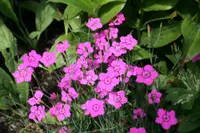
Maiden pink
Dianthus deltoides
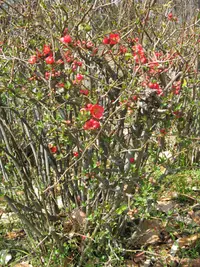
flowering quince
Chaenomeles speciosa
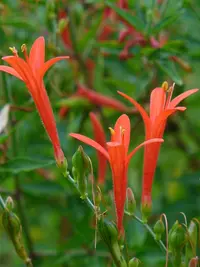
Wright's desert honeysuckle
Anisacanthus quadrifidus
purple false foxglove
Agalinis purpurea
love-lies-bleeding
Amaranthus caudatus
Creeping Cradle Plant
Cyanotis axillaris
Einsel's Columbine
Aquilegia einseleana
wood forget-me-not
Myosotis sylvatica