Rocky crevice planting
Tuck plants into wide gaps between rocks or broken concrete slabs so roots stay cool and dry while the stems can spill over the edge, which closely mimics the natural habitat and improves longevity.

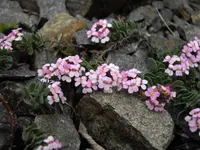
Burnt candytuft, Aethionema saxatile, is a compact, woody-based perennial often grown in rock gardens and sunny borders. It forms low cushions of small blue-green leaves that highlight its clusters of soft pink flowers in spring.
This species is native to rocky slopes in southern Europe and western Asia, where it thrives in harsh, well-drained sites. Its slow, mounded growth habit and drought tolerance make it suitable for gravel gardens and containers.
It can be moderately demanding, as it dislikes heavy, wet soils and poor drainage. Gardeners who understand how to care for Burnt Candytuft usually find it long-lived and reliable in the right spot.

Care Difficulty
Easy Care

Light Preference
Full Sun

Water Requirements
Low Water

Temperature Preference
Cold Hardy

Hardiness Zone
4–7

Soil Texture
Sandy, Loamy, Rocky

Soil pH
Slightly alkaline (7.0–7.5), Alkaline (7.5–8.5)

Soil Drainage
Well-drained

Fertilization
Minimal (feed rarely)
Scan your plant to receive care tips personalized for your specific plant
Available on iOS and Android
This compact alpine prefers bright, open conditions and thrives in full sun in most temperate gardens.
This plant is drought-tolerant and prefers to dry between waterings, especially in rocky or sandy sites.
This hardy perennial tolerates a wide temperature range but performs best in moderate conditions.
This alpine subshrub prefers dry air and does not have special humidity needs.
This drought-tolerant rock garden plant needs very free-draining, mineral soil to prevent root rot.
This species grows reliably in containers when drainage and root conditions are carefully managed.
This alpine perennial needs only light feeding to maintain compact growth and steady flowering.
Pruning keeps Aethionema saxatile dense, floral, and long-lived in rock gardens or edges.
This rock-garden perennial is usually transplanted outdoors rather than grown long term in containers.
Aethionema saxatile is commonly propagated from semi-ripe cuttings or seeds for rock gardens and troughs.
This species is generally cold hardy in temperate climates and usually needs only minimal winter care.

Plant Health Check
Not sure what's wrong with your plant? Check your plant's health inside the app.
This species naturally anchors itself in thin cracks of limestone and other calcareous rocks, with roots adapted to exploit very shallow, mineral-rich substrates on cliffs and rocky slopes in southern Europe and western Asia.
Its pale pink, four-petalled flowers open in spring and early summer and are visited by a range of small bees and flies, providing one of the earlier nectar and pollen resources in its native rocky habitats.
As a member of the cabbage family Brassicaceae, it produces the typical cross-shaped flowers and small dry fruits (siliques) characteristic of this group, and shares many floral traits with more familiar relatives like wallflowers and rock cress.
This species is usually semi-evergreen. In mild winters it keeps most foliage, but in colder regions it can lose many leaves and look sparse, then leaf out again from woody stems in spring.
Keep your plants happy and healthy with plant identification, disease detection, and easy care guidance.