Fairy iris Care (Dietes grandiflora)

Also known as: Large Fortnight Lily, Butterfly Iris, African Iris, Large Wild Iris
Fairy iris

About Fairy iris

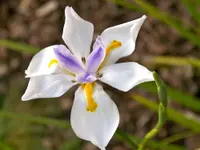
Fairy iris (Dietes grandiflora) is a clump-forming, evergreen perennial with narrow, arching leaves and delicate white flowers marked with yellow and purple. It sends up blooms on slender stems above the foliage, often in flushes through warmer months, giving a light, grassy look.

This species is native to South Africa, where it grows in grasslands and along forest margins, so it adapts well to many mild outdoor climates. It is generally considered low-maintenance, which makes it straightforward to care for Fairy iris in garden beds or large containers.

The plant prefers bright light, moderately moist but well-drained soil, and benefits from occasional division to keep clumps vigorous and flowering well.

Main Plant Requirements

Care Difficulty

Easy Care

Light Preference

Full Sun

Water Requirements

Moderate Water

Temperature Preference

Warm Climate

Hardiness Zone

8–11

Soil Texture

Sandy, Loamy, Clay

Soil pH

Slightly acidic (6.5–7.0), Neutral (7.0)

Soil Drainage

Moist but well-drained

Fertilization

Minimal (feed rarely)

Get Personalized Care Plan

Scan your plant to receive care tips personalized for your specific plant

Available on iOS and Android

How to Care for the Fairy iris

Dietes grandiflora thrives in bright outdoor conditions with a balance of sun and light shade.

  • Provide 4–6 hours of direct sun, ideally morning sun with light afternoon shade, to support strong flowering in Fairy iris.
  • Allow partial shade, especially in hot climates, where filtered light or dappled shade protects foliage from scorch during intense midday sun.
  • Watch for weak, floppy leaves and sparse blooms as signs of too little light, and for bleached or crispy leaf tips as signs of excessive harsh sun.

Dietes grandiflora prefers evenly moist but never soggy soil once established.

  • Water when the top 3–5 cm of soil feels dry, then soak the root zone thoroughly, allowing excess water to drain away.
  • In spring and summer, expect to water more often during hot, dry spells; reduce frequency in fall and winter as growth slows and rainfall often increases.
  • Yellowing, soft leaves and a sour soil smell indicate overwatering or poor drainage, while browning leaf tips and limp, folding fans suggest underwatering.

This species grows best in mild, frost-free climates with moderate temperatures.

  • Aim for 65–80°F (18–27°C) for active growth and flowering, with consistent conditions supporting stronger clumps and more blooms.
  • Tolerates brief drops to about 25–28°F (-4 to -2°C), but repeated or hard frosts can damage foliage and flower spikes.
  • Handles summer heat up to about 95°F (35°C) if soil moisture is adequate; during heatwaves, mulch and occasional shade help reduce stress and leaf scorch.

Humidity is not a major factor for Dietes grandiflora, which adapts well to typical household and outdoor conditions.

Dietes grandiflora prefers well-structured, free-draining soil that stays lightly moist but not waterlogged.

  • Use a loamy mix combining garden soil, coarse sand, and compost to balance drainage and nutrient retention.
  • Aim for slightly acidic to neutral pH, around 6.0–7.0, which supports nutrient uptake and root health.
  • For containers, mix commercial potting soil with 20–30% coarse sand or fine gravel to improve aeration and prevent soggy conditions.
  • Avoid heavy clay or compacted substrates that hold water around the rhizomes, which encourages rot and weak growth.

This species is suitable for container growing, especially where winter cold or space limits are an issue.

  • Choose a deep, wide container that allows spreading rhizomes and offsets to develop without crowding the root zone quickly.
  • Select a heavy or weighted pot in windy areas to stabilize the clumping foliage and tall flower stalks.
  • Lift the container slightly on pot feet or bricks outdoors so drainage holes stay clear and excess water escapes freely.

Dietes grandiflora benefits from light, balanced feeding during active growth but does not need heavy fertilization.

  • Apply a balanced, slow-release fertilizer (around 10-10-10) in early spring, worked lightly into the soil surface.
  • In mid-summer, supplement with a thin layer of compost around the clumps, keeping it off the rhizomes.
  • Feed container plants every 4–6 weeks with half-strength balanced liquid fertilizer during the growing season.
  • Stop feeding in late fall and winter to allow the Fairy iris to rest and prevent soft, frost‑tender growth.

Pruning helps Dietes grandiflora stay tidy and maintain good flowering performance.

  • After blooms fade, remove spent flower stalks at the base to tidy the plant and encourage further flowering.
  • Trim yellow, dead, or damaged leaves at their base with clean, sharp hand pruners to reduce disease risk.
  • Every 1–2 years, thin out the oldest, most crowded fans to improve air flow and maintain an attractive clump shape.
  • Avoid cutting healthy green leaves back hard, as this can temporarily reduce flowering and stress the plant.

This iris is usually grown in the ground, so focus on dividing and transplanting crowded clumps rather than frequent repotting.

  • Look for signs such as congested fans, reduced flowering, and rhizomes pushing above soil before planning to transplant.
  • Divide and transplant every 3–5 years in late winter or early spring, before strong new growth begins.
  • Lift clumps gently, shake off soil, and separate sections with several healthy fans and roots to reduce transplant shock.
  • Replant divisions at the same depth in well-drained soil, water thoroughly, then keep evenly moist for 2–3 weeks to help them establish.

Dietes grandiflora is most commonly propagated by division, with seed used mainly for larger-scale or patient growers.

  • Divide mature clumps in late winter or early spring, when plants are not flowering and conditions are cool but not frozen.
  • Use a sharp spade or knife to separate fans, keeping robust roots attached, and discard any rotten or weak sections.
  • Replant divisions into well-drained soil or pots, firm gently, and keep soil slightly moist until new growth shows establishment.
  • For seeds, sow fresh into a free-draining mix, keep at 65–75°F with bright light, and expect variable, sometimes slow germination.

Dietes grandiflora is moderately frost tolerant but benefits from simple winter precautions in colder regions.

  • In USDA zones around 9–11, plants typically overwinter outdoors with minimal intervention.
  • In cooler areas, add a 5–7 cm mulch layer around the root zone in late fall, keeping mulch off the leaf bases.
  • For container plants, move pots to a bright, frost-free spot indoors or in a sheltered porch before hard frosts.

Care Tips

Clump Division Timing

Divide congested clumps every 4–6 years in late winter or very early spring, replanting outer, younger fans and discarding woody, exhausted centers to maintain flowering performance.

Fan Positioning

When replanting divisions, orient the leaf fans so they radiate outward rather than crowding inward, spacing them 25–40 cm apart to keep air movement good and reduce fungal spotting.

Spent Flower Management

Remove only the spent flower stalks by cutting them low at the base while keeping healthy foliage intact, which keeps the plant tidy without reducing its photosynthetic capacity.

Mulch Gap Practice

Apply a 3–5 cm layer of coarse organic mulch around but not touching the leaf bases, leaving a 3–5 cm gap to prevent rot and to stabilize soil moisture around the rhizomes.

Storm And Snow Prep

In areas with occasional heavy snow or strong winds, loosely tie taller fans into small bundles with soft twine to prevent leaf breakage, then remove the ties once conditions improve when caring for Fairy iris.

Common Pests and Diseases

Aphids

These insects feed on young fans and flower stalks, sucking sap and causing distortion and sticky honeydew on leaves and buds.

Solution

Prune off heavily infested flower stalks, hose down clumps with a strong stream of water, and apply insecticidal soap or a light horticultural oil, repeating every 7–10 days until new growth is clean.

Mealybugs

These insects appear as white, cottony clusters at the leaf bases and along fans, weakening the plant over time and sometimes attracting sooty mold.

Solution

Physically remove clusters with a cotton swab dipped in 70% isopropyl alcohol, then treat remaining insects with insecticidal soap or horticultural oil, making sure to spray deep into the leaf bases and repeating as needed.

Snails and slugs

This pest feeds on tender new fans and flower stalks, creating ragged holes and sometimes chewing off developing buds at night.

Solution

Hand-pick at dusk or early morning, use iron phosphate slug bait around clumps, and reduce hiding spots by clearing dense mulch and debris near the base of the plants.

Leaf spot

This disease causes brown to dark purple spots or streaks on the strap-like leaves, which may merge and lead to premature browning of older foliage, especially in humid or overcrowded plantings.

Solution

Remove and dispose of affected leaves, improve air circulation by thinning and dividing dense clumps, avoid overhead watering, and if needed apply a broad-spectrum fungicide labeled for ornamental leaf spot, following label directions carefully.

Crown rot

This disease leads to yellowing, collapse, and rotting at the base of the fans, often in poorly drained or overwatered sites, and affected clumps may loosen in the soil and pull away easily.

Solution

Dig out and discard badly affected plants, improve drainage by amending soil or planting on a slight mound, water less frequently, and replant only healthy divisions, as this is a key point in Dietes grandiflora care instructions for long-lived clumps.

Interesting Facts

Sequential flower opening

Each flower lasts only 1–3 days, but the plant produces many buds that open in succession along the stem, so flowering can appear almost continuous in warm seasons.

Self-sterile flowers

The species is generally self-incompatible, meaning pollen from the same plant does not usually fertilize its own flowers, which helps maintain genetic diversity in wild populations.

South African stream margins

In its native range in South Africa, this species naturally occurs along forest edges, grassland margins, and near streams, where it experiences periodic moisture with well-drained, often sandy soils.

Botan icon

Did you know?

In some regions outside its native South African range, this species has naturalized along roadsides and disturbed sites because its tough rhizomes and abundant seed set allow it to persist and spread in challenging urban and peri-urban environments.

FAQs about Fairy iris

Lack of flowering is often due to insufficient light, depleted soil nutrients, or overcrowded clumps. Divide congested rhizomes every 3–4 years, remove heavy shade, and apply a balanced, slow‑release fertilizer in early spring to restore blooms.

Grow Healthy Plants with Botan Care

Keep your plants happy and healthy with plant identification, disease detection, and easy care guidance.

Botan plant care app — identify plants on mobile

Explore More Plants