wild daffodil Care (Narcissus pseudonarcissus)

Also known as: wild daffodil, Lent Lily, common daffodil
wild daffodil

About wild daffodil

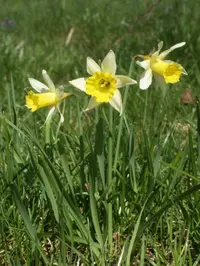
Wild daffodil (Narcissus pseudonarcissus) is a hardy, bulb-forming perennial known for its early spring blooms and naturalized drifts in meadows and woodland edges. It produces upright, strap-like green leaves and nodding, trumpet-shaped yellow flowers on separate stems, forming tidy clumps that expand slowly over time.

In nature it is native to parts of western Europe, especially the British Isles, where it thrives in open, well-drained but moisture-retentive soils. It is generally easy to grow in temperate gardens, as long as the bulbs do not sit in waterlogged ground and receive good light. Understanding how to care for wild daffodil starts with recognizing its rest period in summer, when the foliage naturally dies back after flowering.

Main Plant Requirements

Care Difficulty

Easy Care

Light Preference

Full Sun

Water Requirements

Moderate Water

Temperature Preference

Cold Hardy

Hardiness Zone

3–9

Soil Texture

Sandy, Loamy, Organic-rich

Soil pH

Acidic (5.5–6.5), Slightly acidic (6.5–7.0)

Soil Drainage

Moist but well-drained

Fertilization

Minimal (feed rarely)

Get Personalized Care Plan

Scan your plant to receive care tips personalized for your specific plant

Available on iOS and Android

How to Care for the wild daffodil

Narcissus pseudonarcissus grows best in bright, outdoor conditions that mimic open woodland or meadow edges.

  • Provide 4–6 hours of direct sun daily, ideally morning sun with light afternoon shade, especially in warmer regions to prevent scorched foliage.
  • Tolerates partial shade, such as beneath deciduous trees, where it receives spring sun before the canopy leafs out, then dappled light later in the season.
  • If light is too low, wild daffodil produces fewer, smaller flowers; if sun is too intense and all-day, leaves may yellow and dry early.

Watering should support active growth in spring and then gradually decrease as bulbs enter dormancy.

  • During active growth, water when the top 3–5 cm of soil feels dry, allowing moisture to soak in but not pool around the bulbs.
  • Use well-drained soil or planting sites where water does not stand; persistent soggy soil causes bulb rot, soft bulbs, and foul smell.
  • As foliage yellows and dies back, reduce watering sharply; very dry, shrunken leaves signal underwatering in spring, while limp, yellowing leaves with wet soil suggest excess moisture around Narcissus pseudonarcissus.

This species prefers cool to mild conditions and needs a period of winter chill to flower reliably.

  • Optimal growth occurs in spring at 45–65°F (7–18°C), with buds and flowers forming best in steady, cool weather.
  • Bulbs tolerate winter cold down to about 0°F (−18°C) in the ground when soil is well drained and mulched, but exposed containers are more vulnerable.
  • Foliage copes with short light frosts, yet prolonged heat above 80°F (27°C) causes faster dieback; in hot regions, plant where soil stays cooler, such as morning-sun borders.

Humidity is rarely a limiting factor for Narcissus pseudonarcissus, which thrives in typical outdoor conditions.

Narcissus pseudonarcissus prefers moist, well-structured soil that drains freely but does not dry out too fast.

  • Use a loamy or sandy loam with 20–30% compost to provide stable moisture and nutrients without becoming heavy.
  • Ensure rapid drainage by mixing in sharp sand or fine grit, especially in clay-based garden beds or lawn pockets.
  • Keep pH slightly acidic to neutral, around 6.0–7.0, avoiding strongly alkaline or saline sites that restrict nutrient uptake.
  • Avoid compacted, waterlogged, or peat-only substrates, which reduce aeration around bulbs and increase rot risk.

This species is suitable for seasonal container growing outdoors if the pot allows for deep, cool root and bulb zones.

  • Choose a pot at least 25–30 cm deep so bulbs can sit 10–15 cm below the rim with room for root growth and topdressing.
  • Use a heavy or wide-based container in windy sites to prevent tall flowering stems from tipping the pot as they elongate.
  • Combine several bulbs in a single container to create a dense canopy that shades the substrate surface and slows moisture loss.

Narcissus pseudonarcissus benefits from modest feeding to support flowering, especially in poorer soils.

  • Apply a balanced granular or slow-release fertilizer (around 5-10-10) once in early spring as shoots emerge.
  • Use a light top-dressing of compost after flowering to replenish nutrients without overfeeding the bulbs.
  • Dilute liquid feeds to half strength and apply only while foliage is green and actively growing.
  • Avoid fertilizing wild daffodil during summer dormancy or winter, when bulbs are resting.

Pruning for Narcissus pseudonarcissus focuses on deadheading and managing foliage after bloom.

  • Deadhead spent flower heads in spring, cutting just the stalk to prevent seed formation and conserve bulb energy.
  • Leave green leaves intact for 6–8 weeks after flowering, removing them only once they yellow and collapse naturally.
  • Remove damaged, diseased, or badly tangled foliage with clean, sharp scissors or hand pruners to maintain plant health.
  • Avoid tying or braiding leaves, which reduces photosynthesis and can weaken future flowering.

Transplanting Narcissus pseudonarcissus usually involves lifting and dividing clumps rather than frequent repotting.

  • Look for crowded clumps with reduced flowering or bulbs pushing to the soil surface as a sign they need lifting.
  • Plan to divide and transplant every 3–5 years, ideally in late summer to early fall after foliage has fully died back.
  • Gently lift bulbs with a fork, separate offsets by hand, and discard any soft, moldy, or damaged bulbs.
  • Replant bulbs at 2–3 times their own height in depth, water lightly, and avoid disturbing roots again until growth resumes.

Narcissus pseudonarcissus is most commonly propagated by bulb division rather than seeds.

  • Divide mature clumps in late summer or early fall when bulbs are dormant and foliage is gone.
  • Lift the clump carefully, then separate firm offsets from the parent bulb by hand without cutting if possible.
  • Replant offsets immediately in well-drained soil, spacing 10–15 cm apart at 2–3 times their bulb height.
  • Seed propagation is slow and mainly for breeders, as seedlings take several years to reach flowering size.

This hardy bulb typically needs minimal winter care in most temperate climates.

  • Dormant bulbs tolerate freezing ground, but a 5–7 cm mulch layer helps moderate soil temperature and moisture.
  • In very cold or exposed sites, add extra mulch over planting areas to reduce freeze–thaw heaving of bulbs.
  • Move containers to a sheltered, unheated area where soil stays cold but not waterlogged, such as a cold frame or garage.

Care Tips

Post-bloom deadheading

Remove spent flower heads promptly while leaving the green leaves intact so the bulbs do not waste energy on seed and can refill their reserves for next year.

Foliage tie-back timing

If foliage must be tidied, only loosely tie or braid leaves after they have begun to flop naturally and keep them in place for at least 6 weeks after flowering to allow adequate photosynthesis.

Marking bulb clumps

As flowers fade, discreetly label or map clumps so you can divide or replant them in late summer without damaging dormant bulbs you can no longer see.

Strategic companion planting

Plant shallow-rooted perennials or groundcovers that emerge later in spring to mask yellowing foliage while not competing heavily with the bulbs for light or nutrients.

Planned clump division

Every 4–5 years, lift and divide overcrowded clumps in late summer, replanting only the firm, healthy bulbs at their original depth to maintain strong flowering when growing wild daffodil in the same area long term.

Common Pests and Diseases

Basal rot

This disease causes bulbs to turn brown, soft, and dry from the base upward, often leading to poor emergence or stunted, yellow foliage. Symptoms include a pinkish or brown rot at the basal plate and a dry, mummified bulb.

Solution

Discard all affected bulbs and any obviously shriveled or discolored stock, and avoid replanting daffodils in the same spot for several years. Plant only firm, healthy bulbs in well-drained soil, space them so air can move between plants, and use clean tools to limit spread.

Narcissus bulb fly

This pest is a large fly whose larvae tunnel into bulbs, causing distorted or absent flowering and yellow, collapsing leaves. This pest often leaves bulbs hollowed out and rotting from the inside.

Solution

Lift and inspect weak or failing clumps, discard infested bulbs, and destroy them rather than composting. Use fine mesh or fleece over emerging foliage in late spring and early summer to reduce egg laying, and replant only firm, undamaged bulbs at the recommended depth.

Narcissus eelworm

This pest is a microscopic nematode that invades bulbs, causing swollen, misshapen scales, stunted growth, and twisted, yellow foliage. Symptoms include brown rings or patches inside cut bulbs and progressively weaker flowering over years.

Solution

Remove and destroy all affected bulbs and surrounding debris, and avoid reusing soil or growing daffodils in the same bed for several years. Purchase certified nematode-free bulbs, rotate planting areas, and keep tools and storage trays clean and dry to reduce spread.

Narcissus smoulder

This disease produces brown, elongated leaf lesions with yellow margins and may lead to soft, rotting bulbs and collapsed foliage. This disease spreads in damp, crowded plantings and during storage when bulbs stay moist.

Solution

Remove and destroy infected foliage and bulbs promptly, avoid overhead watering, and improve spacing for faster leaf drying. Store bulbs in a cool, dry, well-ventilated place and clean off soil before storage to reduce moisture and fungal spores.

Narcissus mosaic virus

This disease causes pale streaks, mottling, or striping on leaves and flowers, sometimes with distorted blooms and reduced vigor over time. Symptoms include plants that gradually weaken and flower less each year.

Solution

There is no cure, so rogue and discard infected plants as soon as they are recognized and do not compost them. Control sap-sucking insects that can spread the virus, such as aphids, and propagate only from healthy, symptom-free clumps to maintain good Narcissus pseudonarcissus care.

Interesting Facts

Native Atlantic woodlands

This wild daffodil is naturally associated with light, deciduous Atlantic woodlands and damp meadows in western Europe, where it often forms large, genetically mixed colonies rather than uniform clonal drifts typical of many garden daffodils.

Distinctive bicolored flower

The wild form usually shows pale yellow outer tepals with a deeper yellow trumpet, a color pattern that helps distinguish it from many modern cultivars that have been bred for pure yellow or strongly contrasting colors.

Early spring pollinator resource

Its early flowering period provides one of the first substantial nectar and pollen sources for wild bees and hoverflies in late winter to early spring, especially in ancient woodland and hedgerow systems.

Botan icon

Did you know?

In parts of the UK, especially in Wales, this species has been so culturally important that it is often treated as the traditional wild national daffodil and is celebrated in local festivals and place names, reflecting centuries of association with early spring and regional identity.

FAQs about wild daffodil

Lack of flowers usually comes from planting the bulbs too shallow or too deep, overcrowded clumps, or foliage removed too early in previous seasons. Bulbs need several years of undisturbed energy storage to flower reliably.

Grow Healthy Plants with Botan Care

Keep your plants happy and healthy with plant identification, disease detection, and easy care guidance.

Botan plant care app — identify plants on mobile

Explore More Plants