Stake Tall Stems
Install slender stakes when shoots reach 15–20 cm and loosely tie stems with soft ties to prevent wind damage and bent flower stalks later in the season.


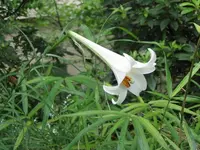
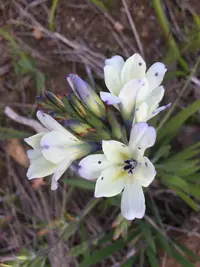
Chinese lily, Lilium brownii, is a bulb-forming perennial lily grown for its large, trumpet-shaped white flowers with a gentle fragrance. It usually sends up upright stems with narrow green leaves and blooms above the foliage, giving a vertical accent in borders or large containers.
This species is native to China and nearby regions, where it grows in mountain meadows and open woodland edges. It is considered moderately easy if given cool roots, good drainage, and protection from waterlogging.
Gardeners who want to learn how to care for Chinese Lily should know it prefers bright light, slightly moist but not soggy soil, and a winter rest period for reliable flowering.

Care Difficulty
Moderate Care

Light Preference
Full Sun

Water Requirements
Moderate Water

Temperature Preference
Cool Climate

Hardiness Zone
5–9

Soil Texture
Sandy, Loamy, Organic-rich

Soil pH
Acidic (5.5–6.5), Slightly acidic (6.5–7.0)

Soil Drainage
Moist but well-drained

Fertilization
Light (every 4–6 weeks)
Scan your plant to receive care tips personalized for your specific plant
Available on iOS and Android
This species prefers bright, open conditions similar to a sunny, temperate garden border.
Lilium brownii needs steady moisture around the bulbs without becoming waterlogged.
This lily prefers temperate conditions with cool to mild winters and moderate summer heat.
Lilium brownii prefers moderate, stable humidity but usually adapts well to typical indoor air.
Lilium brownii grows best in loose, well-aerated, slightly acidic to neutral soil that drains quickly yet retains some moisture.
This species is suitable for container growing when given a deep, very free-draining potting environment.
Lilium brownii benefits from moderate feeding during its active growing season for strong stems and abundant blooms.
Lilium brownii needs light, targeted pruning to maintain vigor and support bulb strength.
Lilium brownii is usually grown in beds, with transplanting or lifting bulbs done infrequently to reduce disturbance.
Lilium brownii is commonly propagated by bulb division and scaling for consistent, true-to-type plants.
Lilium brownii is fairly cold hardy in many temperate regions but benefits from simple winter protection, especially in colder zones.

Plant Health Check
Not sure what's wrong with your plant? Check your plant's health inside the app.
The flowers release a noticeably stronger scent in the evening and at night, which is thought to help attract nocturnal pollinators such as moths in its native range in China.
The species is named for the brownish to purplish tint on the outside of the otherwise white trumpet-shaped tepals, a feature that helps distinguish it from visually similar white Asian trumpet lilies.
In parts of China, the starchy underground bulb of this species has long been cultivated and eaten as a vegetable, especially in regions such as Sichuan and Hubei, where it is treated similarly to other edible lilies.

Lilium brownii is one of the main wild progenitors used by breeders to develop several modern trumpet lily hybrids, contributing traits such as long, outward-facing trumpets and strong fragrance to many popular garden cultivars.
Lack of flowers usually comes from insufficient light, depleted soil nutrients, or bulbs that stayed too dry after flowering. Crowded bulbs or deep planting can also reduce buds. Allow foliage to mature fully so bulbs recharge.
Keep your plants happy and healthy with plant identification, disease detection, and easy care guidance.