desert bluebells Care (Phacelia campanularia)

Also known as: desertbells
desert bluebells

About desert bluebells

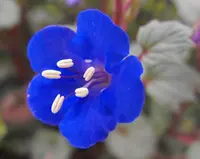
Desert bluebells (Phacelia campanularia) are small annual wildflowers native to the deserts of southern California. They form low, bushy clumps topped with vivid, bell-shaped blue flowers. Leaves are rounded, often with a slightly toothed edge, and may have a soft, slightly hairy texture. Plants bloom generously in cool seasons, then complete their life cycle as heat increases. In nature they grow on sandy or rocky slopes with good drainage and low fertility. They adapt well to garden beds and wildflower meadows and are generally easy to grow from seed. Light, quickly draining soil and moderate moisture help care for desert bluebells in home gardens.

Main Plant Requirements

Care Difficulty

Moderate Care

Light Preference

Full Sun

Water Requirements

Moderate Water

Temperature Preference

Warm Climate

Hardiness Zone

6–10

Soil Texture

Sandy, Loamy, Rocky

Soil pH

Slightly acidic (6.5–7.0), Neutral (7.0)

Soil Drainage

Well-drained

Fertilization

Minimal (feed rarely)

Get Personalized Care Plan

Scan your plant to receive care tips personalized for your specific plant

Available on iOS and Android

How to Care for the desert bluebells

This annual thrives in bright, direct conditions that mimic its native desert habitat.

  • Provide 6–8 hours of full sun daily, ideally strong morning to early afternoon sun with a little late-day relief in very hot regions.
  • In hotter climates, give desert bluebells light afternoon shade or filtered sun to reduce leaf scorch and premature flowering decline.
  • If plants receive under 4–5 hours of sun, expect leggy growth and fewer blooms; choose the sunniest, south- or west-facing spot outdoors.

Watering should balance brief, thorough soakings with dry periods that suit this drought-adapted annual.

  • Allow the top 3–5 cm of soil to dry before watering; use fingers to check, then water deeply so moisture reaches the root zone once you do irrigate.
  • Ensure sharply draining soil or sandy beds so excess water runs off quickly; standing water or heavy clay encourages root rot and yellowing foliage.
  • In cooler seasons or during cloudy weeks, reduce watering frequency; wilting and dry, crisp leaves signal underwatering, while limp, yellowing, or blackened stems suggest overwatering.

This species prefers mild, dry conditions and performs best in cool to warm seasons.

  • Ideal growth occurs around 60–75°F (16–24°C), which supports strong vegetative growth and extended flowering in spring or early summer.
  • Plants tolerate short dips to about 30°F (-1°C) but are damaged or killed by hard frost; use row covers if late cold snaps threaten.
  • Heat tolerance is moderate; flowering often declines above 90°F (32°C), so in hot regions it is best grown as a cool-season annual before peak summer heat.

This species from arid habitats tolerates low humidity and rarely needs special moisture in the air.

  • Performs well at 20–40% humidity, similar to typical heated indoor air in dry regions.
  • Tolerates dry air without issue as long as soil moisture is managed and roots are not waterlogged.
  • Watch for leaf edge browning from drought or heat, not low humidity, when caring for desert bluebells.

This annual prefers light, fast-draining soil that mimics sandy desert conditions.

  • Use a sandy or sandy-loam mix with coarse particles so water passes through quickly and roots receive ample oxygen.
  • Aim for slightly acidic to neutral pH, roughly 6.0–7.0, which suits most general-purpose potting mixes.
  • Blend 50–70% all-purpose potting mix with coarse sand and a small amount of compost for structure and moderate nutrients.
  • Avoid heavy clay, peat-heavy mixes without added grit, or any soil that stays wet for more than 1 day after watering.

Phacelia campanularia grows well in containers when drainage and soil depth are managed carefully.

  • Choose a container at least 20–25 cm deep so its taproot can develop without curling tightly at the base.
  • Use a relatively wide pot to accommodate its spreading habit and reduce the risk of the plant flopping over the rim.
  • Select unglazed terracotta or other porous materials to help excess moisture evaporate quickly from the fast-draining mix.

Phacelia campanularia is a desert annual that needs only light feeding in typical garden soil during its short growing season.

  • Use a balanced, water-soluble fertilizer (for example 10-10-10) at 1/4–1/2 strength for caring for desert bluebells in pots or poor soil.
  • Apply every 3–4 weeks from early spring until flowering peaks, skipping any feed when soil is already fertile.
  • In-ground plants often perform well with just a thin layer of compost worked into the bed before sowing.
  • Stop fertilizing once flowering declines and avoid feeding in winter or after plants have completed their life cycle.

Phacelia campanularia benefits from light, timely pruning to extend bloom and keep plants tidy.

  • In mid to late spring, deadhead spent flowers by snipping just below the faded bloom to encourage continued flowering.
  • Remove dead, damaged, or diseased stems promptly using clean, sharp scissors or hand pruners.
  • Lightly trim leggy or crowded growth to maintain a compact mound and better air circulation.
  • At season’s end, cut plants to ground level once they brown, or leave some seed heads if self-sowing is desired.

This species is usually grown as a seasonal bedding or wildflower plant, so focus on correct initial planting rather than frequent repotting.

  • Transplant seedlings outdoors in early to mid spring once frost danger has passed and soil is workable.
  • Use small individual cells or plugs; disturbance-sensitive roots handle transplanting better when soil stays around the root ball.
  • Choose a sunny, well-drained site and plant at the same depth, watering gently to settle soil and limit root stress.
  • Container plants rarely need larger pots, since this annual completes its life cycle within 1 season before roots become pot-bound.

Phacelia campanularia is most commonly propagated from seed rather than from cuttings or division.

  • Sow seeds in late winter to early spring, either indoors under lights or directly outdoors after frost risk has passed.
  • Press seeds lightly into well-drained soil and keep evenly moist; darkness or a light covering of soil can improve germination.
  • Maintain temperatures around 60–70°F for best germination and provide bright light as soon as seedlings emerge.
  • Thin or transplant seedlings to final spacing once they have 2–3 true leaves, handling roots gently to avoid damage.

As a warm-season annual, Phacelia campanularia generally does not need elaborate winter care because plants die back after frost.

  • In regions with mild winters, allow plants to self-seed and leave spent stems until seeds mature and drop.
  • Where reseeding is not desired, remove dead plants after hard frost and compost them if disease free.
  • Container-grown plants are usually discarded after flowering, since overwintering them indoors rarely improves next year’s display.

Care Tips

Succession Sowing

Stagger sowing every 2–3 weeks in early spring so flowering continues longer instead of peaking all at once.

Dry Climate Mulching

Apply a very thin, open-textured gravel or coarse sand mulch (0.5–1 cm) around, but not touching, the stems to reduce surface evaporation while keeping the crown dry and well aerated.

Self-Seeding Management

Leave a few spent flower heads to dry on the plant, then gently shake them over the soil where you want new plants so the patch can renew itself without uncontrolled spreading.

Wind Protection Setup

In open, windy sites, place low, breathable barriers like pea sticks or short mesh edging on the windward side to reduce stem breakage and lodging without casting shade.

Pollinator Support Planning

Combine with other early-blooming, nectar-rich annuals nearby so pollinators quickly find the area, which in turn improves pollination and seed set when growing desert bluebells.

Common Pests and Diseases

leafminers

This pest tunnels inside the leaves, creating pale winding trails that can distort and weaken the foliage.

Solution

Remove and dispose of affected leaves promptly to reduce larvae in the plant, and use lightweight row covers early in the season to prevent adult flies from laying eggs on young plants; in heavier infestations, apply a neem oil or spinosad-based spray targeted to the undersides of leaves, following label directions.

spider mites

These insects cause fine stippling, bronzing, and eventual drying of foliage, often accompanied by fine webbing on the undersides of leaves in hot, dry conditions.

Solution

Increase humidity around the plants and regularly hose down foliage, especially leaf undersides, to dislodge mites; if populations persist, use insecticidal soap or a miticide labeled for ornamentals, repeating applications as directed until new growth appears clean.

powdery mildew

This disease appears as white, powdery patches on leaves and stems, leading to yellowing and reduced vigor, especially in dense plantings with poor air movement.

Solution

Space plants to improve airflow, avoid overhead watering late in the day, and remove heavily infected leaves; at early signs, apply a sulfur, potassium bicarbonate, or horticultural oil product labeled for powdery mildew and repeat as recommended to protect new growth.

botrytis blight

This disease produces soft, water-soaked spots on leaves and flowers that develop into brown lesions covered with gray fuzzy mold in cool, damp weather.

Solution

Promptly remove and discard affected plant parts and any dense plant debris around the base, improve air circulation, and avoid wetting the foliage; in persistent or high-pressure conditions, a fungicide labeled for botrytis used preventively during cool, wet periods can reduce spread.

aphids

These insects cluster on young stems and flower stalks, sucking sap and causing curling or distortion of new growth while excreting sticky honeydew that can attract sooty mold.

Solution

Spray plants with a firm stream of water to knock off aphids, encourage natural predators like lady beetles by minimizing broad-spectrum insecticides, and, if needed, use insecticidal soap or neem oil, ensuring thorough coverage of tender shoots and the undersides of leaves.

Interesting Facts

Mojave Desert annual

This species is native to arid parts of California, especially the Mojave Desert, where it completes its entire life cycle quickly in the cool, moist part of spring before summer heat arrives.

Bee and pollinator magnet

Its vivid cobalt-blue, bell-shaped flowers produce abundant nectar and pollen, making it highly attractive to native solitary bees and other early-season pollinators in its natural range.

Glandular, sticky foliage

The leaves and stems are covered with fine glandular hairs that can feel slightly sticky and may help reduce water loss and deter some herbivores in its dry native habitat.

Botan icon

Did you know?

This species has been recognized by the Royal Horticultural Society with the Award of Garden Merit, reflecting its reliability and ornamental value when grown under suitable conditions.

FAQs about desert bluebells

This species is typically grown as a cool-season annual. Plants germinate, flower, set seed, and die within 1 growing cycle. Allowing seed to mature and fall often leads to natural reseeding in suitable climates.

Grow Healthy Plants with Botan Care

Keep your plants happy and healthy with plant identification, disease detection, and easy care guidance.

Botan plant care app — identify plants on mobile

Explore More Plants