Windbreak planting
Site plants near a porous windbreak, such as a hedge or slatted fence, to reduce wind stress on young shoots and flowers, which are easily damaged by strong, dry winds.

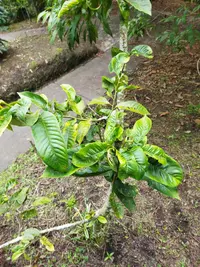
Annona rensoniana is a small tropical tree or large shrub in the custard apple family, valued mainly as a rare fruit and ornamental species. It typically has an upright, branching habit with simple, glossy green leaves and produces fleshy, segmented fruits with soft, aromatic pulp.
This species is native to parts of Central and South America, usually found in warm, humid, lowland areas. It tends to be moderately fast-growing but can be sensitive to cold, poor drainage, and prolonged drought, which affects how easy it is to establish.
Gardeners who want to care for Annona rensoniana should provide a warm, frost-free position with ample light, evenly moist but well-drained soil, and protection from strong, drying winds.

Care Difficulty
Moderate Care

Light Preference
Partial Sun

Water Requirements
Moderate Water

Temperature Preference
Warm Climate

Hardiness Zone
Unknown

Soil Texture
Loamy, Sandy, Organic-rich

Soil pH
Acidic (5.5–6.5), Slightly acidic (6.5–7.0)

Soil Drainage
Well-drained

Fertilization
Minimal (feed rarely)
Scan your plant to receive care tips personalized for your specific plant
Available on iOS and Android
This species prefers warm, bright conditions similar to open woodland edges in the tropics.
This tree prefers evenly moist, well-drained soil and reacts poorly to extremes of drought or saturation.
This tropical species performs best in stable warmth and is sensitive to cold and frost.
This species benefits from moderately high humidity to keep foliage and growth active.
This species prefers an airy, moisture-retentive but free-draining substrate for steady root growth.
This species is suitable for container growing when the pot supports its woody root system and eventual height.
Light, balanced nutrition supports steady growth and fruiting for Annona rensoniana in cultivation.
Thoughtful pruning helps maintain structure, health, and light penetration in Annona rensoniana trees.
This species is usually grown in the ground, so focus on careful transplanting rather than frequent container repotting.
Propagation of Annona rensoniana is typically done from seed, with vegetative methods used more selectively.
This tropical to subtropical species has low frost tolerance and needs protection in regions with cool winters.

Plant Health Check
Not sure what's wrong with your plant? Check your plant's health inside the app.
Annona rensoniana is a relatively obscure Annonaceae tree native to Central America and parts of northern South America, and it is not widely cultivated or traded compared with related fruit trees like soursop or sugar apple.
This species belongs to the Annonaceae, the same family as many well‑known tropical fruit trees, but its own fruit and tree characteristics are poorly documented in the scientific and horticultural literature.
Published information on its morphology, ecology, and uses is sparse, so botanists still treat A. rensoniana as a little‑studied taxon within the diverse genus Annona, and further field research is needed to clarify its full range and traits.
This species is moderately fast-growing in warm, frost-free climates, often adding 30–60 cm of height per year once established. Growth slows in cooler temperatures, poor soil, or if roots are disturbed or confined.
Keep your plants happy and healthy with plant identification, disease detection, and easy care guidance.