Rodent bulb protection
Plant bulbs 10–15 cm deep and lay a 1–2 cm layer of sharp grit or small gravel directly above them to reduce rodent damage in winter and early spring.

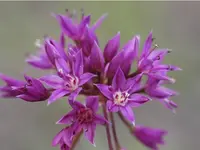
Twincrest onion (Allium bisceptrum) is a small, bulb-forming perennial in the onion family, valued for its upright leaves and showy, pink to purple flower clusters. It typically forms loose clumps and sends up flowering stalks above the foliage, giving a light, airy look in mixed plantings or naturalized areas.
This species is native to western North America, where it grows in mountain meadows, open woods, and moist slopes. It is generally undemanding once established, which makes it relatively simple to care for twincrest onion in suitable climates.
Allium bisceptrum prefers sun to light shade, well-drained soil, and moderate moisture, especially during active growth in spring and early summer.

Care Difficulty
Moderate Care

Light Preference
Full Sun

Water Requirements
Moderate Water

Temperature Preference
Cold Hardy

Hardiness Zone
4–8

Soil Texture
Sandy, Loamy, Rocky

Soil pH
Slightly acidic (6.5–7.0), Neutral (7.0)

Soil Drainage
Well-drained

Fertilization
Minimal (feed rarely)
Scan your plant to receive care tips personalized for your specific plant
Available on iOS and Android
Allium bisceptrum grows best in bright, open conditions that mimic its native mountain habitats.
Allium bisceptrum prefers evenly moist but not saturated soil, especially during active growth and flowering.
This mountain onion is quite cold hardy but still performs best within a moderate temperature range during the growing season.
Humidity is not a critical factor for Allium bisceptrum, which thrives in dry to moderately humid air.
Allium bisceptrum grows best in loose, well-drained mineral soils that do not stay wet.
This species can be grown successfully in containers if drainage and bulb depth are managed carefully.
Allium bisceptrum is a low‑nutrient native bulb that benefits from light feeding in lean soils.
Pruning needs for Allium bisceptrum are minimal and mainly focused on cleanliness and seed control.
This species is more often grown in the ground, with transplanting focused on dividing crowded clumps.
Allium bisceptrum is commonly propagated by division of bulbs and by seeds where conditions suit natural germination.
Allium bisceptrum is cold hardy in most temperate climates and usually needs little special winter care in the ground.

Plant Health Check
Not sure what's wrong with your plant? Check your plant's health inside the app.
This species is naturally restricted to moist, high-elevation habitats in western North America, where it grows along seeps, streambanks, and wet meadows rather than in dry open hillsides typical of many other wild onions.
The common name twincrest onion refers to the characteristic paired projections on the tips of its tepals, which give the open flower a subtly notched, twin-crested appearance under close inspection.
In its native range, this onion provides an important mid- to late-summer nectar and pollen source for bees, butterflies, and other insects in subalpine and montane ecosystems.
Lack of flowers usually comes from insufficient sun, overly rich or wet soil, or bulbs planted too deep. Crowded clumps also flower less. Divide bulbs every few years and keep fertility moderate to support reliable blooming.
Keep your plants happy and healthy with plant identification, disease detection, and easy care guidance.