Mark Dormant Pots
Label pot locations and keep them slightly moist after foliage dies back so you do not discard or disturb the resting corms during their dry dormancy period.

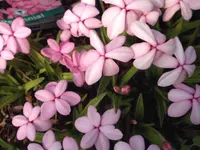
Hypoxis baurii, often called red star, is a small bulb-like perennial grown mainly for its vivid star-shaped flowers and grassy foliage. It forms low clumps that suit pots, rock gardens, and the front of borders.
This species comes from southern Africa, where it grows in open grasslands with a distinct wet and dry season. It prefers bright light, free-draining soil, and moderate moisture, and it dislikes waterlogged conditions.
Once its basic needs are understood, it is a reasonably forgiving plant, especially in pots that can be moved or protected in cooler climates. Learning how to care for red star helps it flower reliably year after year.

Care Difficulty
Moderate Care

Light Preference
Partial Sun

Water Requirements
Moderate Water

Temperature Preference
Warm Climate

Hardiness Zone
8–10

Soil Texture
Sandy, Loamy, Organic-rich

Soil pH
Acidic (5.5–6.5), Slightly acidic (6.5–7.0)

Soil Drainage
Moist but well-drained

Fertilization
Minimal (feed rarely)
Scan your plant to receive care tips personalized for your specific plant
Available on iOS and Android
Hypoxis baurii grows best with bright light that mimics open, grassy habitats.
Hypoxis baurii prefers steady moisture during active growth but dislikes waterlogged soil.
This species prefers mild, temperate conditions with protection from hard frost and extreme heat.
Humidity is not a critical factor for Hypoxis baurii, which adapts well to typical indoor levels of 30–50% and drier outdoor air.
Hypoxis baurii prefers a light, sandy, well-drained mix that stays evenly moist but never waterlogged.
This species is well suited to container growing, especially for controlling drainage and winter protection.
Hypoxis baurii benefits from light, balanced feeding but is sensitive to excess nutrients.
Hypoxis baurii needs only light, maintenance pruning to keep clumps healthy and tidy.
This bulbous plant prefers minimal disturbance, so repotting or transplanting should be infrequent and gentle.
Propagation of Hypoxis baurii is usually done by bulb division, with seed used mainly for larger-scale growing.
This small bulb is moderately cold hardy but still benefits from simple winter protection in cooler climates.

Plant Health Check
Not sure what's wrong with your plant? Check your plant's health inside the app.
This species forms a tight, ground-hugging rosette of narrow, hairy leaves that radiate from a central point, giving it a star-like appearance even when not in bloom.
The flowers open with bright yellow petals above and often show a distinct reddish or purplish tint on the outer petal surfaces, which makes the buds and backs of the flowers look flushed or bicolored.
It is native to moist, open grasslands and rocky slopes in parts of South Africa and neighboring regions, where it experiences summer rain and dry winters, a pattern that strongly influences appropriate Hypoxis baurii care in cultivation.

The species survives seasonal drought by retreating into a small underground corm, a compact storage organ that allows the plant to lose all above-ground growth and then resprout rapidly when favorable moisture and temperature conditions return.
Lack of flowers usually comes from insufficient light, depleted nutrients, overcrowded bulbs, or dormancy disruption. Provide bright conditions, a lean but balanced fertilizer, and a cool, dry rest after flowering to support reliable blooming next season.
Keep your plants happy and healthy with plant identification, disease detection, and easy care guidance.