lemon lily Care (Lilium parryi)

lemon lily

About lemon lily

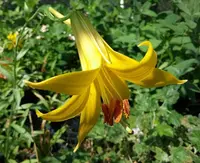
Lilium parryi, commonly called lemon lily, is a summer-blooming bulbous perennial known for its tall stems and fragrant, clear yellow trumpet-shaped flowers. It typically forms upright clumps with narrow leaves arranged along the stem.

This species is native to moist mountain meadows and stream banks in the southwestern United States, especially California and nearby regions. Its preference for cool, moist roots and well-drained yet consistently damp soil can make it more challenging than standard garden lilies.

Gardeners who care for lemon lily should provide bright light, moderate moisture, and protection from extreme heat to keep it healthy over time.

Main Plant Requirements

Care Difficulty

Hard Care

Light Preference

Full Sun

Water Requirements

Regular Water

Temperature Preference

Cool Climate

Hardiness Zone

6–9

Soil Texture

Sandy, Loamy, Organic-rich

Soil pH

Acidic (5.5–6.5), Slightly acidic (6.5–7.0)

Soil Drainage

Moist but well-drained

Fertilization

Minimal (feed rarely)

Get Personalized Care Plan

Scan your plant to receive care tips personalized for your specific plant

Available on iOS and Android

How to Care for the lemon lily

This mountain lily prefers bright sun with some protection from harsh afternoon exposure.

  • Provide 6–8 hours of direct sun, ideally strong morning sun with light afternoon shade, which suits lemon lily in most temperate gardens.
  • Allow light or dappled shade in very hot climates to prevent scorching; leaves that bleach, curl, or develop brown margins indicate excessive sun.
  • Avoid deep shade; if stems stretch, lean, or bloom poorly, move plants to a site with at least 4 hours of direct light and open sky exposure.

This bulb prefers steadily moist but never waterlogged soil during active growth.

  • Water when the top 3–5 cm of soil feels dry, soaking the root zone deeply, then allow excess water to drain away to protect Lilium parryi bulbs from rot.
  • In spring and during flowering, check soil every few days in dry weather; in cool or rainy periods, reduce watering and rely more on natural rainfall.
  • Watch foliage for cues: drooping, dull leaves and dry soil suggest underwatering, while yellowing lower leaves and a sour soil smell point to overwatering.

This species is adapted to cool to mild mountain conditions with moderate summer warmth.

  • Aim for growing-season temperatures around 60–75°F (16–24°C), which support strong stem and flower development without stressing the bulbs.
  • Mature bulbs tolerate winter down to about 15–20°F (-9 to -6°C) if soil drains well; in colder regions, provide deep mulch to buffer freeze–thaw cycles.
  • In hot spells above 85°F (29°C), soil can overheat and dry rapidly; add mulch and light afternoon shade to keep roots cooler and reduce stress.

This species prefers moderately moist air but usually adapts to typical household humidity if soil moisture is stable.

  • Aim for 40–60% humidity, avoiding very dry heated rooms, especially during active growth.
  • Crisp leaf tips or buds that dry and drop early can indicate humidity stress combined with inconsistent watering.
  • Group pots, place trays with water and pebbles nearby, or run a small humidifier to slightly raise local humidity around lemon lily.

Lilium parryi requires deep, moist, sharply drained soil that never stays waterlogged.

  • Use a sandy loam mix: roughly 40% compost, 40% sharp sand, 20% fine bark or perlite for structure and drainage.
  • Aim for slightly acidic to neutral pH around 6.0–7.0 to support nutrient uptake and healthy bulb development.
  • In heavy native soil, plant in raised beds or amend generously with coarse sand and fine gravel to improve aeration.
  • Avoid compacted clay, peat-heavy mixes that hold water, or low spots where water accumulates for more than a few hours.

This lily can grow in containers if given a deep, very free-draining setup that protects bulbs from standing water.

  • Choose a tall, heavy pot at least 30 cm deep so the bulb sits well below the surface while stems remain stable in wind.
  • Use a gritty mix over drainage holes, such as a 3–5 cm layer of coarse gravel, to prevent fine particles clogging the base.
  • Position the container on pot feet or bricks so excess water clears quickly and roots experience consistent aeration after rain or watering.

Lilium parryi benefits from light, targeted feeding that supports flowering without over-enriching the soil.

  • Use a balanced, slow-release fertilizer or dilute liquid feed at 1/2 strength, avoiding high-nitrogen products.
  • Apply during active growth in spring to early summer, about every 4–6 weeks if soil is low in nutrients.
  • In rich garden beds, limit feeding to a thin layer of compost in early spring for gentle nutrient supply.
  • Stop feeding by late summer and do not fertilize during winter dormancy to prevent weak, frost-tender growth.

Pruning for Lilium parryi focuses on hygiene and allowing the bulb to recharge rather than reshaping the plant.

  • In mid to late summer, deadhead spent flowers using clean, sharp scissors to reduce seed set and favor bulb strength.
  • Leave green stems and leaves in place until they yellow naturally, then cut them back to ground level in fall.
  • Remove only dead, damaged, or diseased stems to limit entry points for fungi and pests.
  • Disinfect tools before and after use to lower the risk of spreading viral and fungal problems between lilies.

Transplanting lemon lily focuses on minimal disturbance to the bulbs and choosing a permanently suitable site.

  • Look for crowded clumps, reduced flowering, or bulbs pressing against container sides as signs it needs more space.
  • Plan transplanting or lifting and dividing bulbs for late summer to early fall, after foliage has fully died back.
  • Every 3–5 years, dig carefully, keeping roots and bulb scales intact, and replant at the same depth in well-drained soil.
  • Water gently after replanting, then keep soil just slightly moist to reduce shock and support new root establishment.

Lilium parryi can be propagated, but it is relatively slow and best attempted with careful attention to bulb health.

  • Division of mature bulb clumps in late summer to early fall is the most practical home method.
  • Lift bulbs gently, separate offsets with minimal damage, and replant immediately at the same depth in free-draining soil.
  • Seed propagation is possible but slow; sow fresh seed in cool, bright, protected conditions and keep the mix evenly moist.
  • Maintain good air circulation and avoid waterlogging to limit rot while young bulbs and seedlings establish.

Lilium parryi is moderately cold hardy, needing simple root protection in colder climates.

  • In regions colder than about 10–15°F, add a 5–8 cm mulch layer over the root zone after the ground cools.
  • Use straw, shredded leaves, or bark mulch to insulate bulbs while still allowing drainage.
  • Cut back dead stems in late fall, then keep the mulched area only slightly moist to prevent rot over winter.

Care Tips

Stake Against Wind

Install slender bamboo canes or fiberglass stakes on the windward side when shoots reach 20–30 cm, tying them loosely with soft ties to prevent the tall scapes from bending or snapping in summer storms.

Use Gritty Topdress

After planting, topdress the soil surface with a 1–2 cm layer of coarse sand or fine grit to keep the bulb neck drier, reduce rot risk, and discourage slugs from grazing young shoots.

Bud Thinning Strategy

On crowded stems, pinch off the smallest and most deformed buds early so the plant channels resources into fewer, larger, and better-formed flowers.

Rodent Bulb Protection

When planting, set bulbs inside a wire mesh basket with 1–1.5 cm openings and bury it fully so gophers and voles cannot reach the bulbs but roots can still grow outward.

Cool Summer Microclimate

In hot-summer areas, position lilies where taller perennials or open shrubs provide light afternoon shade and a cooler root zone, which improves flowering consistency when growing lemon lily in USDA zones warmer than its native habitat.

Common Pests and Diseases

Lilium mosaic virus

This disease causes yellow streaking, mottling, and distortion on leaves and sometimes streaked or deformed flowers, leading to weakened plants and poor flowering.

Solution

Remove and destroy infected plants promptly, as there is no cure, and control aphids that spread the virus by using insecticidal soap or horticultural oil and by reducing nearby weedy hosts that harbor both aphids and viruses.

Botrytis blight

This disease produces brown leaf spots, flower bud blight, and a gray, fuzzy mold on leaves, buds, and spent flowers, especially in cool, damp conditions.

Solution

Improve air circulation, avoid wetting foliage, promptly remove and discard affected plant parts, and in persistently wet climates consider applying a labeled fungicide at first sign of spotting to protect new growth and buds.

Aphids

These insects cluster on stems, buds, and the undersides of leaves, sucking sap and causing curling, yellowing, and sticky honeydew that can lead to sooty mold.

Solution

Dislodge colonies with a firm stream of water, then treat remaining insects with insecticidal soap or horticultural oil, repeating every 5–7 days as needed and focusing on tender new growth and flower stems to support healthy growing lemon lily stands.

Lily beetles

This pest feeds on leaves, buds, and flowers, leaving irregular holes and skeletonized foliage, while the larvae cover themselves in dark excrement that can hide their presence.

Solution

Hand-pick and destroy adults, eggs, and larvae regularly, inspect plants at least weekly during the growing season, and if damage continues, use a targeted insecticide labeled for beetles on lilies, applying in the evening to protect pollinators.

Bulb and scale rot

This disease causes soft, discolored, or dry rotting of bulbs and scales, leading to weak shoots, poor emergence, or sudden collapse of flowering stems, often linked to poorly drained soils or contaminated stock.

Solution

Plant only firm, healthy bulbs in well-drained soil, avoid overwatering, discard any bulbs showing rot, and if necessary treat bulbs with a labeled fungicidal soak before planting to reduce infection levels in susceptible sites.

Interesting Facts

Scented high-elevation specialist

This species is native to high-elevation seeps and stream margins in the mountains of southern California and adjacent Baja California, often growing between roughly 1,200–2,400 m in naturally cool, moist microhabitats with flowing water.

Sulfur-yellow nodding flowers

Its large, nodding, trumpet-shaped flowers are a clear sulfur-yellow color with scattered maroon spotting inside, a distinctive combination that helps separate it from most other North American native lilies.

Pollinated by day-flying sphinx moths

The long floral tube and strong fragrance are adapted for pollination by long-tongued sphinx moths that visit during the day, matching the moths’ hovering behavior and proboscis length to the flower structure.

Botan icon

Did you know?

Lilium parryi is considered one of the rarest native lilies in the United States and is listed as threatened in parts of its range due to habitat loss, water diversion, and trampling of its specialized mountain seep habitats.

FAQs about lemon lily

Poor flowering often comes from insufficient winter chill, excessive shade, or depleted bulbs. Ensure a cool dormant period, enough sun, and avoid cutting foliage too early so bulbs can store energy for the next season.

Grow Healthy Plants with Botan Care

Keep your plants happy and healthy with plant identification, disease detection, and easy care guidance.


Botan plant care app — identify plants on mobile

Explore More Plants