Cattleya wittigiana Care

Cattleya wittigiana

About Cattleya wittigiana

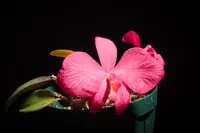
Cattleya wittigiana is a compact epiphytic orchid, typically growing on trees rather than in soil. It is valued for its relatively large, colorful flowers compared to its small plant size. Native to Brazil, it comes from bright, airy habitats with good air movement and pronounced seasonal changes. This background shapes how to care for Cattleya wittigiana in home conditions. The plant usually has thick, leathery leaves and sturdy pseudobulbs that store water, which helps it tolerate short dry periods but not prolonged neglect. It generally prefers bright, filtered light, moderate moisture, and a very open, fast-draining orchid substrate rather than regular potting soil.

Main Plant Requirements

Care Difficulty

Moderate Care

Light Preference

Partial Sun

Water Requirements

Moderate Water

Temperature Preference

Tropical / Frost Sensitive

Hardiness Zone

12–13

Soil Texture

Sandy, Rocky, Organic-rich

Soil pH

Acidic (5.5–6.5)

Soil Drainage

Well-drained

Fertilization

Moderate (every 2–4 weeks)

Get Personalized Care Plan

Scan your plant to receive care tips personalized for your specific plant

Available on iOS and Android

How to Care for the Cattleya wittigiana

This compact orchid prefers bright, filtered light similar to bright shade under a light tree canopy.

  • Provide 4–6 hours of bright, indirect light daily, such as early morning sun and dappled shade for the rest of the day.
  • Allow only gentle direct sun before 10 a.m.; protect from strong midday or afternoon sun to prevent yellowing or scorched leaf patches.
  • In winter, move Cattleya wittigiana to a brighter spot or use sheer-curtained south or west exposure to compensate for shorter days.

Watering should alternate between thorough soaking and a partial dry-down around the roots.

  • Irrigate when roots look silvery and the medium is dry in the top 2–3 cm, then water until it freely drains away.
  • In active growth and warm weather, this may mean watering every 3–5 days; in cooler or darker periods, intervals often extend to 7–10 days.
  • Reduce frequency if pseudobulbs wrinkle only slightly, but stop and improve drainage if leaves soften, roots turn brown, or medium smells sour, signs of overwatering in Cattleya wittigiana.

This species prefers intermediate to warm conditions with a marked drop in temperature at night.

  • Aim for daytime temperatures of 70–80°F (21–27°C) and night temperatures of 58–65°F (14–18°C) to support steady growth and flowering.
  • Avoid exposing the plant below 50°F (10°C); it does not tolerate frost and should be protected from cold drafts or sudden temperature drops.
  • In hot spells above 85–90°F (29–32°C), increase air movement and shade slightly, as sustained heat with stagnant air can stress leaves and limit bud development.

This orchid prefers consistently humid air similar to its native habitat.

  • Aim for 60–80% humidity using a humidity tray, room humidifier, or grouping plants together.
  • It tolerates brief dips to 40–50%, but prolonged dry air causes wrinkled pseudobulbs, dull leaves, and stalled buds.
  • Increase humidity without wetting leaves constantly to reduce fungal risk, and ensure strong air movement around Cattleya wittigiana.

This species grows best in a very airy, bark-based epiphytic mix rather than traditional soil.

  • Use medium orchid bark with added large perlite and a little charcoal to keep the mix open and fast-draining.
  • Avoid dense, peat-heavy or garden soils that hold water around the roots and lead to rot.
  • A slightly acidic to neutral root zone (around pH 5.5–6.5) supports nutrient uptake and healthy root growth.
  • If roots are staying wet for longer than 2–3 days, increase bark size or perlite proportion to improve aeration.

This orchid is well suited to container growing when the pot supports its epiphytic root system.

  • Choose a snug, shallow orchid pot so roots fill the space quickly and the mix dries in a predictable pattern.
  • Use slotted plastic or clay pots when extra side ventilation is needed to prevent the medium from staying wet.
  • Stabilize the pot with a heavier outer cachepot or top dressing if tall growths make the plant prone to tipping.

Balanced feeding supports compact growth and flowering in Cattleya wittigiana grown under cultivation.

  • Use a balanced orchid fertilizer (e.g., 20-20-20) diluted to 1/4–1/2 strength in low-mineral water.
  • Apply every 2–3 weeks during active growth in spring and summer, skipping weeks if leaves darken too much.
  • Reduce feeding to once a month or stop entirely in cooler, low-light winter conditions.
  • Avoid slow-release pellets in bark mixes; flush the medium with plain water monthly to prevent salt buildup.

Pruning needs are minimal and focus on hygiene rather than shaping for Cattleya wittigiana.

  • Best timing is after flowering, when spent blooms and old sheaths are easy to see.
  • Remove only dead or shriveled pseudobulbs, dry flower spikes, and clearly damaged leaves with sterile scissors.
  • Cut close to the base without injuring living green tissue to lower infection risk.
  • Light thinning of very crowded, dead material improves air movement and helps reduce fungal problems.

Repotting maintains healthy roots and airflow around this epiphytic orchid.

  • Repot every 2–3 years, or when roots circle the pot, growth slows, or bark breaks down and stays soggy.
  • Choose late winter to early spring, just as new roots start, so recovery is fast.
  • Use a snug pot with fresh medium-grade orchid bark and optional perlite, keeping the rhizome at the surface.
  • Trim only dead roots, keep living roots intact, and water lightly for 7–10 days to limit stress and rot.

Division is the standard method for multiplying Cattleya wittigiana in home collections.

  • Divide mature clumps in late winter or early spring, when new growths and roots begin.
  • Use a sterile knife to split the rhizome into sections with at least 3–4 healthy pseudobulbs each.
  • Plant divisions in fresh orchid bark, securing them firmly so new roots are not disturbed.
  • Maintain bright, indirect light, 65–80°F temperatures, and moderate humidity to encourage rapid establishing.

This orchid is frost-sensitive and needs warm, stable indoor conditions in winter.

  • Move plants indoors or into a heated greenhouse before temperatures drop below 55°F.
  • Keep day temperatures around 65–75°F and nights above 55°F, with good air movement.
  • Water less often in winter, letting the bark almost dry between waterings while avoiding complete desiccation.
  • Place near a bright window or under grow lights to compensate for shortened days.

Care Tips

Mounting Strategy

Grow this species on cork or hardwood slabs with a thin pad of sphagnum only around the roots, which improves air flow and reduces the risk of rot in warm, bright conditions.

Pseudobulb Monitoring

Check each pseudobulb regularly; if it wrinkles noticeably while the medium is still moist, increase air movement rather than watering more, as this orchid is sensitive to stagnant, soggy conditions.

Targeted Air Movement

Use a small, oscillating fan set on low and angled past the plant, not directly at it, to keep leaves dry after watering and to limit fungal spotting on the relatively thin leaves and sheaths.

Seasonal Rest Adjustment

In late autumn to winter, reduce watering slightly and avoid heavy feeding once new pseudobulbs have matured, resuming more frequent irrigation only when new root tips and a fresh growth start to appear.

Support During Transport

When moving or repotting, secure the rhizome with rhizome clips or soft wire ties so the plant does not wobble, which helps new root tips attach quickly and stabilizes growth when caring for Cattleya wittigiana.

Common Pests and Diseases

Scale insects

This pest feeds on plant sap and often hides on pseudobulbs, leaf bases, and under sheaths, causing yellowing, shriveling, and sticky honeydew. Infestations can weaken plants and reduce flowering in this miniature Cattleya-type orchid.

Solution

Isolate the plant, then manually remove visible insects with a cotton swab dipped in 70% isopropyl alcohol, paying special attention to leaf bases and old sheaths. Follow with repeated treatments using a light horticultural oil or insecticidal soap every 7–10 days, and improve air movement and light so the plant grows strongly and resists reinfestation; this is a core part of Cattleya wittigiana care instructions.

Spider mites

These insects thrive on Cattleya foliage grown too dry and hot, especially under strong indoor light, causing fine stippling, dull leaves, and sometimes webbing on the undersides. Symptoms include bronzing or silvery discoloration that is most visible on older leaves.

Solution

Rinse the plant thoroughly with lukewarm water, focusing on the undersides of leaves, then use insecticidal soap or a miticide labeled for orchids in repeated applications. Raise ambient humidity to 50–70%, avoid very hot, stagnant air, and provide gentle air circulation to make conditions less favorable for mites.

Orchid viruses

This disease category includes Cymbidium mosaic virus and Odontoglossum ringspot virus, which can infect Cattleya species and hybrids, causing distorted growth, streaks, or mosaic patterns on leaves and flowers. Symptoms include poor vigor and flowers that fail to develop normal color or shape.

Solution

Remove and discard any plants strongly suspected of being virused, as there is no cure and spread occurs mainly through contaminated cutting tools and sap. Sterilize tools between plants using a flame, fresh bleach solution, or single-use razor blades, and avoid plant-to-plant sap contact during division or repotting.

Bacterial brown rot

This disease, often caused by Erwinia species, produces rapidly spreading, soft, watery, and foul-smelling lesions on pseudobulbs and leaf bases of Cattleya-type orchids. Symptoms include yellow halos around the wet spots and quick tissue collapse, especially in warm, stagnant, humid conditions.

Solution

Immediately cut out all affected tissue well into healthy, firm tissue using sterile tools, then dust cuts with cinnamon or a sulfur-based product to dry the wound. Reduce watering, increase air movement, keep water off the foliage, and maintain good spacing between plants; discard severely affected plants to protect the collection.

Black rot

This disease, commonly caused by Phytophthora or Pythium, starts as dark, water-soaked lesions on roots, pseudobulbs, or new growths and progresses to firm black tissue that can kill new shoots. Symptoms include rapid spread in overly wet media or in plants kept cool and poorly ventilated after watering.

Solution

Unpot the orchid, cut away all affected black or mushy tissue with sterile tools, and repot into fresh, fast-draining orchid mix, keeping the base of pseudobulbs above the medium. Adjust watering so the mix dries lightly between waterings, improve drainage and air movement, and avoid letting water sit in the crown or new growths, especially in cool conditions.

Interesting Facts

Compact Brazilian mini-cattleya

This species is a naturally small-growing orchid from the campos rupestres of Minas Gerais, Brazil, forming tight clumps with short pseudobulbs and relatively large flowers for its size.

Dry-season flowering strategy

In habitat it blooms mainly in the drier season, producing bright magenta to purple flowers on leafless or nearly mature pseudobulbs, an adaptation to the marked seasonal climate of its native range.

Lithophytic rock specialist

Plants are often lithophytic, anchoring to exposed quartzite or sandstone rocks in high-light, windy sites, where roots cling to crevices with very fast drainage and strong daily temperature swings.

Botan icon

Did you know?

C. wittigiana has played an important role in modern miniature Cattleya breeding, contributing its compact growth, intense flower color, and seasonal blooming habit to many small hybrid lines valued by growers with limited space.

FAQs about Cattleya wittigiana

Lack of blooms usually comes from insufficient light, too-warm nights, or inadequate seasonal rest. Provide bright, filtered light, a pronounced day–night temperature drop, and slightly drier, lower-nitrogen conditions after growth matures to initiate flower buds.

Grow Healthy Plants with Botan Care

Keep your plants happy and healthy with plant identification, disease detection, and easy care guidance.

Botan plant care app — identify plants on mobile

Explore More Plants