Canopy training
Start shaping a low, open canopy when trees are 1–2 years old by selecting 3–4 evenly spaced main branches and removing steep, upright shoots so light can penetrate and fruiting wood develops along the limbs.

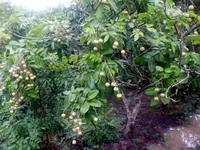
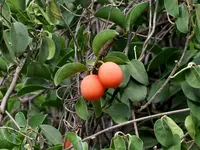
Longan, Dimocarpus longan, is an evergreen fruit tree in the soapberry family, related to lychee and rambutan. It forms a dense, rounded crown with glossy, dark green leaves. Clusters of small yellowish flowers develop into round, tan-skinned fruits with translucent, sweet flesh. The tree is naturally found in southern China and Southeast Asia, where it grows in warm, humid climates. It is moderately demanding, as it needs consistent warmth, good light, and protection from frost. In cultivation, it prefers well-drained soil, regular moisture, and shelter from strong winds, and understanding how to care for longan helps improve flowering and fruiting.

Care Difficulty
Moderate Care

Light Preference
Full Sun

Water Requirements
Regular Water

Temperature Preference
Tropical / Frost Sensitive

Hardiness Zone
10–12

Soil Texture
Sandy, Loamy, Organic-rich

Soil pH
Acidic (5.5–6.5), Slightly acidic (6.5–7.0)

Soil Drainage
Moist but well-drained

Fertilization
Moderate (every 2–4 weeks)
Scan your plant to receive care tips personalized for your specific plant
Available on iOS and Android
This subtropical fruit tree needs abundant bright light to flower and fruit well.
This tree prefers evenly moist, well-drained soil rather than alternating extremes of drought and saturation.
This subtropical species thrives in consistently warm, frost-free conditions.
This species benefits from moderately high humidity to support healthy foliage and fruiting.
Dimocarpus longan grows best in deep, well-structured, free-draining soil that still retains steady moisture.
This species can be grown in large containers if given enough root volume and stable support.
Healthy Dimocarpus longan growth benefits from steady, moderate nutrition in active seasons.
Pruning Dimocarpus longan helps maintain structure, light penetration, and safe tree size.
Longan is most often grown in-ground, so focus on careful transplanting and early container management.
Dimocarpus longan propagation is typically done from seed or air layering for reliable fruit quality.
Longan is frost sensitive and benefits from targeted winter protection in cooler regions.

Plant Health Check
Not sure what's wrong with your plant? Check your plant's health inside the app.
The edible longan aril is translucent and sweet but carries a faint musky or floral note that distinguishes it from the closely related lychee, which tends to have a sharper, more perfumed flavor.
Longan seeds are glossy, dark brown to black with a pale hilum spot, giving the appearance of an eye, which explains the common name dragon’s eye in several Asian languages.
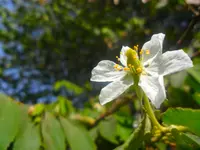
The tree produces many small, yellowish to greenish flowers in large clusters that rely mainly on insect pollination, yet they are relatively inconspicuous compared with the striking fruit clusters that follow.

Historical records indicate that longan has been cultivated in southern China for more than 2,000 years, and high-quality fruit from specific regions such as Guangdong and Guangxi has long been considered a tribute-grade delicacy reserved for elites in imperial times.
Yellowing leaves often result from root stress, usually due to waterlogging, compacted soil, or sudden temperature shifts. Nutrient imbalance, especially nitrogen or iron deficiency, can also cause chlorosis. Check drainage, adjust watering, and consider a balanced fertilizer.
Keep your plants happy and healthy with plant identification, disease detection, and easy care guidance.