


Rootzone mulching
Maintain a 5–8 cm layer of wood chips or shredded bark over the root zone, keeping it 5–8 cm away from the trunk, to stabilize soil moisture, reduce weed competition, and protect fine feeder roots from heat and mechanical damage.

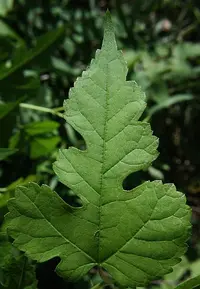
Red mulberry, Morus rubra, is a deciduous fruit tree native to eastern North America. It grows with a rounded, spreading crown and can become quite large outdoors.
Leaves are broad, often lobed, and turn yellow in fall, while the summer fruits ripen to deep red or almost black and attract wildlife. The tree is generally hardy and forgiving, which makes it suitable for many home gardens.
It adapts to a range of soils, preferring well-drained, moderately moist conditions and full sun for best fruiting. Understanding how to care for red mulberry mainly involves giving it enough space, light, and basic soil preparation.

Care Difficulty
Easy Care

Light Preference
Full Sun

Water Requirements
Moderate Water

Temperature Preference
Cold Hardy

Hardiness Zone
4–8

Soil Texture
Sandy, Loamy, Clay

Soil pH
Acidic (5.5–6.5), Slightly acidic (6.5–7.0)

Soil Drainage
Well-drained

Fertilization
Minimal (feed rarely)
Scan your plant to receive care tips personalized for your specific plant
Available on iOS and Android
This species is a sun-loving deciduous tree that fruits best with strong light exposure.
This tree prefers evenly moist, well-drained soil and becomes more drought-tolerant as it matures.
This hardy temperate tree tolerates a broad range of outdoor temperatures once established.
Morus rubra tolerates a wide humidity range and usually does not need special humidity management outdoors.
Morus rubra performs best in deep, loose, moisture-retentive but free-draining soil.
This species can be grown in large containers only for the first years, as long-term confinement is challenging.
Morus rubra usually grows well in reasonably fertile ground but benefits from light feeding in poor soils or containers.
Morus rubra responds well to thoughtful pruning that maintains structure, health, and safe size.
This species is usually grown in the ground, so focus on careful transplanting of young Morus rubra trees.
Morus rubra is commonly propagated from seeds and vegetative methods for orchard or restoration use.
Established Morus rubra trees are cold hardy in much of the US and need little active winter care.

Plant Health Check
Not sure what's wrong with your plant? Check your plant's health inside the app.
Morus rubra is the only mulberry species native to much of eastern North America, from southern Ontario through the eastern and central United States, where it evolved in local forests long before the introduction of white mulberry from Asia.
In many parts of its native range, this species hybridizes extensively with the introduced white mulberry (Morus alba), which makes it difficult to find genetically pure wild populations and is considered a conservation concern.
The fruit of red mulberry ripens to a deep red‑purple to almost black color and is notably rich in anthocyanins, the plant pigments responsible for its strong staining juice and high antioxidant capacity documented in food chemistry studies.

Pollen records from lake and bog sediments show that red mulberry has been part of eastern North American forest communities for thousands of years, providing long-term evidence of its role as a native component of these ecosystems.
This species usually grows about 30–60 cm per year once established, sometimes faster in rich, moist soil. Growth slows with drought, poor drainage, or heavy pruning, so consistent conditions help maintain a steady, moderate growth rate.
Keep your plants happy and healthy with plant identification, disease detection, and easy care guidance.

Wild Himalayan Cherry
Prunus cerasoides
Apple
Malus domestica 'Golden Delicious'
white baneberry
Actaea pachypoda
Japanese Maple
Acer palmatum var. amoenum 'O Sakazuki'
tall hairy agrimony
Agrimonia gryposepala
western redbud
Cercis occidentalis
purple apple-berry
Billardiera longiflora
Vismia baccifera
Vismia baccifera