Apple Care (Malus domestica 'Golden Delicious')

Apple

About Apple

Malus domestica 'Golden Delicious' is a cultivated apple tree grown mainly for its sweet, yellow fruit and reliable cropping. It is usually trained as a small to medium tree or compact home orchard specimen.

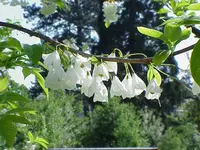
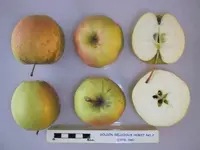
This cultivar likely originated in the United States and is now widely grown in temperate regions around the world. It has simple green leaves, white to pale pink spring blossoms, and smooth golden fruit.

The tree is moderately vigorous, generally easy to grow, and responds well to pruning, which helps manage size and improve light in the canopy. It performs best in full sun, with well-drained soil and steady moisture, and understanding how to care for Apple helps maintain health and fruit quality.

Main Plant Requirements

Care Difficulty

Moderate Care

Light Preference

Full Sun

Water Requirements

Moderate Water

Temperature Preference

Cold Hardy

Hardiness Zone

4–9

Soil Texture

Loamy, Sandy, Clay

Soil pH

Acidic (5.5–6.5), Slightly acidic (6.5–7.0)

Soil Drainage

Moist but well-drained

Fertilization

Minimal (feed rarely)

Get Personalized Care Plan

Scan your plant to receive care tips personalized for your specific plant

Available on iOS and Android

How to Care for the Apple

This cultivar needs abundant outdoor sun to flower and fruit well.

  • Provide 6–8 hours of direct sun daily; morning sun with some protection from harsh late-afternoon summer sun reduces leaf scorch in hot climates.
  • Tree tolerates light partial shade (around 4–5 hours sun), but Apple yields and sweetness drop when light is consistently low.
  • In cool or cloudy regions, choose the sunniest, south-facing site; avoid dense shade from buildings or taller trees, which leads to weak growth and poor fruit set.

Watering aims to keep the root zone moist but never saturated.

  • Check soil at 5–8 cm depth; water only when it feels dry to slightly damp, focusing on the area under and just beyond the canopy drip line.
  • In the first 2–3 years, water deeply every 7–10 days in dry weather; mature trees usually need deep watering only during extended droughts.
  • Reduce watering in late fall and winter, and watch for overwatering signs such as yellowing leaves and soft new growth versus underwatering signs like drooping and scorched leaf edges.

This apple tree handles a wide temperature range but has clear limits for growth and survival.

  • Active growth is strongest around 60–75°F (16–24°C); flowering and leaf expansion are most reliable within this range in spring.
  • Dormant trees tolerate cold down to about -20°F (-29°C), but young trees benefit from protection when forecasts drop below -10°F (-23°C).
  • In summer, the tree copes with short periods near 90–95°F (32–35°C) if soil moisture is adequate; prolonged extreme heat with dry soil stresses the tree and can reduce fruit quality.

This apple cultivar is adapted to outdoor conditions and does not have specific humidity requirements beyond typical garden air levels.

This apple tree performs best in deep, well-aerated, loamy soil that drains freely yet holds some moisture.

  • Aim for a loam or sandy loam enriched with 20–30% well-rotted compost to support root growth and nutrient availability.
  • Ensure drainage by avoiding compacted or heavy clay; incorporate coarse sand or fine gravel if water lingers longer than 24 hours after rain.
  • Maintain soil pH around 6.0–7.0, adjusting with garden lime if strongly acidic or elemental sulfur if clearly alkaline.
  • Before planting Malus domestica 'Golden Delicious', loosen soil to 30–40 cm depth to break up pans and improve aeration around the root zone.

This cultivar can be grown in containers when grafted on dwarf or semi-dwarf rootstock, but careful pot management is essential for long-term health.

  • Choose a heavy, wide container (at least 40–50 cm diameter) to stabilize the tree against wind and prevent tipping as the canopy enlarges.
  • Use a deep pot with 3–5 drainage holes and a coarse lower layer of bark chips or gravel to prevent outlet blockage and localized waterlogging.
  • Position the container on pot feet or bricks so drainage water clears freely, reducing the risk of roots standing in a saturated saucer after rain.

Malus domestica 'Golden Delicious' benefits from moderate, well-timed feeding to support steady growth and fruiting.

  • Apply a balanced NPK granular or slow-release fertilizer in early spring, just before bud break.
  • Top-dress annually with compost around the drip line to improve soil structure and micronutrients.
  • Feed 1–2 times during the growing season, following label rates rather than increasing strength.
  • Stop feeding by late summer and avoid fertilizing during winter dormancy to prevent weak, frost-tender growth.

Pruning Malus domestica 'Golden Delicious' maintains structure, fruiting wood, and light penetration into the canopy.

  • Carry out main pruning in late winter to very early spring while the tree is still dormant.
  • Remove dead, diseased, damaged, or crossing branches first, using clean, sharp bypass pruners or a pruning saw.
  • Thin crowded interior shoots to open the canopy and improve airflow, reducing disease pressure.
  • Shorten excessively upright or vigorous shoots to maintain a balanced, accessible shape and strong fruiting spurs.

This apple is usually grown in the ground, so focus on careful transplanting and, for patio trees, infrequent repotting.

  • Transplant bare-root or container-grown trees in late winter to early spring while dormant for faster establishment.
  • Look for circling roots, tight rootballs, or stalled growth in containers as signs a larger pot or ground planting is needed.
  • Loosen or tease out circling roots gently, set at the same soil level, and backfill with native soil rather than rich potting mix.
  • Water deeply after planting, apply a 5–8 cm mulch ring, and keep soil evenly moist to reduce transplant shock.

Malus domestica 'Golden Delicious' is usually propagated by grafting to maintain cultivar traits and control tree size.

  • Use dormant scion wood and compatible rootstocks for whip-and-tongue or cleft grafting in late winter to early spring.
  • Keep graft unions tightly bound and sealed, then maintain moderate humidity and consistent moisture for callus formation.
  • Sow seeds only for rootstock or breeding; stratify them cold and expect variable offspring rather than true-to-type trees.
  • Softwood cuttings have low success rates and are mainly used in specialist settings with mist systems and rooting hormones.

This apple is cold hardy in most temperate regions and usually needs only basic winter care.

  • Tolerates freezing temperatures once fully dormant but young trees benefit from extra protection.
  • Apply a 5–8 cm mulch layer around the root zone, keeping it a few cm away from the trunk.
  • Wrap young trunks with breathable tree guards to limit sunscald and rodent damage in winter.
  • Move container-grown trees to a sheltered, unheated but frost-moderated spot and water sparingly so soil does not fully dry.

Care Tips

Early branch training

In the first 3–5 years, use cloth ties and stakes or spreaders to gently lower very upright shoots to a 45–60° angle, which encourages strong fruiting branches instead of weak, vertical water sprouts.

Fruit thinning pattern

After natural June drop, leave only 1 fruit per cluster and space fruits about 15–20 cm apart along the branch to reduce biennial bearing and improve fruit size and flavor.

Codling moth monitoring

Hang pheromone traps at bloom time to detect codling moth flight, then time any control measures for 7–10 days after peak catch to target young larvae before they enter the fruit.

Prevent sunscald damage

In hot, high-sun regions, apply a white latex paint diluted 1:1 with water to the southwest side of the trunk and main scaffolds to reduce bark cracking and sunscald in winter and early spring.

Efficient harvest handling

During harvest, pick with a slight upward twist to keep the stem attached, place fruit gently into shallow crates, and cool to 32–40°F as soon as possible to extend storage life when growing Apple for eating or cooking.

Common Pests and Diseases

Apple scab

This disease causes olive-brown to black, velvety spots on leaves and fruit, leading to leaf drop and cracked, deformed apples. Symptoms include early-season spotting that worsens in cool, wet weather.

Solution

Collect and discard fallen leaves and mummified fruit to remove fungal spores, and prune to open the canopy for better airflow. In regions with a history of scab, apply a labeled preventive fungicide at green tip, pink, and petal-fall stages according to local Malus domestica 'Golden Delicious' care recommendations and product directions.

Fire blight

This disease causes sudden blackening and shriveling of blossoms, shoots, and sometimes entire branches, which often appear scorched. Symptoms include characteristic shepherd’s-crook shoot tips and oozing, amber-colored bacterial exudate in humid conditions.

Solution

Prune out infected shoots at least 20–30 cm below visible symptoms during dry weather, disinfecting tools between cuts with 10% bleach or 70% alcohol. Avoid heavy nitrogen fertilization that stimulates soft new growth and, in high-risk areas, consider spring applications of a labeled antibacterial product timed to bloom under local extension guidelines.

Powdery mildew

This disease produces white, powdery fungal growth on young leaves, blossoms, and shoots, leading to distorted foliage and reduced fruit set. Symptoms include stunted new growth and leaves that curl or become narrow and brittle.

Solution

Prune out and dispose of infected shoots during dormancy or as soon as they are noticed, and thin the canopy to improve light penetration and airflow. In sites with a history of powdery mildew, use resistant rootstocks where possible and apply a suitable fungicide preventively to young growth when conditions are warm and dry but nights are cool and humid.

Codling moth

This pest is a key internal fruit borer, with larvae tunneling into apples and leaving frass-filled entry holes and rotten cores. Symptoms include premature fruit drop and apples with small dark entry points and internal tunneling.

Solution

Remove and discard infested or dropped fruit weekly during the season to reduce the next generation, and use corrugated cardboard or banding traps around trunks to capture migrating larvae before pupation. In orchards or larger plantings, monitor adult moths with pheromone traps and time targeted treatments such as granulosis virus or labeled insecticides based on local degree-day models and trap catches.

Apple maggot

These insects lay eggs under the apple skin, and the developing larvae create brown, winding tunnels throughout the flesh, making fruit soft and unusable. Symptoms include small dimples or stings on the skin and distorted, pitted fruit that often drops early.

Solution

Pick up and destroy dropped fruit promptly to break the life cycle, and use sticky red sphere traps or yellow sticky cards hung in the canopy to monitor and reduce adult flies. In high-pressure areas, combine trapping with timely use of a labeled insecticide or kaolin clay film, applied to protect fruit during the main egg-laying period for those wanting to grow Malus domestica 'Golden Delicious' with cleaner harvests.

Interesting Facts

Chance seedling origin

This cultivar arose around 1890 as a chance seedling on a West Virginia farm, meaning it was not deliberately bred but discovered growing among other apple trees.

High sugar, mild acidity

Its flesh has relatively high natural sugar with low to moderate acidity, which gives a distinctly sweet, mild taste that bakes and dries well without becoming overly sharp.

Parent of many cultivars

Golden Delicious has been used extensively in breeding and is a direct parent or ancestor of many modern apples, including Jonagold and Gala, because of its sweetness, productivity, and storage qualities.

Botan icon

Did you know?

The original Golden Delicious tree, discovered on the Mullins farm in Clay County, West Virginia, was so historically important that it was protected, documented by the Stark Brothers Nursery, and stood for decades as a living reference for the cultivar before eventually dying in the late 20th century.

FAQs about Apple

Yes, this tree can grow in large containers if grafted onto dwarf or semi-dwarf rootstock. Use a 40–60 L pot with drainage, high-quality potting mix, and prune roots and branches regularly to control size.

Grow Healthy Plants with Botan Care

Keep your plants happy and healthy with plant identification, disease detection, and easy care guidance.

Botan plant care app — identify plants on mobile

Explore More Plants