

white baneberry Care (Actaea pachypoda)

Also known as: doll's eye, doll's-eyes, White Doll's Eyes
white baneberry

About white baneberry

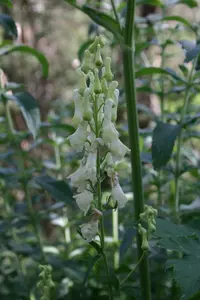
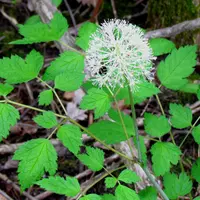
White baneberry, Actaea pachypoda, is a perennial woodland plant native to eastern North America. It grows in shaded forests, often under deciduous trees. The plant forms clumps of divided green leaves and upright stems topped with white flower clusters in late spring. These develop into striking white berries with dark spots, sometimes called doll’s eyes. White baneberry prefers cool, moist, humus-rich soil and consistent shade, which makes it best suited to naturalistic woodland gardens. It is not an easy plant for hot, dry, or exposed sites. Gardeners who care for white baneberry need to match its forest-like conditions for long-term success.

Main Plant Requirements

Care Difficulty

Moderate Care

Light Preference

Partial Shade

Water Requirements

Keep Soil Moist

Temperature Preference

Cold Hardy

Hardiness Zone

3–8

Soil Texture

Loamy, Silty, Organic-rich

Soil pH

Acidic (5.5–6.5), Slightly acidic (6.5–7.0)

Soil Drainage

Moist but well-drained

Fertilization

Minimal (feed rarely)

Get Personalized Care Plan

Scan your plant to receive care tips personalized for your specific plant

Available on iOS and Android

How to Care for the white baneberry

This woodland perennial prefers cool, shaded conditions that mimic a deciduous forest floor.

  • Provide dappled or filtered light with 1–3 hours of gentle morning sun and full shade by early afternoon.
  • Site Actaea pachypoda in partial to full shade; strong midday or late-afternoon sun can scorch foliage and dry soil quickly.
  • In summer, use overhead tree canopy or shade cloth to reduce light intensity, while in early spring slightly brighter light is tolerated before trees leaf out.

This species needs consistently moist, cool soil without waterlogging.

  • Aim for soil that stays evenly damp; allow only the top 2–3 cm to start drying between waterings in typical garden loam.
  • Increase watering during hot, dry periods and reduce in cool, rainy weather, letting natural rainfall supply most moisture where climate allows.
  • Watch for wilting or crisp leaf edges as signs of underwatering, and yellowing, soft stems or a sour soil smell as signs of overwatering and poor drainage.

This shade perennial is hardy to cold winters and prefers moderate summer temperatures.

  • Optimal active growth occurs around 60–75°F (16–24°C), especially in cool, moist woodland settings.
  • The plant tolerates winter lows well below 0°F (-18°C) when crowns are insulated by soil and mulch, and normal frost does not harm dormant roots.
  • Prolonged heat above 85°F (29°C) can stress foliage; provide shade, mulch, and consistent moisture to keep roots cool in hot spells.

This woodland perennial handles typical outdoor humidity and rarely needs special adjustment.

  • Thrives in 50–70% humidity, similar to shaded garden conditions with consistent soil moisture.
  • Tolerates short dry-air spells if roots stay evenly moist, but prolonged heat and low humidity can stress foliage.
  • Humidity stress appears as marginal leaf scorch and premature yellowing, especially in sun or wind-exposed positions.
  • Increase local humidity by using leaf litter mulch over the root zone and avoiding reflected heat from nearby hard surfaces.

Actaea pachypoda prefers deep, humus-rich forest-type soil that stays evenly moist but never waterlogged.

  • Use a loose loam rich in organic matter, such as garden soil amended with compost and shredded leaf mold for structure.
  • Aim for slightly acidic to neutral pH around 5.5–7.0, avoiding strongly alkaline, chalky substrates that limit nutrient availability.
  • Ensure steady drainage by working in coarse bark fines or pine fines and a small amount of perlite to improve pore space and aeration.
  • Avoid compacted clay, poorly drained low spots, or thin, sandy soil; build a 10–15 cm deep organic layer to retain moisture without stagnation.

This species can be grown in containers, but long-term performance is usually better in the ground.

  • Choose a tall, stable pot at least 30–35 cm deep to accommodate its fleshy, descending roots and prevent tipping in wind.
  • Use a heavy, non-porous container material, such as glazed ceramic, to slow moisture loss and mimic cool woodland soil conditions.
  • Position the container in dappled shade against a north or east-facing wall to reduce root-zone overheating and excessive evaporation.

Actaea pachypoda is a woodland perennial that needs only modest nutrition in garden conditions.

  • Apply a light top-dressing of leaf mold or compost once each spring to mimic forest soil enrichment.
  • If growth appears weak, use a balanced, slow-release fertilizer (around 10-10-10) at half strength in early spring.
  • Avoid summer and fall feeding to prevent soft, frost-tender growth later in the year.
  • Do not fertilize dormant plants in winter; excess salts can damage resting roots.

Actaea pachypoda benefits from minimal, targeted pruning to keep clumps healthy and tidy.

  • Cut back dead or damaged stems in late fall or very early spring using clean, sharp hand pruners.
  • Remove spent flower stalks after berries have dropped if self-seeding is not desired.
  • Thin congested stems at the base to improve air movement and reduce foliar disease risk.
  • Avoid heavy shaping; this species has a naturally informal woodland habit.

This species is normally grown in the ground, so care focuses on careful transplanting rather than frequent repotting.

  • Transplant in early spring or early fall when temperatures are mild and soil is evenly moist.
  • Choose a shaded or part-shade site with humus-rich, well-drained soil similar to the original location.
  • Move plants only when necessary; slow growth, decline, or crowding are better cues than a set schedule.
  • Lift with a wide root ball, replant at the same depth, water thoroughly, and mulch to reduce root stress.

Actaea pachypoda is most often propagated by seed or careful division in suitable conditions.

  • Sow fresh seeds outdoors in fall so natural cold stratification over winter breaks dormancy.
  • Use a shaded, consistently moist, humus-rich seedbed or pots sunk in the ground for stable temperatures.
  • Divide established clumps in early spring, keeping divisions large with several buds and ample roots.
  • Replant divisions immediately, water well, and maintain even moisture until strong new growth appears.

This woodland perennial is cold hardy in much of the US and usually needs only simple winter care.

  • After frost blackens foliage, allow stems to die back, then cut them to ground level if desired.
  • Apply a 5–8 cm layer of leaf mold or shredded bark mulch to insulate the root zone.
  • Container-grown white baneberry in cold climates should be moved to a sheltered, frost-free but cool location.

Care Tips

Site preparation

Before planting, clear competing tree roots and invasive groundcovers from a 30–45 cm radius so the young plant can establish a dense, undisturbed root zone in the first 2–3 years.

Leaf-litter mulching

Maintain a 5–8 cm layer of shredded leaves or hardwood fines around the clump to mimic woodland duff, moderating soil moisture and gradually improving the humus-rich structure this species prefers.

Summer stress check

During hot, dry spells, inspect foliage weekly for midday wilt and marginal scorch, then deepen but do not increase frequency of irrigation to encourage deeper rooting rather than shallow, surface-dependent roots.

Berry and seed management

If children or pets access the area, remove developing berries as they color, but in secure sites allow some fruit to mature and drop to promote natural reseeding when growing white baneberry as a small colony.

Division timing

Only divide established clumps in early spring just as shoots emerge, keeping large sections with multiple buds intact to reduce transplant shock and replanting them immediately at the same depth as before.

Common Pests and Diseases

Leaf spot

This disease causes small brown to purplish spots on foliage that may merge into larger blotches, especially in damp, shaded plantings.

Solution

Remove and discard heavily spotted leaves, keep foliage as dry as possible by watering at soil level, and improve spacing for better air movement; in repeatedly affected beds, a copper or chlorothalonil-based fungicide labeled for ornamental perennials can be applied early in the season according to label directions.

Powdery mildew

This disease produces a white, powdery film on the upper leaf surfaces, leading to yellowing and reduced vigor in humid, shaded woodland sites.

Solution

Increase air circulation by thinning nearby vegetation, avoid overhead watering, and remove the most affected leaves; in severe or recurrent cases, apply a sulfur or potassium bicarbonate fungicide labeled for ornamentals at the first sign of the white coating.

Leaf miners

These insects create pale, winding tunnels inside the leaves, which can distort foliage and reduce photosynthesis on stressed plants.

Solution

Remove and dispose of mined leaves to reduce larvae, encourage natural predators by avoiding broad-spectrum insecticides, and if damage is significant on young clumps, use a systemic insecticide labeled for ornamental perennials, applied to the soil early in the growing season.

Slugs and snails

These pests chew irregular holes in leaves, often starting at the edges, and may leave shiny slime trails on or around the plant, especially in moist, shady beds.

Solution

Hand-pick at night, reduce dense surface mulch and hiding places, and use iron phosphate-based slug baits around but not touching the crowns, reapplying as directed during wet periods.

Crown rot

This disease causes the base of the stems to become soft, dark, and sunken, leading to wilting and collapse, particularly in poorly drained soils.

Solution

Dig up and discard affected plants including surrounding soil, improve drainage with raised beds or amended soil, avoid planting too deeply, and replant only in well-drained sites; preventive fungicide drenches are rarely needed if soil moisture is managed carefully as part of Actaea pachypoda plant care.

Interesting Facts

Doll s eye berries

The white berries have a glossy surface with a single dark scar that resembles a pupil, giving rise to the common name doll s eyes. Each berry is held on a thick, fleshy, bright red stalk that makes the fruits highly conspicuous in the forest understory.

Specialized seed dispersal

The berries are highly toxic to humans but are eaten by some bird species, which are resistant to the toxins. Birds disperse the seeds through their droppings, helping the plant colonize suitable moist, shaded forest habitats.

Spring ephemeral strategy

This species produces foliage and flowers early in spring before the forest canopy fully closes. By using this spring ephemeral strategy, it captures light and completes much of its growth before shade increases in summer.

Botan icon

Did you know?

Actaea pachypoda is native to eastern North American deciduous forests and is considered an indicator of relatively undisturbed, mature woodland habitat, so its presence often suggests a long history of minimal soil disturbance and intact forest structure.

FAQs about white baneberry

All parts, especially the berries and roots, contain toxic compounds that affect the heart and nervous system. Ingestion can cause nausea, vomiting, dizziness, and potentially serious complications. Keep children and pets away and seek medical help if eaten.

Grow Healthy Plants with Botan Care

Keep your plants happy and healthy with plant identification, disease detection, and easy care guidance.

Botan plant care app — identify plants on mobile

Explore More Plants